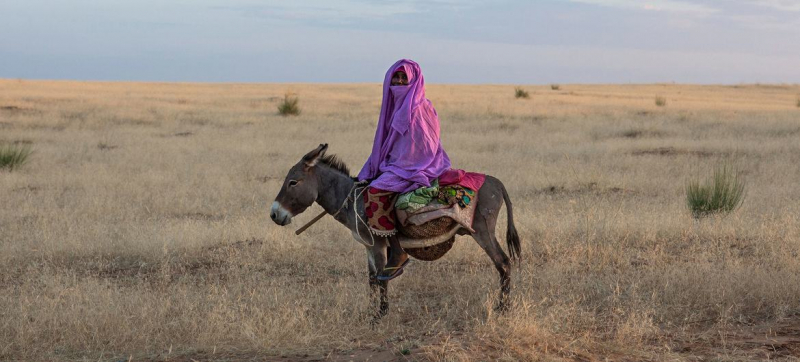

More than a billion people around the world fear they could lose rights to their land and housing over the next five years. More than a billion people could lose land and housing in the next five years Human rights
Despite global progress in strengthening land rights, more than a billion people around the world – almost one in four adults – fear they could lose rights to some or all of their land and housing over the next five years.
This is stated in a report prepared with the support of the UN. Its authors highlight the need for more inclusive land rights policies.
Over the past two decades, governments have adopted national and international frameworks on issues such as land policy in Africa and responsible land tenure regulation. As a result, more than 70 countries have begun land reform processes.
“Land insecurity” and inequality
However, many problems remain in this area. According to a report prepared by the UN Food and Agriculture Organization (FAO), the global alliance International Land Coalition and the French Center for Agricultural Research for Development (CIRAD), ownership, tenure or use rights to only 35 percent of the world’s land are currently formally documented.
The data also suggests that more than 1.1 billion people experience “land insecurity,” meaning they believe it is likely or very likely that they will lose their property in the coming years.
“Land insecurity is one of the most devastating forms of inequality,” said Maximo Torero Cullen, FAO’s chief economist.
Who owns the land?
The report states that governments have legal title to more than 64 percent of the world’s land, a share that includes land held in traditional use with certain tenure rights but no documented ownership.
Just over a quarter of all land is privately owned – by individuals, groups of individuals and companies. Specifically, about 18 percent of the world’s land mass, or 2.4 billion hectares of land, is owned by individuals and corporations. Considering agricultural land—about 37 percent of the world’s land area—the top 10 percent of landowners farm nearly 90 percent of all cultivated land.
The ownership status of 10 percent of the land remains unknown.
Land tenure systems
The report also highlights that land tenure systems vary significantly across regions.
For example, in sub-Saharan Africa, 73 percent of land is under customary use, but only one percent is officially recognized as such, while most land is formally owned by the state.
In North America, 32 percent of land is privately owned, in Latin America – 39 percent, in Europe – 55 percent, with the exception of Russia, where state ownership of land predominates.
Indigenous peoples and women
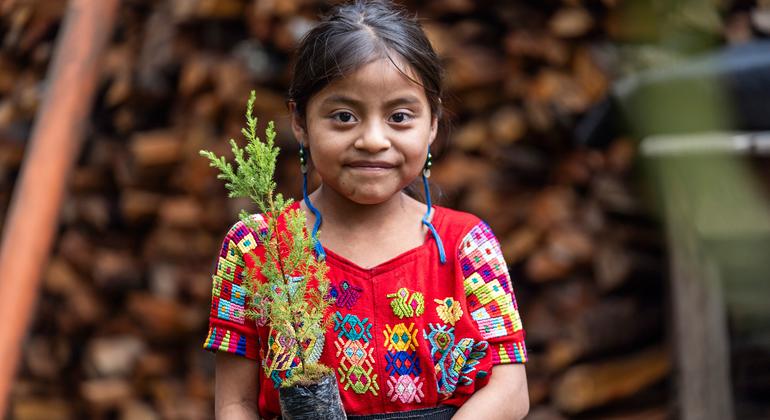
Although indigenous peoples and other holders of customary land rights occupy 5.5 billion hectares—42 percent of the world’s land—they have clearly defined and documented property rights on only 1 billion hectares.
The data also shows that in almost all countries, women are less likely than men to own land or have secure rights to land, either for residence or for farming.
“So many people still live in fear, afraid of losing their land and homes, while women and youth remain among the most vulnerable groups,” said Marcy Vigoda, director of the International Land Coalition.
Traditional land tenure
The report also examines traditional land tenure systems in detail. Traditional lands are areas historically inhabited and used by indigenous peoples, nomads or local communities for traditional farming.
These include forests, grasslands, wetlands and fisheries, and their management – once considered a relic of the past – is increasingly seen as vital to both people and the planet, given its contribution to biodiversity conservation and the fight against climate change.
Approximately 4.2 billion hectares of traditional lands have been mapped worldwide, representing more than 32 percent of the Earth’s total land area (excluding Antarctica).
The FAO also notes that traditional lands are increasingly under threat from human activities such as urban expansion, large-scale industrial agriculture, oil and gas extraction and mining.