
After visiting the UK, Rustam decided to change his approach to growing strawberries. From seasonal work abroad to the transformation of strawberry farming in Uzbekistan Economic development
Rustam’s family has been farming for generations. His grandfather began working the land back in the 1960s. Since childhood, Rustam spent whole days in the fields. Today he continues the family business, changing approaches to growing strawberries in Uzbekistan.
By the early 2000s, Rustam Ismatullaev began farming on his own. By 2013, he expanded his small plot to 10 hectares. In an effort to improve his work results, he began to try new methods and look for the most effective solutions. He traveled extensively throughout the country, studying how strawberries grew in different soils and climates.
“These years of trial and error have taught me effective approaches,” says Rustam. “I learned how soil, weather and the approach to farming affect the results.”
In 2023, one conversation at home changed all his plans. On the advice of his wife, Rustam abandoned short-term agricultural jobs in different regions of the country and began to look for new opportunities. He soon learned about a seasonal employment program in the UK. He has since traveled there three times to work, returning from Scotland for the last time in the fall of 2025.
“I worked on berry farms where strawberries, blueberries and raspberries are grown, and I saw in practice how modern farm management works – from crop planning to working on large production areas,” he says.
The area of the farms on which Rustam worked was 30–35 hectares – significantly larger than most strawberry farms in Uzbekistan. Rustam learned how to use fertilizers more efficiently, manage drip irrigation and increase productivity. Returning to Uzbekistan, he began to apply these methods on his own plots.
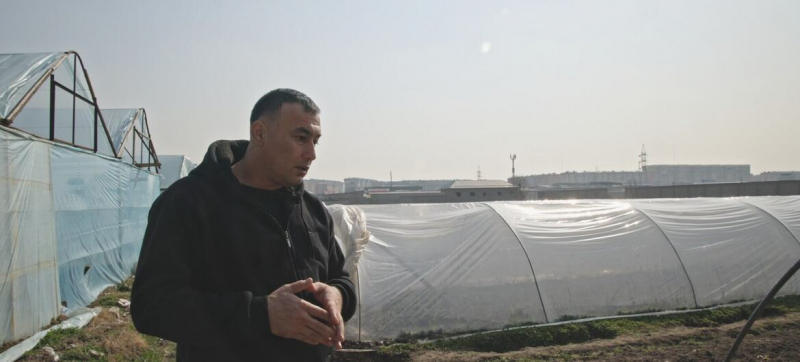
In 2024, he received a grant from the International Organization for Migration (IOM), thanks to which he was able to purchase materials for the construction of mobile greenhouses measuring six by six meters. Such structures can be assembled and disassembled as needed, moving production and growing strawberries all year round.
“If you grow strawberries in the same area for too long, the yield drops,” he explains. – You need to change the place regularly. Thanks to these greenhouses, I can move the plantings and keep the plants healthy. They also protect the crop in winter and help control temperature, which is very important in our conditions.”
Rustam is one of eight migrants who returned home and received small grants from IOM. This support is aimed at ensuring that the skills acquired abroad will help them create reliable sources of income at home. Migrants also underwent a one-day training on financial literacy.
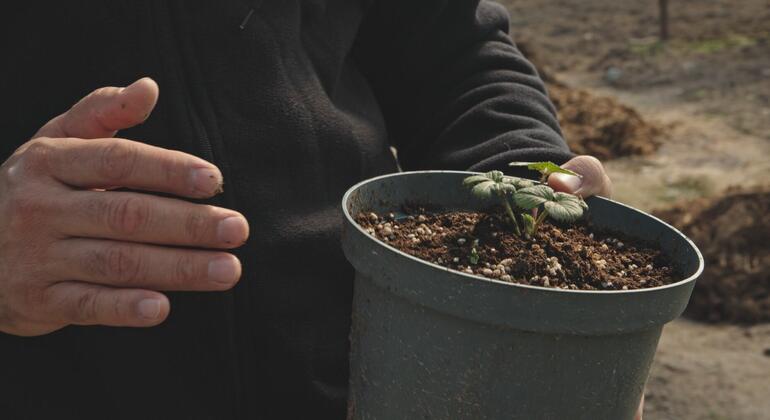
Based on his experience working abroad, Rustam has developed his own technology for growing strawberries, which he plans to patent. It is based on drip irrigation to save water, more efficient use of fertilizers and better organization of labor.
With this method, one person can maintain one hectare of land until the harvest stage – while more traditional methods require about eight workers.
Rustam emphasizes that this does not lead to job cuts. On the contrary, higher productivity and increased yields create additional employment in the following stages – primarily in the collection, sorting and packaging of products.
According to him, the results can be quite impressive. “Usually the yield is about 20 tons of strawberries per hectare,” he notes. – Using this technology, it can reach 45 tons. It makes a huge difference for farmers.” Higher production volumes make it possible to expand farms and create new jobs.
Another important lesson that Rustam learned from his work in the UK was the importance of high-quality planting material. “What surprised me most was the number of varieties of strawberries,” he says. “In Uzbekistan, the choice remains quite limited.”
Returning home, Rustam chose high-quality seedlings suitable for his method. Local varieties did not fully meet his requirements, so he began to form his own planting stock. Today he grows seedlings in four greenhouses and works with 24 varieties of strawberries, most of which are of European origin.
By March 2026, he expects to collect 5.5 tons of crops from a plot of 0.32 hectares, and by April to receive 180 thousand new seedlings. The next step, he said, is to expand seedling production and share it with other farmers.
Rustam supports many of his fellow villagers. Now he is collaborating with four low-income families, whose plots are home to strawberry plantations. Rustam pays them wages and involves them in the production of seedlings. Each family works with a different variety, learns new skills and helps test which strawberry varieties are best suited to local conditions.
As the business develops, Rustam plans to hire four permanent employees with a fixed salary and a share of the profit. During the harvest period, when production volumes are high, he expects to employ up to 20 seasonal workers.
For Rustam, this business is more than his own farm. It creates opportunities for many people across the country.
“Strawberries can be a good source of income for us,” he says. – Every time I return from abroad, I bring new ideas, test them in practice and share effective methods of growing strawberries. If you work hard, honestly and responsibly, success will surely come.”