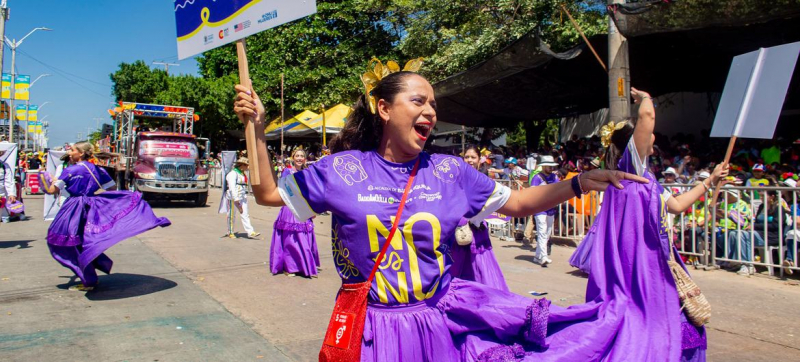

March for women’s rights in Colombia. International Women’s Day: UN warns of persistent legal inequalities Women
On March 8th, the world celebrates International Women’s Day. The UN calls on all people of good will to support the global movement to protect the rights of women and girls and their access to fair justice. It is estimated that today women on the planet have only 64 percent of the legal rights that men have. At this rate, full legal equality may take 286 years to achieve.
This year’s International Women’s Day theme is “For all women and girls: rights, justice, action,” emphasizing the need to eliminate discriminatory laws and social norms.
“Women’s rights are human rights. And investing in women and girls is one of the surest ways to make the world a better place,” said UN Secretary-General António Guterres in a video message to mark the Day.
Legally enshrined inequality
Today, not a single country in the world has achieved complete legal equality. Laws in many countries continue to restrict women’s rights in areas such as employment, access to finance, security, family relationships, property, freedom of movement, entrepreneurship and pensions.
Legal restrictions have long-term consequences not only for individuals, but also for entire societies. In some countries, laws still allow early and child marriage, depriving about 12 million girls every year of the opportunity to receive an education and realize their potential.
Women’s Rights Forum
The opening of the 70th session of the UN Commission on the Status of Women is the largest annual international forum on gender equality. The session will take place from March 9 to 19 at the UN headquarters in New York.
The theme of this session will be “Ensuring and strengthening access to justice for all women and girls.”
The forum is taking place at a time of serious global challenges. In many countries, space for civil society is shrinking and there is a setback in respect for the rights of women and girls. Yet justice systems often fail to protect those who face discrimination and violence.
Experts note that without effective and fair judicial systems, human rights remain just a declaration.
What does access to justice mean
Access to justice means the opportunity for women and girls to defend their rights and seek accountability for violations.
This includes laws that protect women from violence, mechanisms to prevent discrimination, and fair law enforcement and courts. We are also talking about accessible legal assistance, which allows women to protect their rights regardless of income, language or citizenship.
“Women’s rights mean nothing if they cannot be protected,” UN Women emphasized.
Justice also plays a key role in settings of conflict and crisis, where women and girls face heightened risks. The rate of conflict-related sexual violence increased by 87 percent between 2022 and 2024, according to the UN.
Barriers to justice
Even where laws exist to protect women’s rights, in practice they often cannot be implemented due to numerous obstacles.
In seven out of ten countries, women face greater barriers to accessing justice than men. Key barriers include discrimination, stigma, high legal costs, remoteness of courts and underrepresentation of women in the justice system.
At the same time, new technologies create both opportunities and risks. On the one hand, digital tools can facilitate access to legal information and judicial procedures. On the other hand, they open up new forms of online violence and discrimination.
Eliminating legal inequalities requires systemic reform. Experts are calling on governments to repeal discriminatory laws, strengthen judicial systems, expand access to legal aid and support women’s organizations, which are often on the front lines of the fight for the rights and protection of victims.