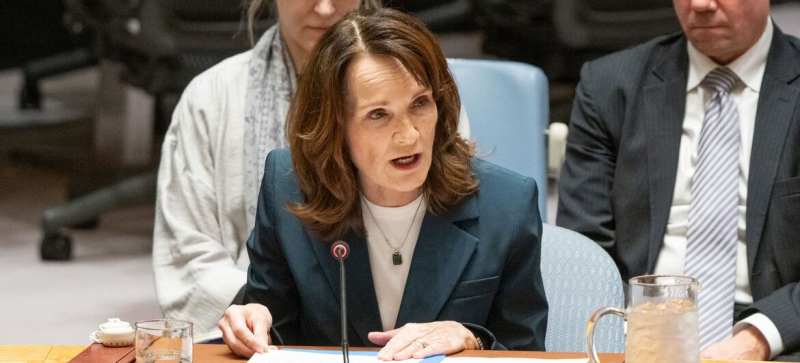

Georgette Gagnon speaks at a UN Security Council meeting on the situation in Afghanistan. UN: Afghanistan’s isolation increases risks for regional and global security Peace and security
Afghanistan is on the brink of a new wave of instability due to a combination of external conflicts, economic pressure and de facto government policies that are alienating the country from the international community. This was stated by Deputy Head of the UN Mission in Afghanistan Georgette Gagnon, speaking at a meeting of the Security Council on Monday.
Gagnon recalled the goal enshrined in Security Council Resolution 2721 – “An Afghanistan at peace with itself and its neighbors, fully integrated into the international community.” According to her, this prospect is becoming increasingly distant amid the worsening conflict between Afghanistan and Pakistan, which has led to “heavy human and economic losses.”
Closing cross-border routes
The closure of the Pakistani border and instability on trade routes passing through Iran have already led to rising prices for basic goods in Afghanistan, adding to pressure on its already fragile economy. Gagnon stressed that a key challenge remains Afghanistan’s continued isolation from the international community, which is blocking progress in the areas of security, economic development, human rights and humanitarian assistance. According to her, if the situation does not change, the country could again become a source of regional and global instability. In her speech, Georgette Gagnon noted a number of positive trends. Among them is the continued ban on opium poppy cultivation, which has led to a 20 percent reduction in the area under cultivation in 2025 compared to the previous year. Moreover, since September 2023, Afghanistan has managed to accommodate 5.5 million returning refugees – “with no signs of social collapse.”
INTERVIEW | How the UN supports Afghanistan in the face of regional escalation and acute resource shortages
However, as Gagnon emphasized, these achievements do not compensate for the damage caused by other decisions of the de facto authorities, most notably the ban on education for girls above the sixth grade and restrictions placed on the work of women in the humanitarian sector. She called it “extremely harmful” to the future of the country and recalled that the ban on recruiting local UN employees violates international norms and the Charter of the United Nations.
“Critical” humanitarian situation
The humanitarian situation in Afghanistan remains critical: 17.5 aid needed in 2026 millions of people, but the current plan is only 10 percent funded. Gagnon warned that dwindling resources, climate shocks and mass refugee returns are increasing pressure on families and prompting a new wave of migration.
The Deputy Head of the UN Mission in Afghanistan also expressed concern that Afghanistan is not demonstrating a willingness to fulfill its commitments to combat terrorism: neighboring countries have expressed alarm about extremist groups associated with the de facto authorities.
Incentives for reintegration
Gagnon called on the Security Council to remain united and actively help Afghanistan. According to her, UN member states can create incentives for the country’s reintegration into the international community.
“The UN mission in Afghanistan remains fully committed to the common goal of creating conditions under which this country can live at peace with itself and its neighbors,” she concluded.