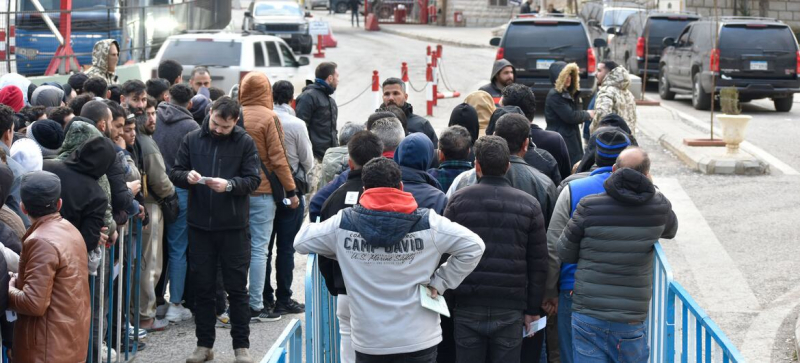

People at the border crossing between Lebanon and Syria. The UN Security Council discussed the situation in Syria against the backdrop of regional escalation Peace and security
The ongoing escalation in the Middle East is increasing pressure on Syria at a time when the country is going through a fragile transition and recovery. UN representatives warned about this when speaking at a Security Council meeting on Wednesday.
Deputy Special Envoy of the Secretary-General for Syria Claudio Cordone said that the consequences of the regional conflict are already being felt on Syrian territory.
Regional threats
According to him, falling debris after intercepting missiles and drones led to the death and injury of civilians. In addition, there was one incident of shelling from Lebanese territory, as well as increased Israeli operations in Syrian airspace and repeated incursions into its territory.
He noted that the strikes in Lebanon led to about 140 thousand people, mostly Syrians, crossing the border in search of safety.
Cordone called on Israel to “fully respect the sovereignty and territorial integrity of Syria” and comply with the 1974 separation of forces agreement.
At the same time, he positively assessed the efforts of the Syrian government to interact with international partners in order to prevent the country from further being drawn into the regional conflict.
“Compliance with international law, de-escalation and dialogue remain key conditions for preventing further consequences of this destructive war,” the Deputy Special Representative emphasized.
Steps towards political transition
Cordone reported on the previous day’s indirect elections in Raqqa governorate and planned voting in other regions, emphasizing the importance of inclusive representation, especially of women, in future institutions of government.
He paid special attention to the creation of the National Transitional Justice Commission, noting that this step reflects the desire to restore the rule of law, ensure accountability and promote reconciliation.
At the same time, unresolved issues remain, including the situation in Es-Suwayda and the integration of Kurdish forces into government structures.
Cordone also warned about the intensification of Daesh (ISIS) and pointed out the serious challenges associated with the closure of the Al-Hol camp and the resettlement of its residents.
Humanitarian situation: growing needs and risks
In turn, Assistant Secretary-General and Deputy Emergency Relief Coordinator of the UN Joyce Msuya noted that despite the closure of Damascus airport and increased security risks, humanitarian operations continue.
In the northern and eastern regions of Syria, the situation is stabilizing, but more than 100 thousand people still remain in a state of forced displacement in the provinces of Aleppo and Al-Hasakah.
At the same time, irregular power supply continues to disrupt the work of water supply and medical institutions. Humanitarian organizations are helping more than 200,000 people every month with food, medical care and basic necessities.
However, Msuya emphasized, humanitarian aid cannot replace government services.
Mines and unexploded ordnance continue to pose a serious threat. Since February, according to the UN, 50 people have been killed and another 97 injured as a result of such incidents. The UN is ready to expand mine clearance work, but this requires additional resources and security.
Msuya warned that prolonging the conflict in the region could seriously hit the Syrian economy, including through rising fuel prices and disruption of supply chains.
“It would be a tragic mistake if international support for the Syrian people weakens now,” she concluded.