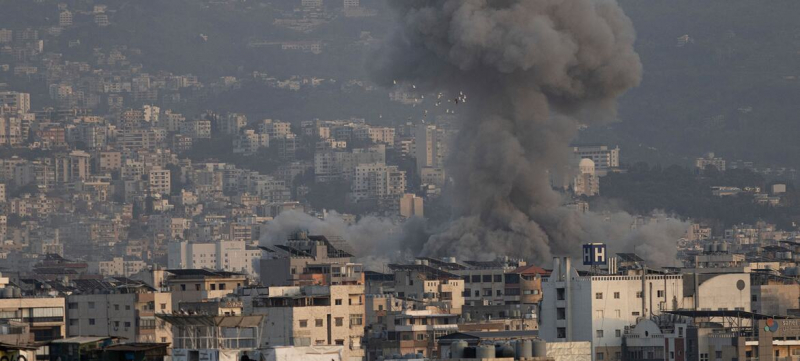

Explosion in Beirut, Lebanon. Humanitarian crisis in the Middle East: Aid to Lebanon expands amid new blows Peace and security
UN humanitarian agencies and their partners are stepping up assistance in Lebanon, where ongoing attacks are causing more casualties, destruction and mass displacement.
Lebanon: the number of internally displaced persons exceeded a million people
UN agencies are expanding emergency assistance throughout Lebanon, providing food, temporary shelter, clean water, medical care and nutrition support to families forced to flee their homes.
According to the latest data, the number of displaced people has exceeded a million people, among them about 367 thousand children. People are fleeing their homes as the attacks continue, with many taking refuge in overcrowded schools and temporary accommodation centres.
It is reported that Israeli strikes on the central areas of Beirut led to new casualties and destruction of residential areas, including the collapse of a multi-story building. Medical facilities were also damaged; medical workers were among the wounded.
Thousands of families across the country continue to flee war zones as attacks intensify. Many end up in overcrowded shelters where access to basic services is extremely limited.
Humanitarian organizations are distributing emergency supplies, including hygiene supplies and shelter, to victims, and thousands of women and children are receiving specialized nutrition assistance.
Children at risk and calls for de-escalation
The situation of children is of particular concern. According to UNICEF, they face increased risks to health, safety and psychological well-being due to loss of access to basic services.
On-site medical care, access to clean water, emergency kits and psychosocial support are provided for children who have experienced traumatic events.
Humanitarian organizations are stepping up calls for urgent de-escalation of the conflict, emphasizing the need to protect civilians, especially children.
Iran: UNICEF expands medical care for children
The United Nations Children’s Fund (UNICEF) is increasing support for the health system in Iran amid growing needs caused by the ongoing escalation and bombing by the US and Israel.
Mobile medical teams, primary care tents and emergency medical kits have been deployed in coordination with national health authorities. Additional supplies are already on their way to the country. The assistance is expected to cover at least 226 thousand people.
UNICEF is also expanding psychosocial support programs for children affected by conflict.
Strike near a nuclear facility in Iran
The International Atomic Energy Agency (IAEA) confirmed that a projectile incident destroyed a facility located about 350 meters from the Bushehr nuclear power plant reactor. At the same time, the reactor itself was not damaged, and no injuries were recorded among the personnel.
IAEA Director General Rafael Mariano Grossi stressed that any attacks near nuclear facilities violate key principles of nuclear safety and should not occur under any circumstances.
Education and cultural heritage are under threat
UNESCO has announced emergency measures in the region amid escalating violence that is undermining education systems and threatening cultural heritage sites. The crisis has affected tens of millions of children, with at least 65 schools damaged and many others closed or used as shelters, the organization said. In response, efforts are being made to create temporary learning spaces, expand online learning, and provide psychosocial support for students and teachers.
At the same time, measures are being taken to protect cultural objects. There are approximately 125 UNESCO World Heritage Sites in 18 countries in the Middle East. In Lebanon, artifacts are moved to safe locations while satellite monitoring records damage.
UNESCO calls on all parties to respect international law and warns that further destruction of education, culture and media systems could have long-term consequences for the stability of the region.