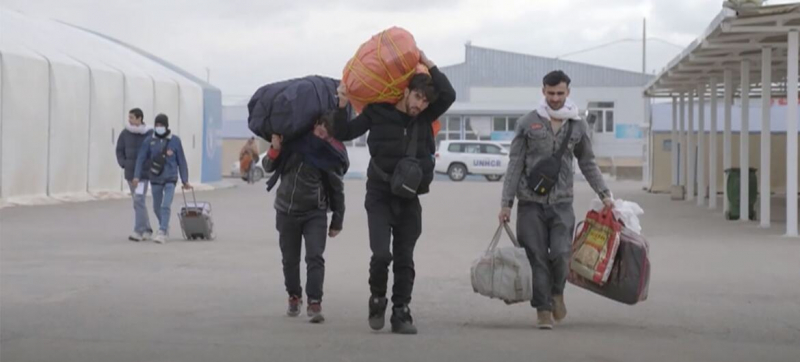

Afghans returning from Iran arrive at the border checkpoint. Regional turmoil is pushing millions of Afghans into deeper humanitarian crisis Peace and security
The escalation of conflicts in Iran, Pakistan and socio-economic difficulties in Afghanistan itself have sharply worsened the situation of millions of Afghans. The Office of the United Nations High Commissioner for Refugees (UNHCR) warns about this. In an interview with UN News Service, agency spokesman Babar Baloch described the situation as “really very worrying.”
According to Baloch, Afghanistan has repeatedly faced dire humanitarian crises, but new regional upheavals have increased the pressure on returning refugees and internally displaced persons to the limit. In recent years alone, more than five million Afghans have returned from Iran and Pakistan, many of them not of their own free will.
“Thousands of people have been arriving in Afghanistan since the beginning of the conflict in Iran, essentially moving from one conflict to another,” he noted.
A country on the brink: food shortages, closed borders and new waves of displacement
Millions of Afghans remain without stable housing and income within their own country. Logistics disruptions have led to rising levels of malnutrition, according to the World Food Programme. The closed Pakistan-Afghan border and the deteriorating situation in Iran have deprived humanitarian organizations of key supply routes. Since the start of clashes between Pakistan and the de facto authorities of Afghanistan, the number of newly displaced people has exceeded 100 thousand.
“Every new round of history makes the situation for Afghans only worse,” Baloch said.
Women and girls are “under a double blow”
The situation of Afghan women is of particular concern to UNHCR. Restrictions imposed by the country’s de facto authorities have deprived them of education, work and freedom of movement.
“It’s very, very difficult to be an Afghan woman now,” Baloch stressed, adding that local UNHCR staff also face obstacles in their work. UNHCR warns that its humanitarian capacity is being severely limited by lack of funds. The 2026 appeal for Afghanistan, Iran and Pakistan—more than $400 million—is seriously underfunded.
“We have experience and the presence of specialists on the ground, but without resources there is nothing to help people,” Baloch emphasized.
Regional instability adds pressure
The crisis in Iran, according to preliminary estimates, has led to the displacement of 600 thousand to a million households, this is more than 3.2 million people. Lebanon has registered over a million new displaced people, while the country is already hosting 1.3 million Syrian refugees.
“We see how rapidly the conflict is spreading and the consequences can affect the whole world,” Baloch warned.