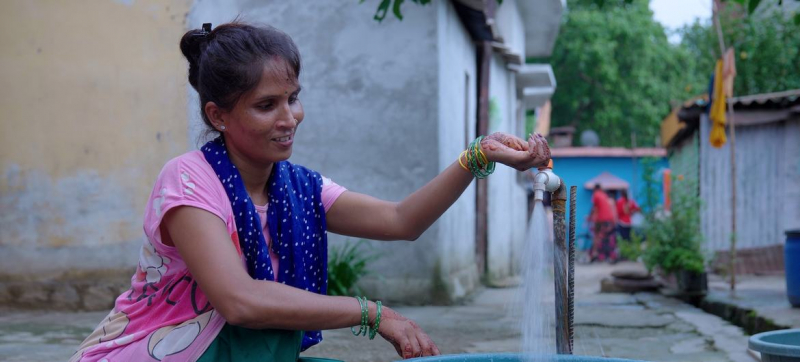

Women and girls are often responsible for collecting water, especially in rural areas. UN report: Global water crisis worsened by gender inequality Women
Despite the progress made in recent decades, inequalities in water resources remain, disproportionately affecting women and girls. They are the ones who most often collect water, but remain excluded from water management and decision-making processes.
This is a key finding of the UN State of Water Report, published by UNESCO in collaboration with UN-Water. The report notes that in more than 70 percent of rural households without access to water, women are responsible for collecting water.
“Ensuring women’s participation in water resource management is a critical condition for progress and sustainable development. We need to do more to ensure women and girls have access to water. It is not just a fundamental right: ensuring equal access to water for women benefits entire societies,” said Khaled Al-Anani, Director-General of UNESCO.
“It is time to fully recognize the central role of women and girls in addressing water challenges…Women and men must manage water as equals as a common good that serves the interests of all societies,” said Alvaro Lario, Chair of UN-Water.
The State of the World’s Water Report is released annually as part of World Water Day, which is celebrated on March 22. This year, its authors highlight that 2.1 billion people lack access to safe drinking water, with women and girls most acutely affected. They are most often responsible for collecting water, which causes them to miss school and miss out on education. In addition, women and girls may become victims of violence on their way to water sources located far from their homes.
Main conclusions of the report
According to the report, if you add up all the hours that women and girls around the world spend collecting water, the total is 250 million hours a day – time that could be spent on education, recreation or income-generating activities.
Poor sanitation disproportionately affects women and girls, especially in urban slums and rural areas. Lack of toilets and water for menstrual hygiene also leads to girls missing school days. An estimated 10 million adolescent girls (15–19 years old) in 41 countries missed school, work or social activities between 2016 and 2022.
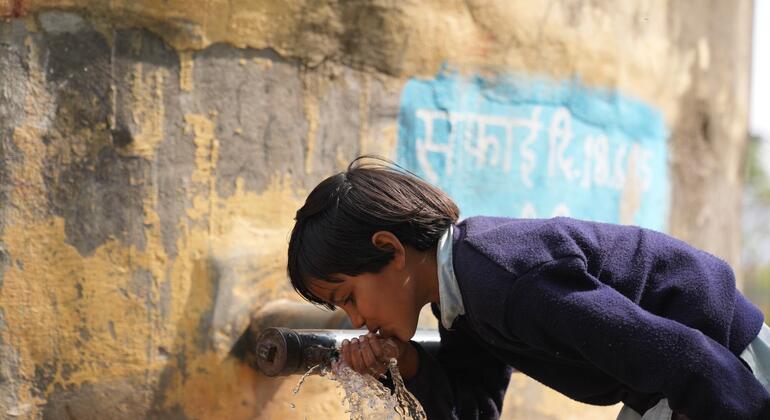
Despite their central role in providing water for their families and in agriculture, women remain underrepresented in water management and decision-making processes.
Data from 64 utilities in 28 low- and middle-income countries showed that less than one-fifth of water sector workers are women, and they receive lower wages than men. In 2021-22, women in 79 countries held less than half of public sector jobs in water, sanitation and hygiene, and in almost a quarter of 109 countries the number was less than 10 percent.
The report also notes that women’s access to water is directly affected by gender inequality in land and property ownership. Water rights are often linked to land tenure rights, which directly affect the availability of water resources for productive purposes such as agriculture. Land tenure laws and regulations that discriminate against women place them at a socio-economic disadvantage. In some countries, men own twice as much land as women.
Gender inequality in times of crisis
Climate change, water scarcity and natural disasters are exacerbating existing gender inequalities. Gender remains a key risk factor in determining access to early warning systems and recovery support.
Data shows that climate change disproportionately affects women: a one degree Celsius rise in temperature reduces income in female-headed households by 34 percent more than in male-headed households, while women’s weekly workload increases by an average of 55 minutes compared to men.
How to overcome water inequality
The report contains concrete recommendations for progress, including eliminating legal, institutional and financial barriers to women’s equal rights water and land, scaling up gender-responsive finance and budgeting, integrating water-related unpaid labor into planning, pricing and investment decisions, and strengthening women’s leadership and technical skills.