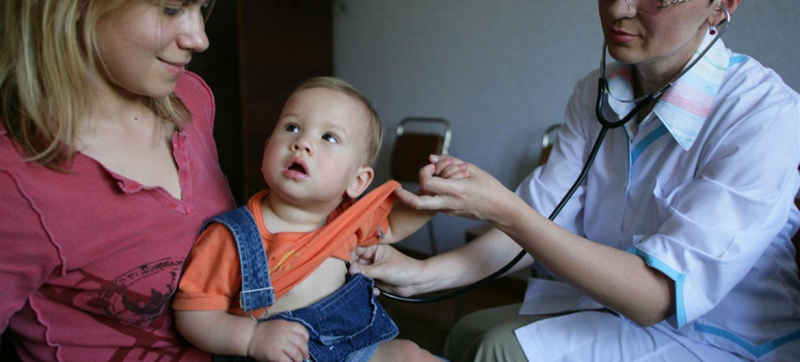

In several European countries, the incidence of tuberculosis among children under four years of age exceeds 10 cases per 100 thousand people. New study documents critical gaps in TB detection in the European Region Health
In the European Region of the World Health Organization (WHO), one in five cases of tuberculosis goes undetected, and the rate of drug-resistant forms of the disease remains one of the highest in the world. This is stated in a joint report published on Tuesday by WHO and the European Center for Disease Prevention and Control.
In 2024, 51 countries in the region reported 161,569 new and recurrent cases of tuberculosis – only 79 percent of the estimated number of cases. WHO suggests that about 204 thousand people have fallen ill in the region. Under-detection remains a key problem: people who are not diagnosed in time continue to transmit the infection and experience more severe forms of the disease.
The situation in the European Union and the European Economic Area (EU/EEA) is also causing concern among experts. There were 38,249 cases of tuberculosis reported here in 2024, but one in five patients who start treatment are not tested after a year. This gap persists even among children under 15 years of age.
Despite overall declines in morbidity and mortality – by 39 and 49 percent respectively since 2015 – the region is significantly behind the End TB Strategy targets. In the EU/EEA, progress is even slower, with tuberculosis incidence falling by 33 percent and deaths by just 17.
Drug resistance
The European Region bears a disproportionate share of the global burden of multidrug-resistant tuberculosis. In 2024, there were 26,845 confirmed cases of disease resistant to rifampicin or several other drugs.
European rates are significantly higher than the world: 23 percent of new cases in the region are multidrug-resistant (versus only 3.2 percent globally), and among previously treated patients, resistance is detected in 51 percent of cases (versus 16 percent globally). This makes the region one of the most problematic on a global scale.
“Lost opportunity”
“One in five people with tuberculosis in the European Region goes undetected, and this is not just a missed diagnosis – it is a missed opportunity to prevent suffering and further transmission,” said WHO Europe Director Hans Kluge. He stressed that speeding up diagnosis, switching to shorter oral treatment regimens and strengthening monitoring could put countries back on track to achieve their goals.
Additional challenges: HIV, prisons and childhood morbidity
The report records 23 thousand cases of combination of TB and HIV, 80 percent of them are in Russia and Ukraine. Despite high levels of testing, antiretroviral therapy coverage remains below targets.
The situation in prisons is particularly alarming: the incidence rate here reaches 121.6 cases per 100 thousand people – 13 times higher than in the region as a whole.
In several European countries, the incidence of tuberculosis among children under four years of age exceeds 10 cases per 100 thousand people, indicating persistent disparities within the region.
Commenting on the report’s findings, ECDC Director Pamela Rendi-Wagner noted that progress in Europe in recent years has been insufficient: “To achieve the 2030 targets, sustained efforts are needed in early detection and supporting patients throughout their treatment.”