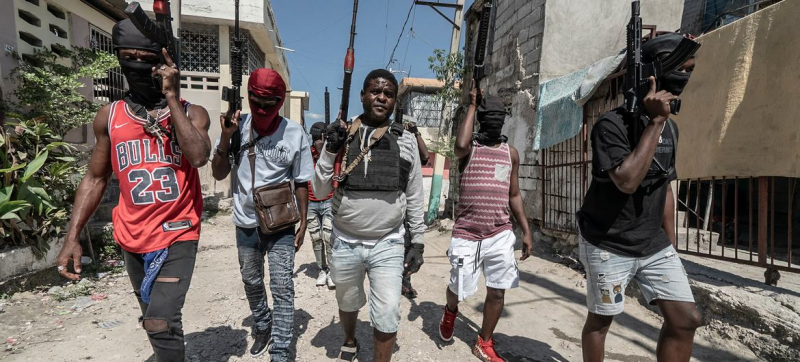

Members of one of the criminal gangs on the streets of Port-Au-Prince. Haiti: Police accused of extrajudicial killings as gangs expand control Peace and security
Criminal gangs continue to gain influence in Haiti, seizing key sea and land routes, while police in the crisis-stricken Caribbean country face accusations of using “disproportionate lethal force and extrajudicial killings.”
A report by the Office of the United Nations High Commissioner for Human Rights, released Tuesday in Geneva, describes how the expanding influence of gangs is destroying the lives of Haitians amid ongoing bloodshed – killing more than 5,500 people last year alone.
At least 26 armed groups operate in Port-au-Prince, the capital of Haiti, and its surrounding areas. The escalating violence has forced some 1.4 million Haitians to flee their homes.
Expanding the influence of gangs
Recently, groups have expanded beyond the capital, moving to the outskirts and further to the north of the country. They managed to strengthen strategic corridors and establish control over key sea and land routes that provide them with funding.
At the same time, gangs continue to terrorize the population: they kill and kidnap people, engage in child trafficking, rob cars and pedestrians at illegally installed checkpoints, extort money from entrepreneurs, destroy and plunder private and government property.
Reprisals against those suspected of collaborating with the police or disobedience are particularly brutal. “People are killed and their bodies are doused with gasoline and burned,” the report says.
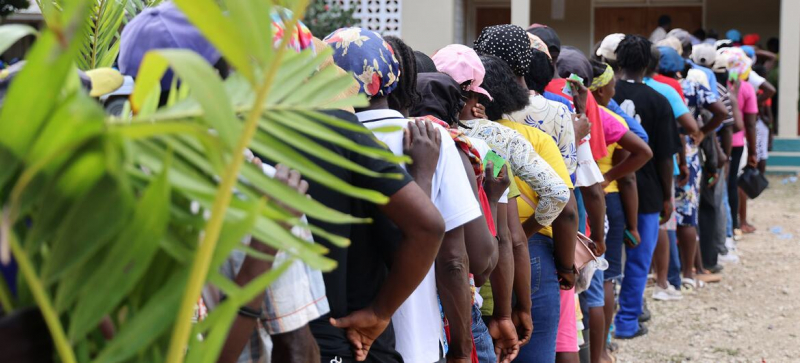
People displaced by violence in Haiti queue at a humanitarian aid distribution point.
Disproportionate use of force by police
Violence does not only come from gangs – it is practiced by Haitian security forces, private security agencies and vigilante groups.
The report’s authors recorded almost 250 “extrajudicial executions or attempts to commit them” by the police. We are talking about reprisals against alleged gang members or people whom the police considered their accomplices.
Human rights activists are also concerned about the activities of a private military company hired by the Haitian government. It has already carried out drone strikes and fired from helicopters – but the legality of such operations, the report says, “raises serious doubts.”
“Some, if not most, of these strikes could qualify as targeted killings, given the deliberate nature of the use of lethal force against specific individuals,” the report’s authors note. The judicial authorities, according to their data, did not initiate a single investigation into the legality of these actions.
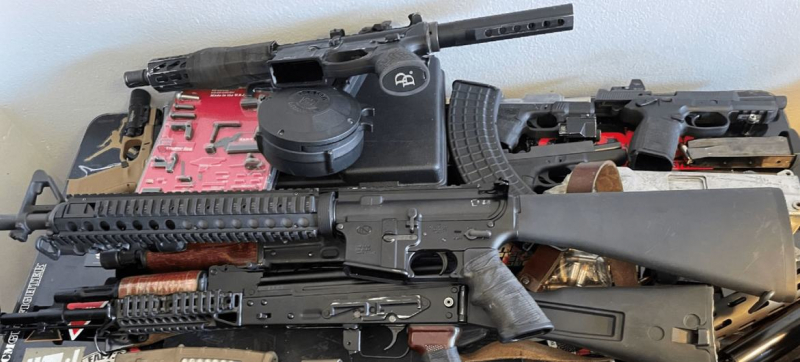
Weapons seized by US law enforcement that were destined for Haiti.
“People’s Justice”
Vigilante groups and mobs, armed with stones, machetes and, increasingly, guns, practice so-called “people’s justice”, which leads to the lynching of people suspected gang ties. Sometimes such reprisals, according to the report’s authors, “were encouraged or supported by individual police representatives.”
The UN has repeatedly emphasized that restoring security is the key to stabilizing Haiti, but this alone is also not enough: without progress in the areas of governance, justice and social services, especially for youth, any gains will be short-lived. Strong international support is needed to break the cycle of violence and assist the country in its Haitian-led efforts to restore security.