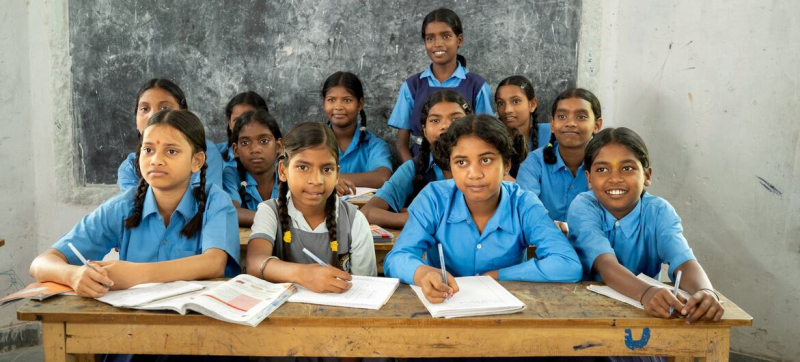

Students in Purnia, India, participate in an inclusive education program. UNESCO report: Number of children out of school increases for seventh year in a row Culture and education
The number of children and young people out of school rose for the seventh year in a row to reach 273 million. This is due to population growth, crises and budget cuts. This is the main finding of UNESCO’s Global Education Monitoring Report 2026, a key global source of data on the state of education.
One in six school-aged children worldwide are excluded from education, and only two out of three students complete secondary school. However, many countries are making significant progress, highlighting the importance of taking national context into account when setting targets and developing appropriate policies.
Regional data
A UNESCO report released on Wednesday shows that progress in achieving school attendance has slowed in almost all regions since 2015. The most pronounced slowdown in sub-Saharan Africa is mainly due to population growth. A series of crises, including conflicts, have also stalled progress. More than a sixth of all children in the world live in conflict zones. This means that the actual number of children out of school is millions higher than reported in official statistics.
This problem is particularly acute in the Middle East, where ongoing regional tensions have led to the closure of many schools. As a result, millions of children were unable to attend classes and faced an increased risk of falling behind in their learning.
Positive trends
Despite existing challenges, the report highlights significant achievements in the global education sector in recent years. A number of countries have reduced school absenteeism rates by at least 80 percent since 2000, including Madagascar and Togo among children, Morocco and Vietnam among adolescents, and Georgia and Turkey among youth.
In Azerbaijan, the share of five-year-old children receiving preschool education services increased from 25 percent in 2016 to 92 percent in 2021, which allowed almost close the access gap between urban and rural areas. Similar progress has been seen in Uzbekistan, where preschool enrollment has tripled in just seven years. The efforts of the country’s government have led to the elimination of inequality in access to kindergartens between the capital and other regions.
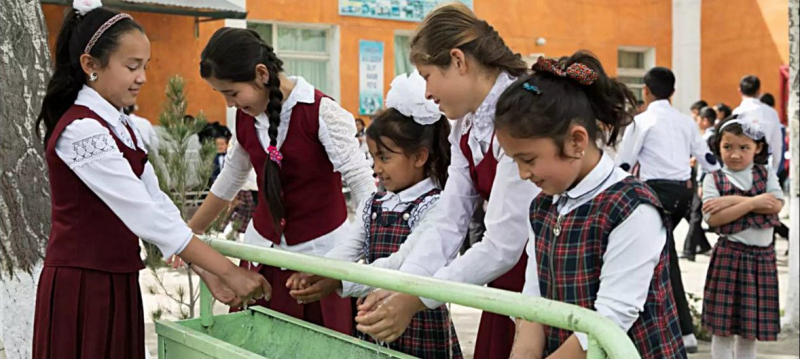
In Uzbekistan, inequality in access to kindergartens between the capital and other regions has been eliminated.
With a total enrollment of 1.4 billion in 2024, global enrollment in primary and secondary education has increased by 30 percent since 2000. Preschool enrollment increased by 45 percent and postsecondary enrollment increased by 161 percent. This means more than 25 children are accessing education every minute. In addition, the gender gap in primary and secondary education has been virtually eliminated on average.
In China, access to higher education has expanded at an unprecedented pace, from 7 percent in 1999 to more than 60 percent in 2024.
At the same time, more children are not only starting but also completing education: since 2000, global completion rates have risen from 77 percent to 88 percent in primary education, from 60 percent to 78 percent in lower secondary education, and from 37 percent to 61 percent in upper secondary education. However, at current rates, the global completion rate for upper secondary education will not reach 95 percent until 2105.
Inclusive education
The report also highlights the growing commitment to inclusion around the world. An analysis of policies in this area since 2000 shows that the proportion of countries enshrining inclusive education in legislation has increased from 1 to 24 percent, while the proportion of countries enshrining in their laws the education of children with disabilities in inclusive educational environments has increased from 17 to 29 percent.
According to a UNESCO report, countries in Eastern Europe, Central Asia and the South Caucasus are demonstrating a major shift from the “medical model” of disability to an inclusive pedagogical approach. According to the report, the proportion of children with disabilities enrolled in specialized boarding schools in the region fell from 78 percent in 2005 to 29 percent in 2024. The most impressive rates of desegregation were recorded in the Republic of Moldova, where the rate fell from 77 to 8 percent, and in Armenia, where Thanks to legislative reforms in 2005 and 2021, the proportion of children in special schools has decreased from 37.5 percent in 2015 to just 6.5 percent in 2023.
Funding and accessibility
Over the past 25 years, the share of countries using various financing mechanisms for the benefit of socially vulnerable groups in primary and secondary education has more than quadrupled. These include measures such as transfers of funds to subnational governments, schools, and directly to students and their families. In particular, 76 percent of countries have policies in place to reallocate resources to disadvantaged schools. However, the new index presented in the report shows that only 8 percent of countries are fully using these mechanisms to redistribute educational resources to socially vulnerable groups.
Previous efforts to make education more affordable have increased coverage but reduced quality, leading to increased dropout rates. In addition, other significant costs that remain barriers for families have not been eliminated: transportation costs, after-school care, or meals. With declining donor funding, school grant programs and school feeding schemes (operating in 84 percent of countries), which have not been fully integrated into national budgets, are now at risk of closure.
What next
The report demonstrates that no single measure can ensure universal access to education. Policies must be tailored to local realities, address problems comprehensively and be evidence-based. Thus, in 14 African countries, the introduction of compulsory rather than just free education increased the average length of schooling by more than a year for both girls and boys. Moreover, the combination of such measures with laws prohibiting child labor gives an even more significant effect.
Effective policies must also take into account factors outside of education. For example, in Cambodia, electrification alone increased the length of schooling by almost a full year. In low- and middle-income countries, school feeding programs generate up to six months of additional learning for every $100 spent. By providing cash transfers tied to school attendance, children are 36 percent more likely to enroll in school.
By supporting governments around the world and bringing together ministers, development partners, civil society and youth, UNESCO will continue to shape the post-2030 education agenda, ensuring education remains a priority in the face of global challenges.