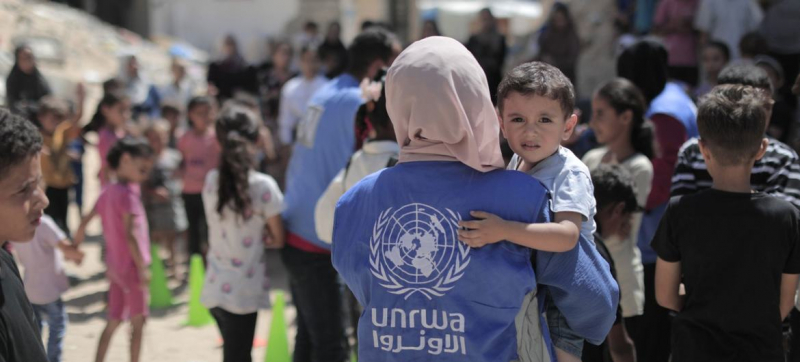

The UN works in some of the world’s most dangerous and unstable regions, including Gaza. The Secretary General called for the immediate release of 118 detained UN staff UN
UN Secretary-General Antonio Guterres called for the immediate release of 118 UN employees who are currently detained in several countries around the world.
The Secretary General’s call came against the backdrop of an increase in the number of attacks on UN personnel: last year alone, 179 employees of the Organization were arrested or detained. This figure has risen sharply: at this time a year ago, 52 UN workers were in prison. In Yemen alone, 73 UN staff are currently being held by de facto authorities, including eight from the Office of the UN High Commissioner for Human Rights. In a statement marking today’s International Day of Solidarity with Detained and Missing Personnel, the Secretary-General stressed that “no colleague is left behind” and called on Member States to respect international law while ensuring safe and unimpeded humanitarian work. The UN works in the world’s most dangerous and fragile regions, including Gaza, Afghanistan, Sudan, Ukraine, Yemen, Haiti and the Democratic Republic of Congo. “Any detention not only violates fundamental human rights, international law and immunity, but also undermines vital humanitarian efforts, delaying the delivery of aid to millions of people,” said General Assembly President Annalena Burbock. UN staff in Yemen continue to face arbitrary arrests and “some have been deprived of their liberty for five years,” UN High Commissioner for Human Rights Volker Türk said on Wednesday. “Every day adds to the injustice of their detention. Their suffering and the suffering of their families is unbearable,” he added. UN staff in Yemen are being held in territories controlled by the country’s de facto authorities, the Houthis. Since 2014, Yemen has been in a state of civil conflict between the Houthis and the internationally recognized government. The High Commissioner called on Yemen’s de facto authorities to immediately and unconditionally release all 73 UN staff.
History of losses and the struggle for personnel safety
Since its founding in 1945, the UN has lost hundreds of personnel killed in the line of duty. As the Organization’s activities expanded, so did the awareness that its personnel were becoming increasingly vulnerable.
The first step towards systemic protection was the adoption by the Security Council in September 1993 of a resolution on the security of UN personnel. Following this, the Sixth Committee of the General Assembly began work on an international legal mechanism for the protection of staff.
The result was the Convention on the Safety of United Nations and Associated Personnel, adopted on 9 December 1994. The document has become a key instrument obliging states to ensure the protection of employees working in conflict zones and emergency situations.
Reminder of the tragedy
The International Day of Solidarity with Detained and Missing UN Personnel is celebrated annually on the anniversary of the abduction of Alec Collett, at the United Nations Relief Agency for Palestine Refugees in the Near East (UNRWA). It was captured by an armed group in 1985. It was not until 2009 that his remains were discovered in the Bekaa Valley in Lebanon. The story was a reminder of the dangers faced by aid workers.
In recent years, the number of attacks on UN personnel has continued to increase. According to the Organization, staff face risks of kidnapping, assault, illegal detention and death as a result of armed conflicts.
Solidarity, justice, protection
Today’s date is designed to mobilize the international community to protect UN staff and peacekeepers; demand justice for those who have been kidnapped, detained or attacked; and strengthen the resolve of states to ensure the safety of humanitarian workers, journalists and NGO representatives.
The UN emphasizes that the protection of personnel is not only a moral obligation, but also a necessary condition for the implementation of humanitarian and peacekeeping mandates around the world.