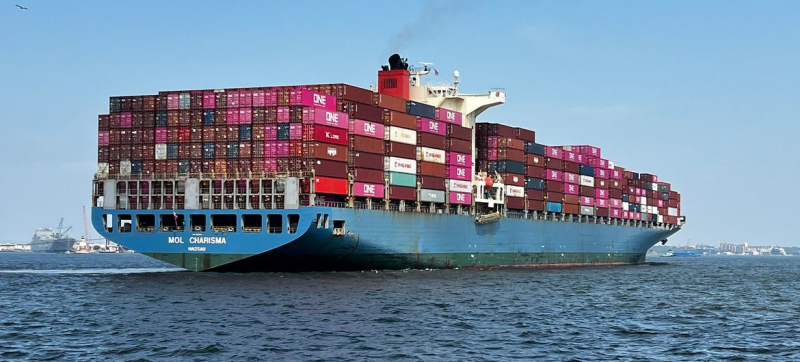

Environmental priorities are increasingly shaping global trade trends. Slower growth, digitalization and tariffs: what awaits global trade in 2026? Economic development
According to preliminary data, 2025 was a record year for global trade: its volume increased by 7 percent and exceeded $35 trillion for the first time. Growth is expected to continue in 2026, but at a slower pace.
The first review of the year by the United Nations Conference on Trade and Development (UNCTAD) highlights an increasingly complex and fragmented global environment. Geopolitical tensions, reshaping supply chains, accelerating digital and green transitions, and increased regulation are reshaping trade flows and global value chains.
Below are some of the key trends that, according to UNCTAD experts, will shape global trade in 2026.
Slowing global growth is hitting developing economies
Global economic growth in 2026 is projected to remain subdued at 2.6 percent. In developing countries (excluding China) it will slow to 4.2 percent.
The largest economies are also losing momentum:
- USA: growth will fall to 1.5 percent, down from 1.8 percent in 2025.
- China: growth is expected at 4.6 percent versus 5 percent a year earlier.
- Europe: government stimulus will provide limited support to the economy, but demand will remain moderate.
Slower growth weakens export demand, tightens financial conditions and increases vulnerability to external shocks. Developing countries will need to strengthen regional trade, diversification and digital integration to improve resilience.
Tariffs increase uncertainty
In 2026, governments are expected to continue to use tariffs for protectionism and strategic pressure. Their use has increased sharply in 2025, especially in the manufacturing industry, including against the backdrop of US measures.
Tariffs disrupt trade even before they are actually introduced:
- rising costs weakens demand and changes sources of supply;
- Policy instability constrains investment and long-term planning.
The service sector is becoming a driver of growth, strengthening the digital divide
Services already account for 27 percent of global trade, and the figures will grow by about 9 percent in 2025, significantly outpacing trade in goods.
Digitalization accelerates this process, but at the same time widens the gap:
- class=”notranslate”>__GTAG16__ services delivered digitally account for 56 percent of global service exports;
- in developed countries their share reaches 61 percent;
- in the least developed countries – only 16 percent, which highlights the scale of inequality.
At the same time, new barriers are emerging due to tightening digital trade rules. Closing the digital divide – through infrastructure, skills development and supportive regulation – will be key to developing countries’ participation in the fastest growing segment of global trade.
The environmental agenda is increasingly influencing trade
Environmental priorities are increasingly shaping global trade trends as we move from climate commitments to their practical implementation. Clean energy technology markets could reach $640 billion annually by 2030.
Yet by the end of 2025, prices for key clean energy minerals were 18 to 39 percent below 2021-22 peak levels due to oversupply, slowing battery demand and technological changes reducing demand for raw materials.
Despite the price decline, supply risks remain. Export restrictions are increasing, including measures on cobalt in the Democratic Republic of Congo and rare earth elements in China. In response, countries are building up reserves and entering into bilateral agreements, raising the risk of fragmentation of value chains.
Navigating in a fragmented trade environment
Among the main trends and events of 2026, UNCTAD also highlights: pressure on global trade rules amid preparations for the World Trade Organization (WTO) ministerial conference, reshaping global value chains, growing trade among countries in the Global South, climate and security risks to agricultural trade, and increased government regulation.
As these processes evolve, timely data, analysis and policy support will be key. UNCTAD will continue to monitor changes and help countries navigate new conditions, manage risks and identify opportunities in an increasingly fragmented global trading environment.