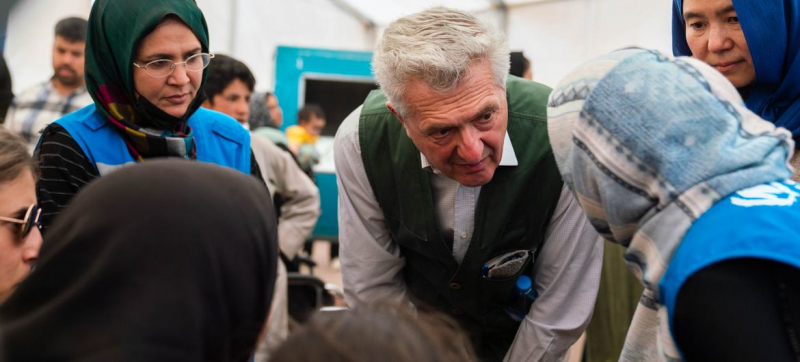

UNHCR head Filippo Grandi talks to refugees on the border with Afghanistan (archive). Despite funding cuts, the UN will help millions of refugees in 2025 Refugees and migrants
In the face of severe funding cuts, the United Nations High Commissioner for Refugees (UNHCR) continued to respond in 2025 to some of the world’s most challenging humanitarian situations, including new emergency crises and worsening protracted conflicts that have forced millions of people from their homes. This is stated in a UNHCR report published on Monday.
Over the past year, the organization has supported people fleeing renewed violence in eastern Democratic Republic of Congo, provided aid to refugees from South Sudan, and protected millions of Afghans returned or deported from Iran and Pakistan.
At the same time, protracted conflicts deepened: the ongoing war in Sudan, intensified attacks on Ukraine and armed clashes in Colombia contributed to repeated population displacement, exacerbating the vulnerability of already affected people.
Emergency response
In 2025, UNHCR responded to 24 active emergencies in 16 countries, including 10 new crises. Seven of these were identified as the most extensive and complex, requiring urgent intervention in extremely difficult contexts, such as Sudan, South Sudan and Chad.
UNHCR staff provided clean water to half a million people in Sudan, financially supported 500,000 Afghan and 120,000 Syrian returnees, and provided more than a million services to displaced people inside Ukraine and in countries hosting Ukrainian refugees.
Looking into the future: challenges of 2026
According to forecasts, in 2026, conflicts and instability in such countries like the DRC, Sudan, South Sudan, Ukraine and Venezuela, will lead to new waves of displacement and increase pressure on already vulnerable groups. These crises affect approximately 52 million internally displaced people and account for a third of UNHCR’s global funding needs in 2026.