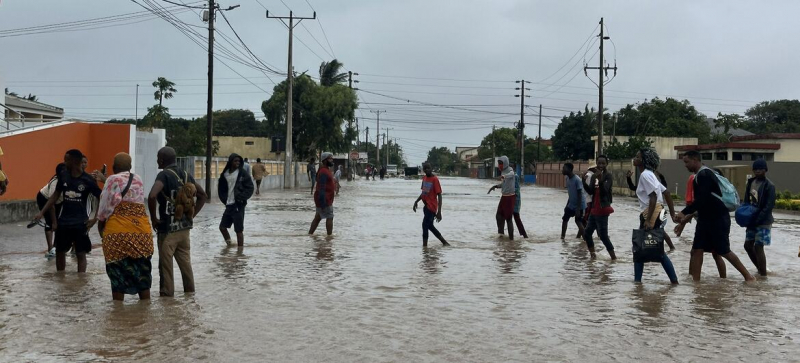

Flooded street in Xai Xai, Mozambique. Mozambique: Floods increase risks of disease, malnutrition and crocodile attacks Humanitarian assistance
Catastrophic floods have led to widespread destruction in Mozambique. Local residents are left without the ability to feed themselves and their loved ones, and also face an increased risk of disease outbreaks and even the threat of crocodiles in urban areas. UN humanitarian agencies warned about this on Tuesday.
The head of the UN Office for the Coordination of Humanitarian Affairs (OCHA) in Mozambique, Paola Emerson, told reporters in Geneva that more than half a million people were affected by floods caused by heavy rains in the first weeks of the new year. The number of casualties continues to rise.
Destroyed roads and hospitals
Among the most affected regions are the province of Gaza, as well as the provinces of Maputo and Sofala.
Speaking from the city of Shai-Shai, the administrative center of Gaza province, Emerson emphasized that 90 percent of the country’s population lives in adobe houses – “earthen structures that literally spread after several days of rain.”
According to her, medical facilities, roads and other critical infrastructure were seriously damaged. About 5 thousand kilometers of roads in nine provinces were damaged, including the main highway connecting the capital Maputo with the rest of the country. This leads to serious disruptions in supply chains.
Risks of crocodiles
At the same time, the dams continue to release water, despite the weakening of the rains.
“Up to 10 thousand cubic meters of water are discharged from one dam alone. That’s about 25 times the volume of water that the press briefing room you’re in right now can hold,” Emerson told reporters.
The Mozambican government declared a state of emergency and created an emergency response center in Gaza province. The town of Shai-Shai, located near the Limpopo River, was flooded, forcing authorities to begin evacuating the population. Ms Emerson said warnings had been issued in the city centre, “including warnings about the risk of crocodiles in flooded areas”.
“Water levels in rivers are rising and they are reaching urban and densely populated areas,” she said. Crocodiles living in the Limpopo River may be entering populated areas that are now underwater.
Threats to children’s health
Also speaking from Xai-Xai, UNICEF Mozambique Communications Manager Guy Taylor warned of “deadly threats” to children.
The combination of waterborne diseases and malnutrition “is often fatal,” he said. He recalled that even before the floods, one in four children in Mozambique suffered from chronic malnutrition.
Their situation is now aggravated by disruptions in food supplies and limited access to medical care. Taylor added that Mozambique is now entering its annual cyclone season, posing the risk of a double crisis.
“We can prevent illness, death and irreversible loss for children, but we need to act quickly,” he emphasized.
The UNICEF representative noted that Mozambique is a “country of children and youth”, where the average age of the population is 17 years.
“When floods and cyclones occur, as has happened repeatedly and with increasing frequency in recent years, it is children and young people who suffer the most,” he concluded.