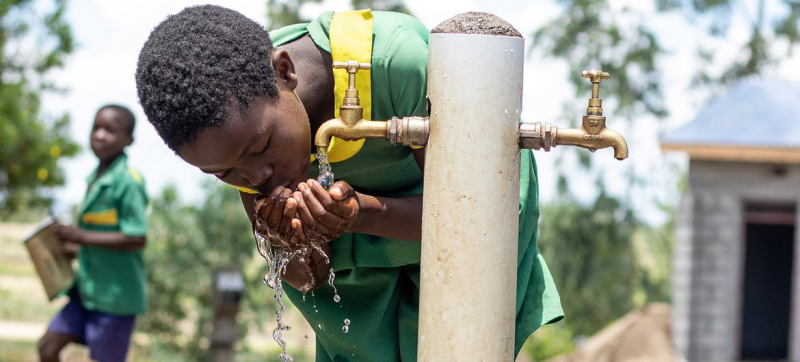

Four billion people experience severe water shortages for at least one month of the year. The world is entering an “era of global water bankruptcy” Climate and Environment
Against a backdrop of chronic groundwater depletion, over-allocation of water resources, land and soil degradation, deforestation and environmental pollution, the United Nations University today released a report declaring an “era of global water bankruptcy” and calling on world leaders to adapt to the new reality based on scientific evidence.
Irreversible loss of water capital
The report’s authors note that terms such as “water stress” and “water crisis” no longer reflect what is happening in many regions of the world. We are talking about a post-crisis state characterized by the irreversible loss of natural water capital.
“This report speaks to an inconvenient truth: many regions are living beyond their hydrological capacity, and many key water systems are already bankrupt,” said the report’s lead author Kaveh Madani, director of the UN University Institute for Water, Environment and Health.
Many countries have not only used up their water resources, including river water, soil water, and snow reserves, but have also depleted long-term water reserves such as glaciers and swamps.
This has led to a range of severe impacts, including land subsidence in river deltas and coastal cities, disappearance of lakes and wetlands, and irreversible loss of biodiversity.
Water conference and international cooperation
The report is published ahead of a high-level meeting in Dakar, Senegal, which will take place on January 26-27 and will focus on preparations for the 2026 UN Water Conference. The conference will take place on December 2-4, 2026 in the United Arab Emirates.
While not every river basin and not every country is in a state of water bankruptcy, Madani emphasized, many critical water systems around the world have already crossed this threshold.
“These systems are interconnected through trade, migration, climate feedbacks and geopolitical dependencies, so the global risk landscape has now fundamentally changed,” he noted and emphasized the need for international cooperation in this area.
“Hot spots”
As the authors of the report note, a very difficult situation is developing in the Middle East and North Africa: lack of water resources, climatic shocks, low agricultural productivity, sandstorms.
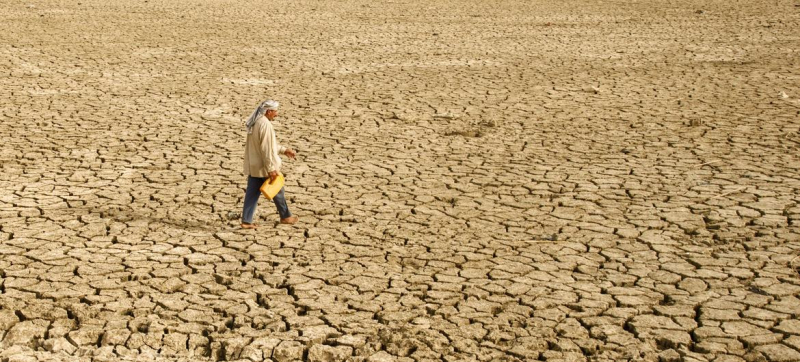
Climate change and associated heat and droughts are exacerbating the problem of water scarcity.
In several regions of South Asia, agricultural activities associated with the intensive use of groundwater and urbanization have led to a chronic decline in groundwater levels and local subsidence.
In the southwestern United States, the Colorado River has become a symbol of the water crisis caused by overuse of water resources, climate change and resulting droughts.
“Water bankruptcy” by the numbers
Drawing on global data and recent scientific research, the report provides a stark picture of trends, the vast majority of which are caused by human activity:
- 50 percent of the world’s large lakes have lost some amount of water since the early 1990s;
- the area of natural wetlands lost over the past 50 years amounted to 410 million hectares (an area comparable in size to the European Union);
- more than 30 percent of global glacier mass has been lost since 1970; entire mountain systems in low and middle latitudes may completely lose functional glaciers in the coming decades;
- dozens of large rivers no longer reach the sea at certain times of the year;
- 4 billion people experience severe water shortages for at least one month of the year;
- 3 billion people live in areas where overall water supplies are declining, and more than 50 percent of the world’s food is produced in these same regions;
- 1.8 billion people were living in drought conditions in 2022–23.
A new diagnosis for a new era
Water bankruptcy is a global phenomenon, the report’s authors emphasize.
“Agriculture consumes the vast majority of freshwater, and food systems are closely linked through trade and prices,” Madani explained.
“When water shortages disrupt agriculture in one region, the consequences reverberate through global markets, political stability and food security in others,” he added.
Call for a “reset” of the global water agenda
The report emphasizes that water bankruptcy is not only a hydrological problem, but and an equity issue with deep social and political implications that requires attention at the highest levels of government and multi-stakeholder cooperation.
“We can’t restore lost glaciers… But we can prevent further loss of remaining natural capital and rebuild institutions to live in new conditions,” Madani said.
Upcoming events, including the 2026 UN Water Conference, provide opportunities to implement this agenda.
The report published today is a call for transformation.
“By acknowledging the reality of water bankruptcy, we can finally make tough decisions that protect people, economies and ecosystems. The longer we delay, the deeper the [water] shortage becomes,” Madani said.