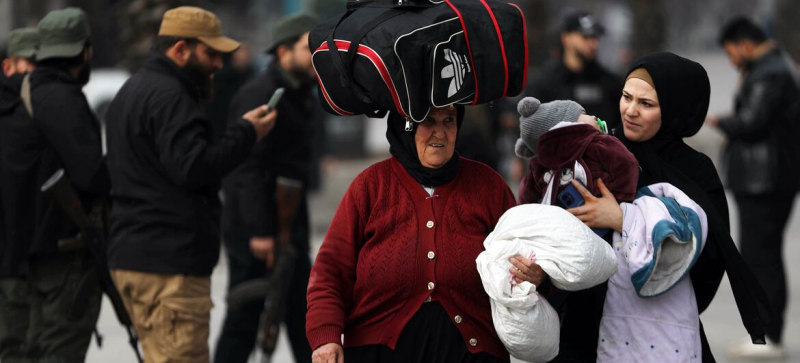

People are being evacuated from Aleppo, Syria, amid escalating fighting. Syria: New clashes and ISIS prison escapes threaten the safety of civilians Peace and security
The UN continues to closely monitor developments in northeast Syria following clashes between government forces and the Kurdish Syrian Democratic Forces (SDF) coalition, during which dozens of ISIS fighters have reportedly escaped from prison.
Secretary-General Antonio Guterres is watching the ongoing violence “with great concern,” Farhan Haq, deputy spokesman for the UN chief, said at a briefing in New York on Tuesday.
The Secretary General called on the parties to fully comply with international law and ensure the protection of civilians, emphasizing the need for reliable protection of places of detention.
He also strongly recommended that the parties continue the dialogue, act in good faith and work together to implement all agreements reached.
The situation of civilians
The UN Office for Human Rights (OHCHR) expressed “We are concerned about reports of renewed fighting between the Syrian army and the SDF, despite the January 18 ceasefire agreement,” OHCHR spokeswoman Ravina Shamdasani told reporters in Geneva.
Rolando Gomez, a spokesman for the UN Information Service in Geneva, described the overall situation as “alarming, especially given the damage to critical infrastructure.” He expressed concern about the situation of families unable to leave combat zones, as well as those who have been forced to leave their homes in recent days.
A fragile transition period
Syria remains on an extremely fragile path of political transition after the fall of the regime Bashar al-Assad in December 2024 and almost 14 years of civil war.
The transitional government is regaining control over areas in the northeast of the country previously under the control of Kurdish forces. Fighting was recorded in the provinces of Aleppo, Raqqa, Deir ez-Zor and Al-Hasakah.
Syria’s Permanent Representative to the UN, Ibrahim Olabi, told reporters in New York that the government and the SDF had reached a “common understanding” on a number of issues regarding the future of Hasakah province.
According to him, the SDF was given “a four-day period to conduct internal consultations and prepare a detailed plan for practical mechanisms for integrating the region.” Syrian troops, he noted, will not enter the cities of Al-Hasakah and Al-Qamishli and will remain on their outskirts until the plan is finalized.
Camps and prisons
There are several prisons in northeastern Syria that house thousands of ISIS (Daesh) fighters. Previously, this terrorist group controlled large areas of Syria and Iraq, committing mass executions, rape, forced recruitment and other serious crimes.
Tens of thousands of civilians, mostly women and children, suspected of links to militants, are being held in separate camps, including the notorious Al-Hol camp, home to more than 30,000 people.
Ceasefire and new clashes
The ceasefire agreement of January 18 was reached after several weeks of fierce fighting. It provides for the transfer of control over areas under SDF control to the authorities and the integration of SDF forces into the national army.
However, the very next day after the truce was announced, hostilities resumed. According to media reports, about 120 ISIS militants escaped from a prison in the city of Al-Shaddadi, although most of them were subsequently detained.
Shamdasani recalled that OHCHR has repeatedly emphasized that any integration of armed forces, including SDF, into Syrian government structures “must be carried out within the framework of an appropriate vetting process from a human rights perspective to ensure that persons involved in violations or abuses are not included in these structures.”
Humanitarian assistance
Meanwhile, humanitarian organizations continue to provide assistance in the four affected provinces, including providing emergency medical and psychosocial services, as well as water and sanitation support, the UN Office for the Coordination of Humanitarian Affairs (OCHA) said.
In the city of Deir ez-Zor, government services have been suspended and key transport routes have been temporarily closed, depriving civilians of access to health and education services. In Raqqa, damage to critical infrastructure has limited movement between city districts and disrupted the main water supply system.
According to OCHA, people continue to leave the cities of Raqqa and Tabqa, as well as the village of Taurus, heading towards Hasakah and Qamishli. However, hundreds of families are still unable to leave Tabqa and are taking refuge in public buildings.
A needs assessment of the population is currently underway, while humanitarian organizations continue to call for sustainable and safe access to those affected.