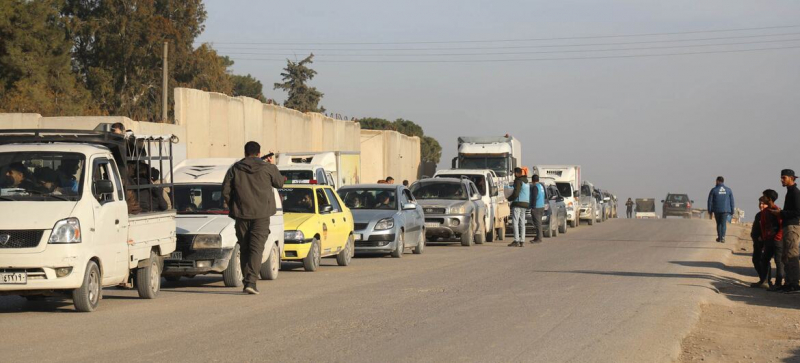

Aleppo residents are leaving the city in droves after the security situation worsens. Syria at a turning point: escalation in the northeast, fragile truce and humanitarian challenges Peace and security
At the UN Security Council meeting on Thursday, two key speeches were made on the political and humanitarian aspects of the current situation in Syria. In the second year since the fall of the Assad regime, the country faces serious military turmoil and a massive humanitarian crisis that threaten to undermine the fragile gains of recent months.
Since the beginning of the year, the situation in the northern and northeastern regions of Syria has sharply worsened. According to UN Assistant Secretary-General Khaled Khiari, negotiations between the government and the Syrian Democratic Forces (SDF), the core of which are Kurdish forces, again reached a deadlock on January 4, after which fierce fighting broke out in Aleppo. The clashes, which lasted several days, led to a mass exodus of civilians: tens of thousands of Syrians were forced to flee their homes, dozens were killed, and hundreds were injured. As a result, the SDF forces retreated across the Euphrates River, and on January 17, government forces occupied large areas previously controlled by Kurdish forces.
Broken negotiations
The efforts of international mediators led to the announcement of the signing of a “Ceasefire and Full Integration Agreement,” but the very next day the negotiations broke down and fighting resumed. Only on January 20 did the parties announce that they had reached “mutual understanding” and organized a four-day pause for consultations. Despite this, the situation remains extremely tense – local clashes continue.
Hard winter
A report on the humanitarian situation in Syria, presented by the Director of Operations of the UN Office for the Coordination of Humanitarian Affairs (OCHA), Edem Wosornu, added alarming statistics to the political picture. In the city of Raqqa alone, more than 13 thousand people have been forced to leave their homes in recent weeks. In Aleppo, Hasak and Deir ez-Zor, infrastructure and communication lines have been destroyed, hospitals are closed, children cannot attend school. The situation is aggravated by winter cold: in the camps of internally displaced persons in the north of the country, where about 160 thousand people are concentrated, shelters have been destroyed and children have died from the cold. At the same time, the country’s humanitarian support programs are funded only by a quarter of what is needed.
Political transformation
Despite the existing problems, the speakers noted important steps towards the political transformation of Syria. Over the past year, almost three million refugees and internally displaced persons have returned to their homes. New institutions are being formed – the People’s Assembly, the Constitutional Committee, the Constitutional Court. The government is taking steps in the areas of justice and the fight against impunity, although Syrian society expects more. Separately, a decree on the linguistic, cultural and civil rights of the Kurds was noted – a step that could become the basis for deeper national reconciliation. ISIS continues to pose a real threat to the stabilization of the situation in Syria, especially against the backdrop of chaos in the northeast of the country. In Suwayda, armed clashes and tensions continue among the Druze community. Israeli operations in the south of the country violate Syrian sovereignty. Uncleared mines are one of the main causes of death and injury to civilians.
There is hope, but people need peace
The speakers believe that the stabilization of Syria depends on several key factors. First of all, a sustainable ceasefire and the resumption of political dialogue are necessary, since without this any achievements will eventually fade away. Equally important is the significant increase in humanitarian and recovery funding: in 2025, only a third of the required funds were received, leaving UN humanitarian agencies unable to help ten million people in need. Finally, active diplomacy and international support for the transition are required. Eden Vosornu concluded her presentation with the story of an Aleppo resident who lost her small business in recent fighting. This woman said: “We have been through a lot and are very tired. All we want is peace and security.” According to Vosornu, this phrase reflects the general mood of millions of Syrians: there is hope, but people need peace, and the country as a whole needs the political will of its leaders and financial support from the international community.