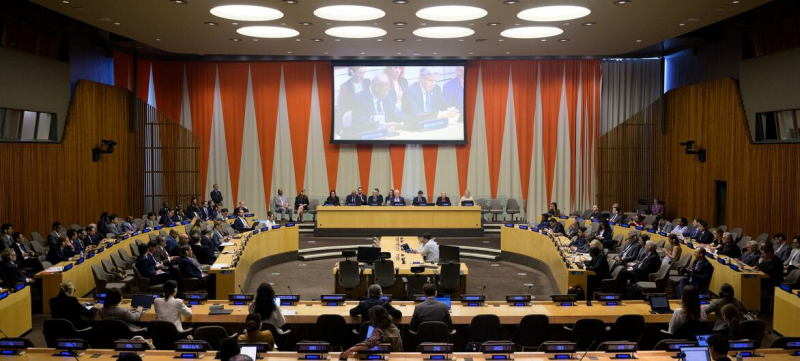

Economic and Social Council Hall. Economic and Social Council: 80 years at the center of global development UN
From humanitarian crises and youth unemployment to climate resilience and financing for development, many of the key global issues of our time are on the agenda of one United Nations entity that celebrates its 80th anniversary this year.
Created in 1945, the Economic and Social Council (ECOSOC) is dedicated to ensuring that peace and security are based on economic stability, social progress and international cooperation.
Eight decades after its first meeting in London in early 1946, ECOSOC remains a vital – although often under-the-radar – driver of the UN’s work on sustainable development.
“The Council’s mandate has been rich and increasingly complex every year: to advance common solutions to the world’s most pressing economic, social and environmental challenges,” said UN Secretary-General António Guterres at an event at UN Headquarters to mark the Council’s 80th anniversary.
“However, for eight decades, ECOSOC has been the engine of progress,” he added.
Wide field of activity
ECOSOC is the United Nations’ primary forum for dialogue on global economic, social and environmental policies. It brings together Member States, UN specialized agencies and their partners to discuss priorities, share data and agree on collective action.
The Council’s responsibilities include coordinating the work of regional economic and social commissions, expert bodies, and UN funds and programs that provide development assistance and make policy recommendations that directly affect people’s daily lives.
For those unfamiliar with the UN system, the hallmark of ECOSOC is its practical influence. It helps shape how the UN responds to natural disasters, supports countries recovering from crises, and harmonizes international efforts to reduce poverty, create jobs and protect the environment.
The Council is also responsible for monitoring the implementation of the decisions of major UN conferences and summits, helping to ensure that the commitments made by countries are fulfilled.
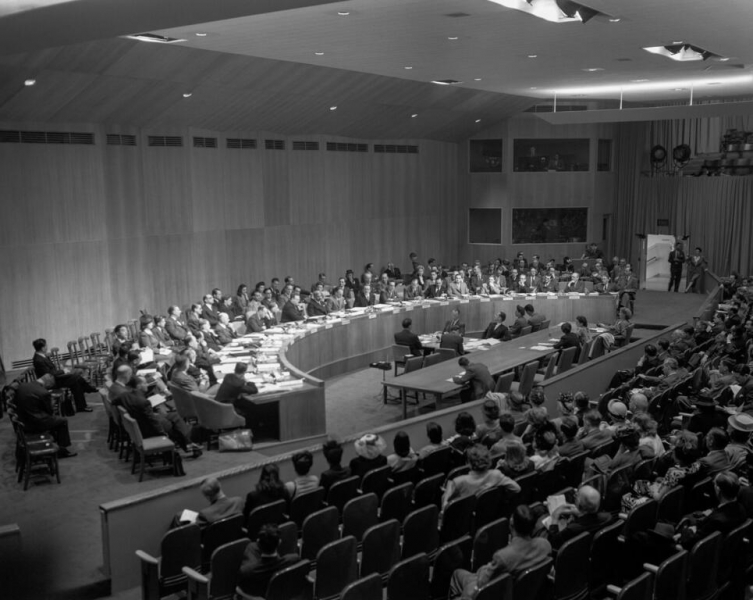
Delegates to the second session of ECOSOC in May 1946.
The Council evolves with a changing world
Over time, ECOSOC has evolved in accordance with changes in the global environment. Its membership has expanded from 18 countries at its founding to 54 today. Council members are elected by the General Assembly for three-year terms.
General Assembly reforms over the past decade have strengthened ECOSOC’s coordinating role within the UN system, enhancing its ability to identify new issues, encourage innovation and integrate the economic, social and environmental dimensions of development.
“It [the Council] has adapted to a changing world by expanding its membership, strengthening its mandate and reforming the UN development system,” Guterres emphasized.
Implementation of the Sustainable Development Goals
A key focus of ECOSOC’s current work cycle is the implementation of the 2030 Agenda for Sustainable Development, the UN’s global plan to end poverty, protect the planet and promote shared prosperity.
ECOSOC provides political leadership and oversight of this agenda through its annual program of work, bringing together ministers, senior officials, civil society leaders, academics and private sector representatives around shared priorities.
“ECOSOC plays a central role in advancing the 2030 Agenda for Sustainable Development – our shared roadmap towards a more peaceful, just and inclusive world,” said UN General Assembly President Annalena Baerbock at the 80th anniversary event Council.
Still relevant
Celebrating its 80th anniversary on January 23, 2026, ECOSOC remains unchanged its core mission – promote cooperation for the sake of common economic and social progress.
In a world facing multiple crises – from climate change and inequality to humanitarian emergencies – the Council’s behind-the-scenes work continues to shape how the international community responds to these challenges.
“Today’s event is not only an occasion to reflect on eight decades of progress, but also a reminder of the work that is not yet completed,” said Annalena Burbock.