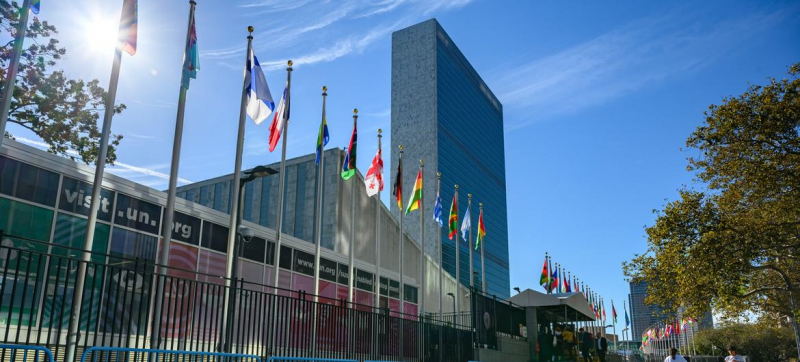

UN headquarters in New York. UN Secretary General: Peace is impossible without the rule of international law UN
Secretary-General António Guterres, speaking on Monday at the UN Security Council’s open debate on strengthening the international rule of law, said that peace, justice and effective multilateralism depend directly on states’ compliance with their obligations under the UN Charter and international law.
He recalled that the principle of the rule of law underlies the entire international security system created after the Second World War.
According to the head of the UN, for 80 years, international law has helped humanity avoid a new world war and mitigate the consequences of many regional conflicts. This system, he emphasized, is mandatory for all states and is based on respect for the sovereignty, territorial integrity and political independence of countries.
Flagrant violations
The Secretary General recalled that in 2024, UN member states adopted the Pact for the Future, confirming their commitment to international law. However, today, he warned, the situation is rapidly deteriorating.
“Around the world, the rule of law is being replaced by the law of the jungle,” Guterres said.
He pointed to “flagrant violations of international law and brazen disregard for the UN Charter” – from the unlawful use of force and attacks on civilian infrastructure to the denial of life-saving humanitarian aid. Such actions, he said, create dangerous precedents and undermine trust between states.
“From Gaza to Ukraine, from the Sahel to Myanmar, in Venezuela and other countries, international law is increasingly being treated like a menu, choosing only what is convenient,” the UN chief noted.
Responsibility of members of the UN Security Council
Guterres emphasized the special role of the Security Council, calling it the only body empowered by the UN Charter to make decisions binding on all states on issues of peace and security. That is why, he noted, reform of the Security Council is necessary to increase its representativeness and effectiveness.
The Secretary General identified three key areas of action.
First, all states must fulfill their obligations: “The purposes and principles of the Charter of the United Nations are not optional.”
Secondly, he called for more active use of the mechanisms for the peaceful settlement of disputes provided for in the UN Charter – negotiations, mediation, arbitration – and strengthening cooperation with regional organizations to prevent conflicts. Peace, he added, is impossible without investment in development, the fight against poverty, inequality and corruption.
Third, Guterres emphasized the importance of independent justice and accountability. He called on states to accept the compulsory jurisdiction of the International Court of Justice and to ensure the independent operation of the International Criminal Court.
Concluding his speech, the Secretary General also recalled the role of the members of the UN Security Council, who, in his words, “bear a special responsibility to set an example” in the matter of compliance with the provisions of the Charter UN.