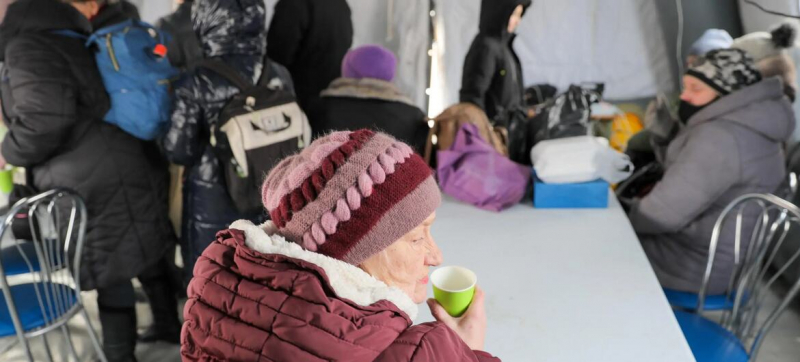

Elderly and disabled people often find themselves locked in their high-rise apartments without electricity or heat, unable to cook a hot meal or charge their devices to stay connected. Warming points and mobile kitchens help Ukrainians survive extreme frosts Victoria Andrievskaya Humanitarian assistance
War-weary residents of Ukraine are now experiencing the coldest winter since 2014. Local authorities and humanitarian organizations are joining forces to protect the population, especially the most vulnerable, in conditions where temperatures sometimes drop to -20 Celsius.
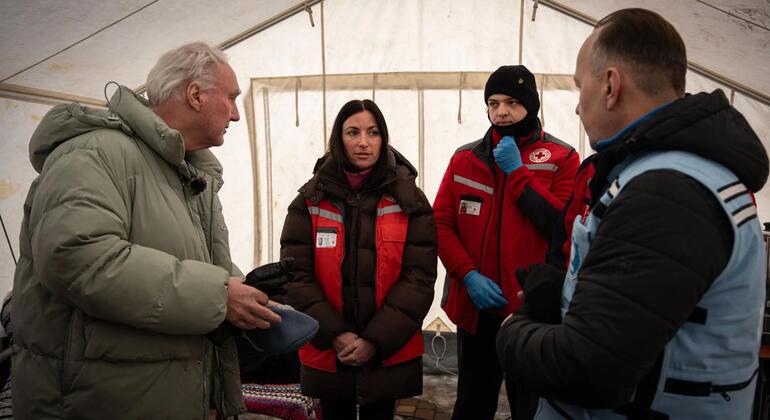
Starting in 2022, the Ukrainian government began creating so-called “indestructibility points” in large tents and public buildings – schools and libraries – where people can stay warm, charge mobile devices and receive other assistance. The emergency situation this winter led to the creation of additional mobile warming points based on the State Emergency Service and the Ukrainian Red Cross. Humanitarian partners provide them with equipment, hot meals and technical assistance. In January, a team from the UN Office for the Coordination of Humanitarian Affairs (OCHA), led by Matthias Schmale, UN Humanitarian Coordinator for Ukraine, visited several warming centers and mobile kitchens in Boryspil, a city in the Kyiv region. They met with local residents, rescuers, representatives of authorities and humanitarian organizations.
“We came to warm up”
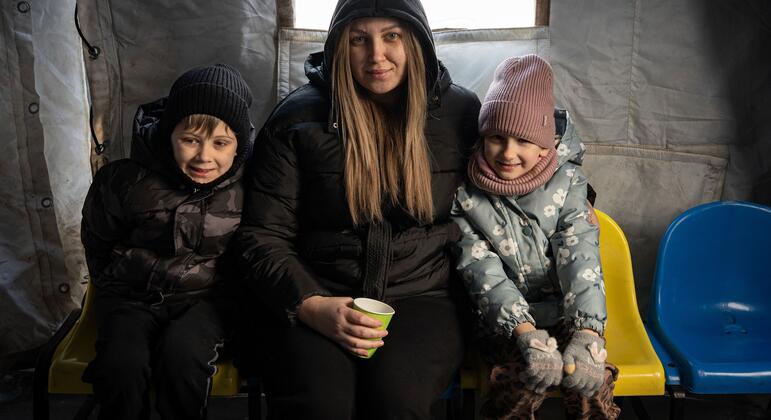
The team, which included the head of the Ukrainian office of OCHA Andrea De Domenico, visited one of the “points of invincibility.” “This winter has been very difficult for us,” said Ekaterina, a mother of two small children from the outskirts of Boryspil. – We don’t have electricity at home. We came here to stay warm and charge our children’s phones and mobile devices. It was very cold in the house.”
Coordinated support
A few steps from the tent is a large mobile kitchen – a food truck operated by the non-governmental organization Food Without Borders. It prepares hot meals for people suffering from cold and power outages. “This is one of many wonderful initiatives supporting people throughout Ukraine during this harsh winter,” said Matthias Schmale. “As attacks on energy infrastructure continue, many are facing prolonged outages of electricity, heating and water, as well as limited ability to prepare hot meals. I am deeply impressed by the determination of local communities, civil society and authorities to work together to support those affected.” Many shopping centers, food establishments and gas stations also function as places of warmth and support. Similar assistance is being provided in other regions of Ukraine, where fighting has disrupted basic services amid harsh winter conditions. The UN Humanitarian Coordinator visited another warming center set up in Boryspil by the Ukrainian Red Cross. Volunteer Victor told him about the difficult conditions people face due to long power outages. “In some apartments the temperature now drops to five degrees,” he said. “People spend many hours in our warm tent, especially in the evening when it gets even colder.”
Winter Response Plan
In parallel, aid workers are implementing activities under the Winter Response Plan, launched in 2025 to provide winter assistance to 1.7 million of the most vulnerable people across Ukraine between October 2025 and March 2026. The rapidly changing situation – including large-scale and sustained attacks on energy infrastructure – is causing service disruptions. The scale of the problems far exceeds the scenarios predicted in the Plan. Elderly people and people with disabilities often find themselves locked in their high-rise apartments without electricity or heating, unable to prepare a hot meal or charge their devices to stay connected. It’s also hard for families with children. In January, the UN and partners unveiled a response plan for 2026 that calls for $2.3 million to help 4.1 million of Ukraine’s most vulnerable people. For families like Ekaterina’s in Boryspil, being in a warm place, getting a hot meal and charging their phone helps them cope with serious risks to their physical and mental health.