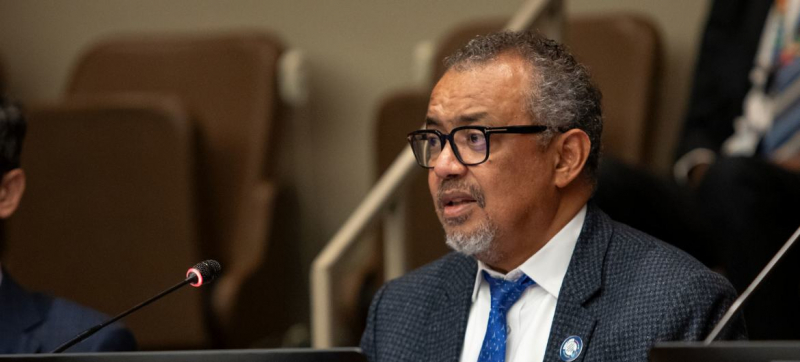

Head of the World Health Organization (WHO) Tedros Adhanom Ghebreyesus. Photo from the archive The head of WHO talks about the financial situation: “The past year was one of the most difficult in the history of the organization” Healthcare
In light of the sharp decline in financial revenues, the World Health Organization (WHO) is forced to review its work to properly prioritize and maintain core programs. In particular, WHO merged a number of departments, halved the senior management team at headquarters and almost halved the number of directors.
WHO Director-General Tedros Adhanom Ghebreyesus announced this on Wednesday, speaking at a meeting of the budget committee of the organization’s Executive Board. “Over the past 12 months, we have gone through a painful but necessary process of prioritization and refocusing,” he said.
Due to the financial deficit, the budget for 2026-2027 had to be revised several times. Ghebreyesus said the process had maintained gender balance and a regional presence, and WHO’s global team was now “a little younger than before.”
He recalled that the reform process began back in 2017–2018, and at that time “WHO’s excessive dependence on several donors was revealed.” The organization has taken a number of measures to eliminate existing risks.
“We proposed – and in 2022 the World Health Assembly approved – a plan to gradually increase assessed contributions to 50 percent of the base budget, from just 14 percent at that time,” the speaker noted. In addition, he said, the WHO Foundation was created to expand the donor base.
Without these measures, WHO is estimated to have had to lay off approximately 3,000 staff. Instead, 1,241 people left the organization, of which 1,162 employees retired or were about to retire.
However, the financial problems are not over. The measures taken made it possible to provide 85 percent of the budget for the current and next years, but finding the remaining 15 percent, according to the head of the organization, will not be easy: we are talking about an amount of $660 million. In this regard, the head of WHO called on donors to provide the necessary funding.