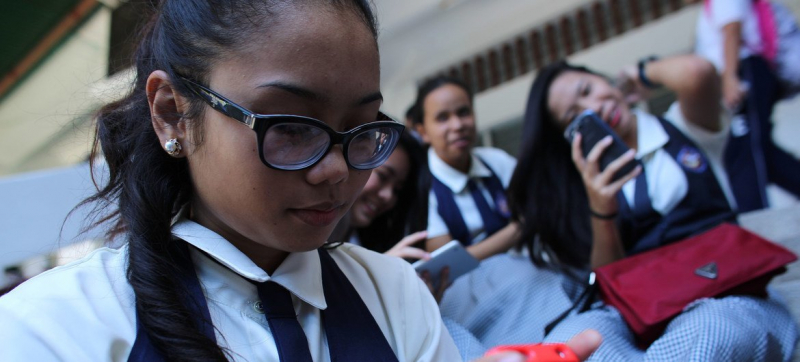

Social media has a huge impact on children’s lives. From deepfakes to grooming: UN warns of growing AI threats to children Human rights
Huge volumes of malicious content created with the help of artificial intelligence are being distributed online. In this regard, UN agencies issued an urgent call to take a set of measures to protect children from violence, exploitation and psychological trauma.
Cosmas Zavazava, director of the Telecommunication Development Bureau of the International Telecommunication Union (ITU), one of the agencies that produced the joint statement of recommendations and guidelines, spoke about the wide range of threats facing children. We are talking about grooming, deepfakes, the introduction of malicious functions into digital services, cyberbullying and access to inappropriate content.
“During the COVID-19 pandemic, we have seen that many children, especially girls and young women, have been subjected to online violence, and in many cases this has resulted in physical harm,” he said.
Organizations working in the field of child protection report that attackers can use AI to analyze a child’s behavior on the Internet, his emotional state and interests, in order to more accurately build a strategy of involvement and manipulation.
AI is also allowing criminals to create fake images of real children, which has led to the emergence of a new form of sexual extortion.
According to a 2025 report by the independent Childlight Institute for Global Child Safety, in the United States, the number of cases of child sexual abuse committed using technology increased from 4,700 in 2023 to more than 67,000 in 2024.
Australia sets the tone
At the end of 2025, Australia became the first country in the world to ban children under 16 from having accounts on social networks, based on because the risks of such content significantly outweigh the potential benefits.

The government cited its own research showing that almost two thirds of children aged 10 to 15 had been exposed to cruel, violent or traumatic content, and more than half had been cyberbullied. Much of this content was distributed through social networks.
A number of other countries, including Malaysia, the UK, France and Canada, are also preparing similar restrictions or legislative measures. Thus, according to media reports, the French National Assembly this week adopted in the first reading a bill that prohibits children under 15 years of age from using social networks. The document will then be sent for consideration to the Senate.
Lack of knowledge about AI
At the beginning of 2026, a number of UN agencies involved in child protection issues signed the Joint Statement on Artificial Intelligence and rights of the child. The document directly speaks of serious risks – and that society is not yet ready to cope with them.
The statement highlights the low level of knowledge about AI among children, teachers, parents and guardians, as well as the lack of technical training among government agencies in regulating AI, protecting data and assessing the impact of technology on children’s rights.
Responsibility of technology companies
Special attention is paid to the role of technology giants. The statement notes that most AI-based tools – along with their underlying models, methods and systems – are currently being developed without taking children and their well-being into account.
“We are really concerned and want the private sector to be involved, an active participant and part of the overall story that we are writing with other UN agencies and partners who believe that technology can be a tool for development, but it can also lead to harm,” Zavazawa said.
At the same time, he expressed confidence that companies are ready to make their products safer: “At first we felt that they were afraid of stifling innovation, but our message is very clear: if you use AI responsibly, you can make a profit, run a business and maintain market share.”
“The private sector is our partner, but we have a responsibility to sound the alarm when we see that technology can lead to undesirable consequences,” the ITU representative added.
The issue of children’s rights
This is not the first time such risks have been drawn attention from a human rights perspective: in 2021, the Convention on Rights new provisions have been added to reflect the challenges of the digital age.
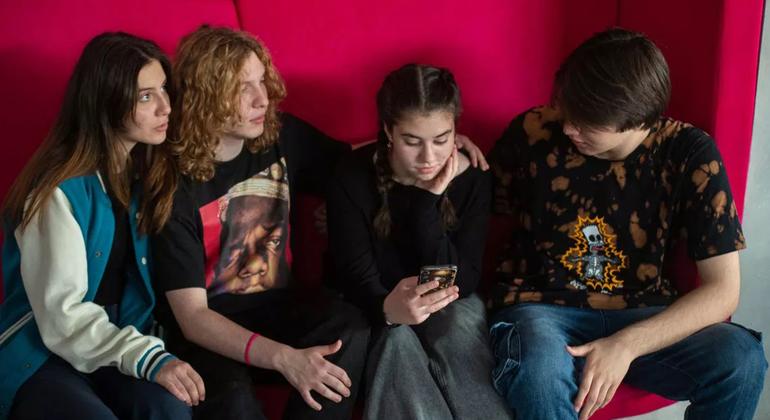
However, according to UN agencies, countries need more practical guidance for effective regulation, and a detailed list of recommendations has been prepared in this regard.
“Children are going online at an increasingly younger age, and they need to be protected,” Zavazawa emphasized. “That is why we have developed recommendations for protecting children on the Internet. The first part is addressed to parents, the second to teachers, the third to regulators, and the fourth to industry and the private sector.”
Key recommendations
- States should strengthen AI regulatory systems to protect rights child.
- International organizations are encouraged to consider children’s rights in all AI-related policies and policies.
- Governments and companies must ensure AI systems are transparent, accountable, and secure.
- States need to prevent and combat violence and exploitation of children perpetrated or amplified by AI.
- More robust, child-friendly data protection mechanisms are required.
- Decisions made using AI must take into account the best interests and holistic development of each child.
- AI must be inclusive and free of bias so that all children can benefit equally from technology.
- The views and experiences of children themselves must be taken into account when developing AI policies and systems.
- AI development should promote environmental sustainability and minimize long-term harm to future generations.