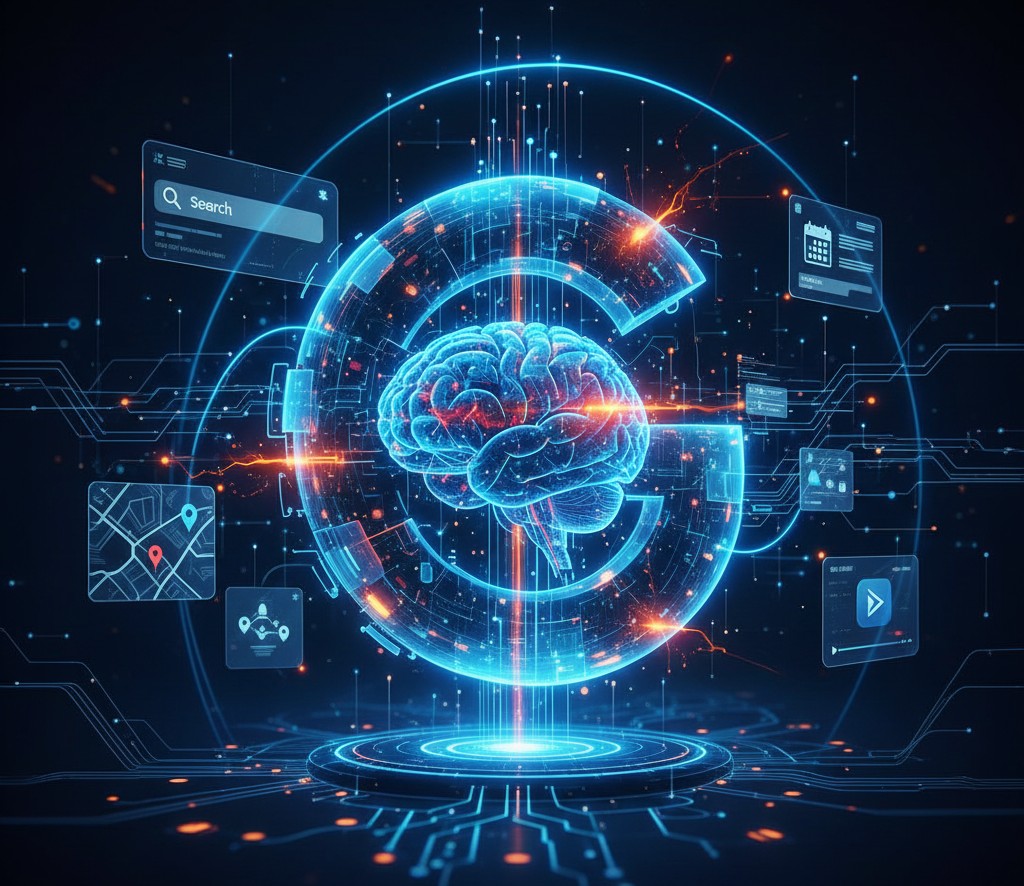
Google has announced a broad rollout of new artificial intelligence features across its core products, marking another step in the company’s strategy to embed AI more deeply into everyday digital experiences. The updates affect several widely used services, including Search, Workspace tools, and Android, with a focus on automation, personalization, and improved efficiency.
The announcement highlights Google’s ongoing effort to integrate AI not as a standalone feature, but as a foundational layer across its ecosystem.
What Happened
Google confirmed that it is introducing a new set of AI-powered capabilities across multiple products, expanding on existing machine learning systems already in use. The changes are designed to help users complete tasks faster, surface more relevant information, and reduce manual effort.
The rollout is being implemented gradually, with some features already available to select users and others expected to launch more broadly throughout 2026.
Key Details and Features
One of the most notable updates affects Google Search. AI-driven enhancements are being used to better understand user intent, summarize complex information, and provide more contextual responses. These improvements aim to make search results more precise while reducing the time users spend navigating multiple pages.
In Google Workspace, new AI features are focused on productivity. Tools such as Docs, Gmail, and Sheets now include expanded assistance for writing, summarizing, and organizing content. Google says these updates are intended to support everyday workflows rather than replace user input.
Android is also receiving AI-based improvements, particularly in system-level functions. These include smarter notifications, adaptive performance management, and enhanced privacy controls powered by on-device intelligence.
Across all products, Google emphasizes that AI features are designed to work in the background, improving usability without disrupting familiar interfaces.
Why It Matters
The expansion of AI across Google’s core products reflects a shift in how major technology companies approach artificial intelligence. Instead of offering isolated AI tools, Google is embedding these capabilities directly into services used by billions of people.
For users, this means more personalized and efficient experiences, but it also raises questions about data usage and transparency. Google has stated that privacy safeguards remain a priority, with many AI processes handled directly on devices rather than in the cloud.
From an industry perspective, the move underscores the increasing importance of AI as a competitive differentiator among large technology platforms.
What to Expect Next
Google is expected to continue refining these features based on user feedback and real-world performance. Additional updates may include deeper AI integration in Search results, more advanced automation in Workspace, and expanded on-device AI capabilities in future Android releases.
Developers and businesses that rely on Google’s ecosystem may also see new tools and APIs designed to leverage these AI enhancements.
As the rollout continues, Google’s approach suggests that AI will play an even larger role in shaping how users interact with digital products in the coming years.
FAQ
Are these AI features available to all users?
Some features are available now, while others are being rolled out gradually throughout 2026.
Do users need to enable these features manually?
Most AI enhancements are integrated automatically, though some options can be adjusted in settings.
How does Google address privacy concerns?
Google states that many AI processes run on-device and follow existing privacy policies.
Will these updates change how Search works?
The core Search experience remains the same, but AI helps improve relevance and context.
Conclusion
Google’s introduction of new AI features across its core products signals a deeper shift toward AI-driven digital experiences. By integrating intelligence directly into everyday tools, the company aims to enhance usability while maintaining familiar workflows. As these changes continue to roll out, they are likely to influence how users interact with technology on a daily basis.