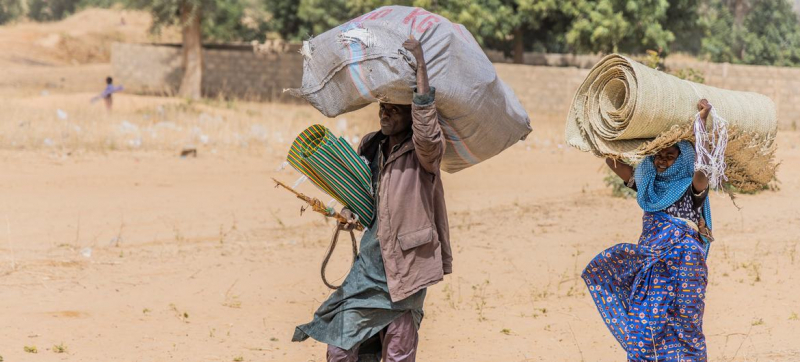

Humanitarian assistance for refugees from Nigeria. Nigeria: Trans-Religious Conflict and Humanitarian Crisis Fabrice Robinet Peace and security
When the United States launched airstrikes against Islamist militants in northern Nigeria last Christmas, officials in Washington said the purpose of the operation was to protect Christians. The strikes have once again focused the world’s attention on persistent sectarian violence in Africa’s largest country by population. Claims that a “genocide of Christians” is taking place in Nigeria have once again begun to be heard.
However UN Coordinator in the country Mohamed Fall stressed that the current crisis goes far beyond any community or specific line of conflict. He said the violence had spread across large swathes of the country, forcing millions of people from their homes and exacerbating one of Africa’s largest – and least publicized – humanitarian emergencies.
“Security remains one of Nigeria’s major challenges,” Fall said in an interview with UN News Service. “It can no longer be pinned down to any one region. This happens almost everywhere.”
Growing conflict
The crisis began in the northeast in 2009 with an uprising that led by the jihadist group Boko Haram, which was later joined by factions such as the Islamic State in West Africa. In nearly two decades, violence has radically changed the face of large swaths of the country.
In the northeast alone, more than two million people remain in a situation of forced displacement. “An entire generation grew up in displaced persons camps, not knowing any other life,” Fall noted.
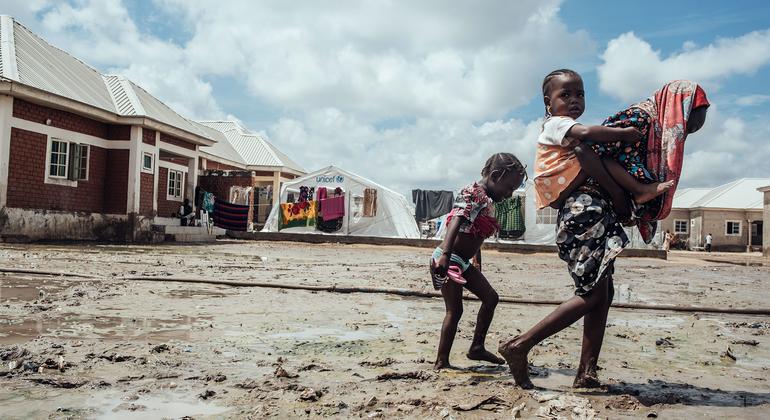
According to him, the human losses are enormous: since the beginning of the uprising, more than 40 thousand people have died, thousands of schools and medical institutions have been destroyed, and vast agricultural lands have become inaccessible. The deeper damage, he added, is economic and social.
“People have been cut off from any economic activity,” Fall said. “They have been deprived of the opportunity to live by their labor and maintain dignity.”
Large-scale violence
What began as a local uprising eventually turned into wider and more disparate violence.
In northwestern Nigeria, in states such as Zamfara, Katsina and Sokoto, armed criminal groups have taken over rural areas and engaged in mass kidnappings and extortion. The UN estimates that around one million people have been forced to flee their homes in the region.
In the central part of the country, clashes between farmers and herders over land, exacerbated by climate change and environmental degradation, have also led to new waves of displacement. In other areas, separatist movements and oil-related attacks are destabilizing the situation.
As a result, Nigeria has about 3.5 million internally displaced people—almost 10 percent of the total number of displaced people in Africa.
Controversial statement
Recent attacks on churches and Christian schools have again attracted international attention. In January, more than 160 worshipers were kidnapped during Sunday services in Kaduna state. Days earlier, attacks on villages in northwestern Nigeria left dozens dead, and students were again attacked near a Catholic school in Papiri.
These events recalled the kidnapping of 276 schoolgirls, most of them Christians, by Boko Haram militants in Chibok in 2014, an episode that sparked global outrage.
Citing the need to protect Christians from Islamist militants, the US administration ordered airstrikes on jihadist positions in northern Nigeria on Christmas Day. Some government officials in Washington said that a “genocide of Christians” was taking place in the country. The UN avoids such formulation.
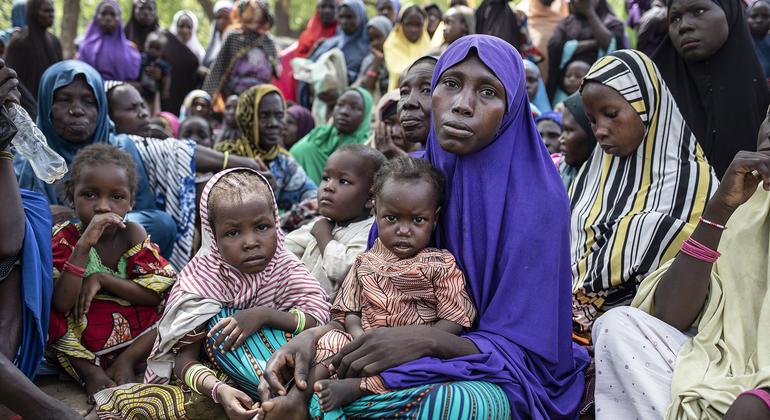
“I would not characterize this violence as the targeted targeting of any one religious group,” Fall said. Most of the more than 40,000 killed in the conflict are Muslims, many of whom were killed while praying in mosques, he said.
He recalled the Christmas Eve attack in Maiduguri— which was the center of the uprising — where the attack occurred “between a mosque and a market” and claimed the lives of Muslims parishioners
“Everyone is at risk, regardless of religion or ethnicity,” a UN official said, warning that simplistic interpretations only deepen social divisions rather than addressing the causes of violence.
Crisis in numbers
Behind the violence lies a massive humanitarian crisis. In the northeastern states alone, according to the UN, 7.2 million people need help, of which almost six million are in an extremely difficult or critical situation.
The main threat was food shortage. Humanitarian groups predict that up to 36 million Nigerians could face varying levels of food insecurity in the coming months. More than 3.5 million children under five are at risk of acute malnutrition.
“The consequences are not just short-term,” Fall noted. “Malnutrition affects cognitive development, education and shapes people’s lives for years to come.”
The crisis is exacerbated by droughts and floods, outbreaks of cholera and meningitis, and a weak health care system.
Help reduction
Despite the scale of the crisis, funding has dropped sharply.
“A few years ago, almost $1 billion a year was allocated to implement the humanitarian response plan for Nigeria,” Fall said. – In 2024 – 585 million. Last year, barely 262 million were allocated. This year we are not sure that we will get even 200 million.”
The decline in funding comes as donors’ attention has shifted to other crises.
Test for Africa’s largest economy
The situation in Nigeria shows sharp contrasts: one of Africa’s largest economies is facing humanitarian a crisis more often associated with much poorer countries.
“Nigeria is not Sudan. Not Somalia. Not South Sudan, Fall emphasized. This is a country with resources. The primary responsibility for responding to humanitarian needs lies with the government.”
The UN calls on the federal and regional authorities of Nigeria to take greater responsibility, while appealing to donor states not to forget this crisis.
“Nobody wants to live off foreign aid,” Fall noted. People would rather be able to earn money than remain dependent. Give the fish— ok. “Teaching how to fish is better.”