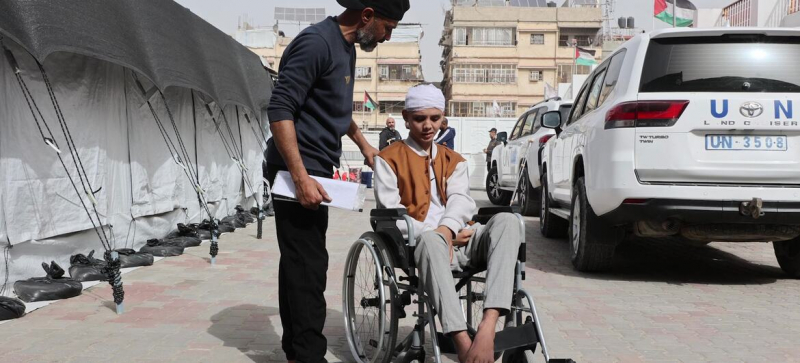

An injured child awaits medical evacuation. Partial opening of the Rafah crossing – the hope and anxiety of Palestinians in Gaza Peace and security
The resumption of operation of the Rafah crossing in the southern Gaza Strip on Monday after more than a year of interruption is causing optimism among many, but the latest outbreak of violence indicates the instability of the situation. This was reported from the United Nations Relief Agency for Palestine Refugees in the Near East (UNRWA).
The only crossing between Gaza and Egypt could become a route to the outside world – including for thousands of seriously ill and wounded Palestinians who require treatment outside the enclave. A fragile ceasefire between Israel and Hamas has been in place in Gaza since October last year. However, reports of violence and airstrikes have continued to come in in recent days.
Contradictory situation
“As we have seen more than once throughout this conflict, now we see contradictory processes: on the one hand, a positive step in the form of an opening Rafah, and in the last 24 hours, 30 Palestinians have been killed in airstrikes during the ceasefire,” UNRWA acting director for Gaza Sam Rose told the BBC.
“At the same time, international organizations that have the capacity, skills and resources to do much-needed work continue to face severe constraints,” he added.
The opening of the crossing, Rose said, “Gazans feel hopeful, but they also have a real, deep fear for the future.”
UNRWA continues to work on the ground, providing vital assistance in times of uncertainty. The agency noted that “access remains limited, risks to public safety remain,” and people still desperately need external support.
Restricted movement
The opening of the Rafah checkpoint was one of the key points of the peace plan proposed last September by US President Donald Trump. So far, Israel is allowing 50 Palestinians a day to cross the crossing – and only on foot, international agencies report.
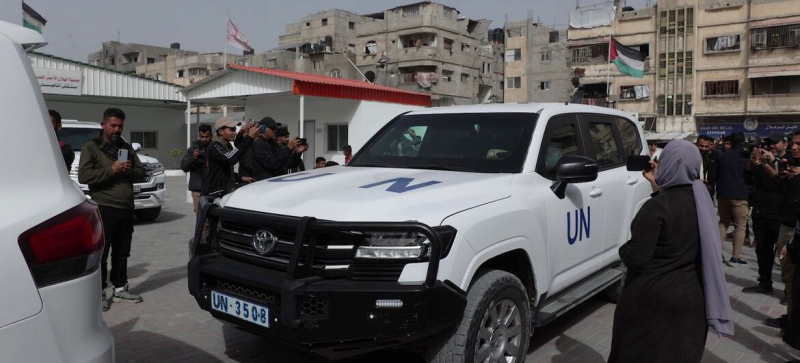
The World Health Organization (WHO) supports medical evacuations from Gaza.
The work of Rafah will be coordinated with Egypt and under the supervision of the European Union, the UN Office for the Coordination of Humanitarian Affairs (OCHA) said. Only residents who fled Gaza during the war will be able to return, after receiving prior permission from Israeli security services, passing EU checks at Rafah and a second stage of identification in a special corridor controlled by the Israeli army.
Support for returnees
OCHA welcomed the opening of a key border crossing, stressing that “civilians must be able to leave the enclave and return to it voluntarily and in safe conditions, as required by international law.”
The UN sent a preliminary mission over the weekend to assess the condition of the roads. The United Nations Development Program (UNDP) will provide buses to transport returnees from the internal control point to Nasser Hospital in Khan Younis, where several UN agencies and partner NGOs have set up a reception center. Psychologists and public protection specialists work there, food, information materials and Internet access are provided.
Medical evacuation
On Monday, with the support of the World Health Organization (WHO), a medical evacuation from Gaza took place. Some patients and their accompanying persons were able to travel directly to Egypt, while others proceeded through the Israeli-controlled Kerem Shalom crossing.
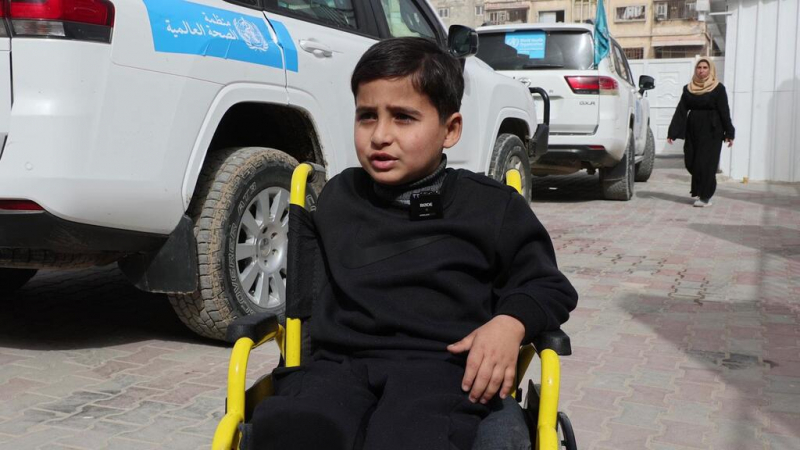
A boy in a wheelchair is waiting for a referral for treatment.
According to Palestinian sources, the Israeli authorities approved the departure of only five wounded from a list of 27 people presented to the Egyptian and Israeli sides.
Treatment outside Gaza
Families gathered in the courtyard of Al-Amal Hospital in southern Gaza to say goodbye to sick relatives traveling to Egypt for further treatment. A UN News Service correspondent watched as the buses were prepared to depart.
A boy named Yusef Awad, who uses a wheelchair, hopes that after treatment he will be able to walk and play again.
“I hope to come back and walk like other children,” he said.
“Speed up the process”
Another injured child, Ahmad Abu al-Khair, sat in a wheelchair next to his father, waiting his turn for medical treatment evacuation. Ahmad’s head was covered with a white bandage and he appeared immobilized.
“We hope that the decision makers and the World Health Organization will speed up the process and help send my son Ahmad for treatment, because every hour here is worsening his condition,” his father said.
Thousands continue to wait
Dozens of wounded Palestinians staged a protest outside the hospital, sitting in wheelchairs and demanding an increase in the daily number of exit permits – “to hundreds”, instead of 50.
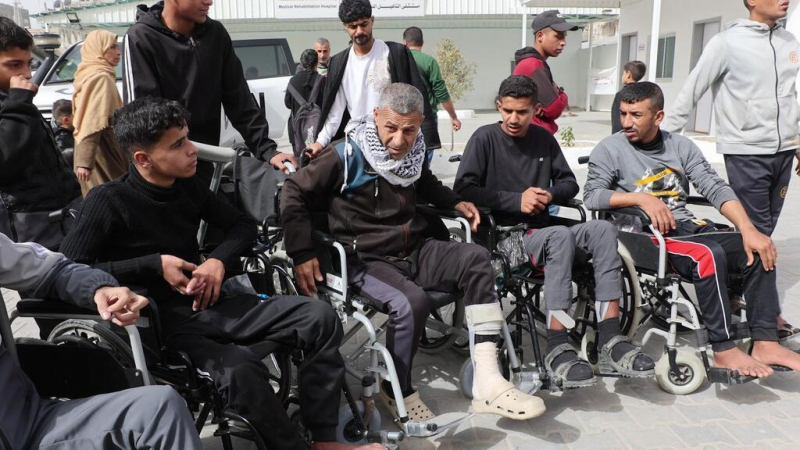
A group of wounded Palestinians are demanding permission to travel abroad for treatment.
“We have been waiting for the crossing to open since the beginning of the war, and like many others, we have had no luck,” said the wounded Farid al-Qassas. – In this building alone, about 100 patients need referral for treatment. We hope that they will hear us and save those who are still alive.”
The last medical evacuation through Rafah took place in May 2024. In total, more than 18,500 patients in Gaza, including 4,000 children, are still waiting to receive treatment abroad.
“The most effective solution would be to resume referrals for treatment to the West Bank, including East Jerusalem, as well as restore damaged medical facilities in Gaza,” OCHA emphasized. Until then, UN member states are encouraged to accept more patients.
Aid delivery
The agency also emphasized that “ultimately, vital humanitarian supplies must arrive in sufficient volumes and with less restrictions through Rafah and other crossings.”
From January 23 to 29, at least 13,800 containers of humanitarian aid delivered by the UN and partners were unloaded at checkpoints. Nearly 60 percent of the cargo was food, and shelter materials, school supplies, medical supplies, fuel and nutritional kits were also delivered.