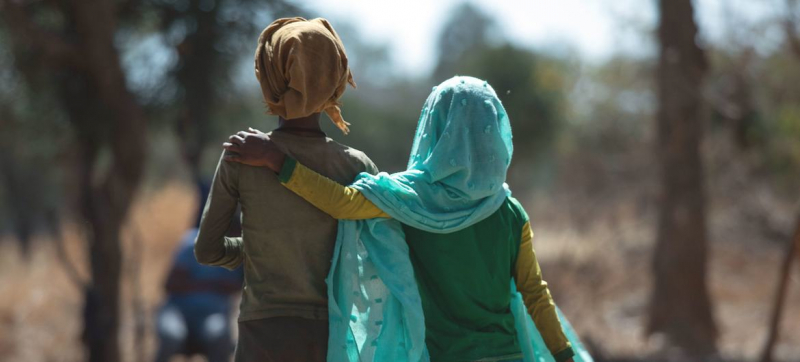

Every dollar invested in the fight against female circumcision brings a tenfold return. Investments in the fight against female genital mutilation have a tenfold return Human rights
Female genital mutilation violates the human rights to life, health and bodily integrity and causes irreparable harm to more than 230 million women and girls worldwide. An additional 23 million girls are at risk of being affected by this practice in the near future.
UN Secretary-General Antonio Guterres recalled this on the International Day of Zero Tolerance towards Female Genital Mutilation.
It is estimated that in 2026 alone, about 4.5 million girls, many of them under the age of five, could suffer from the surgery, which is sometimes called female circumcision.
Serious consequences
“This custom is rooted in the same gender biases that limit girls’ access to education, limit women’s employment opportunities and limit their participation in public life,” the UN chief said in his message. “The world has committed to ending this dangerous practice by 2030.”
The leaders of the United Nations Population Fund (UNFPA), the United Nations Children’s Fund (UNICEF), UN Women, the World Health Organization, UNESCO, and the UN High Commissioner for Human Rights in a joint statement stressed that female genital mutilation cannot be justified under any circumstances.
This practice causes serious harm to the physical and mental health of girls and women, leading to severe lifelong complications, and the annual cost of their treatment is estimated at approximately $1.4 billion.
There is progress, but it is not enough
Efforts to eradicate FGM over the past three decades have begun to bear fruit, the statement said. Almost two-thirds of the population in countries where the practice is common now support its elimination. Since 1990, in countries and areas where female circumcision is practiced, the proportion of girls undergoing the procedure has fallen from one in two to one in three.
However, the UN emphasizes, this is still not enough to achieve the goal of the Sustainable Development Agenda – a complete end to FGM by 2030.
Investments bring huge returns
UN agencies note that effective solutions are well known. These include health education, the involvement of religious and community leaders, parents and health professionals, and the use of traditional and social media. Of particular importance is support for grassroots initiatives, including youth and community networks.
Equally important is assistance to victims – access to medical care, psychosocial support and legal services tailored to the specific context.
According to the UN, every dollar invested in the fight against FGM brings a tenfold return. An investment of $2.8 billion could prevent 20 million cases of female circumcision and generate an economic impact of $28 billion.
Risk of rollback
As 2030 approaches, the achievements of recent decades are under threat. Funding cuts are already limiting prevention and support options for victims.
Of additional concern is the rise of arguments in favor of the so-called “medicalization” of genital mutilation—attempts to justify its performance by medical professionals, ostensibly to reduce harm. The UN emphasizes that such approaches create new obstacles to the complete elimination of the practice.
Without sustainable and predictable funding, community-based programs risk collapsing, primary services weakening and progress lost.
“Achieving net zero will require sustained political commitment – and continued investment,” António Guterres said.
The UN reaffirms its commitment to working with local and international partners – public and private – to end this practice once and for all.