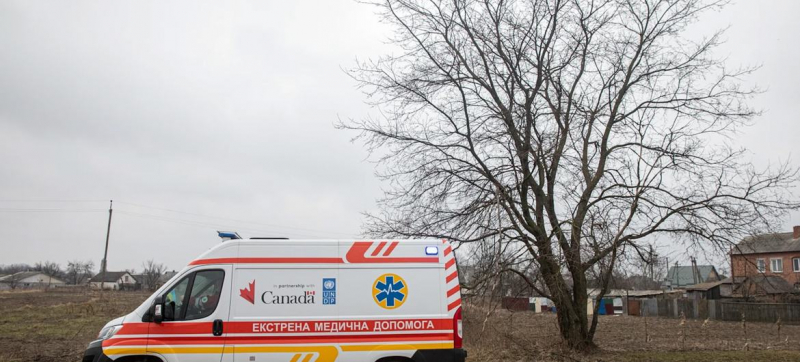

Combat and attacks on civilian infrastructure continue to create critical health care needs across the country. WHO requests $42 million to protect Ukraine’s healthcare system Healthcare
The World Health Organization launched its Humanitarian Appeal for Ukraine 2026, asking for $42 million to provide access to health care for 700,000 people.
The funds are intended to strengthen emergency and trauma care, maintain and restore the primary health care system, increase the readiness of state and local structures, and coordinate the medical evacuation of patients in need of specialized care.
Attacks on healthcare facilities
Due to fighting and attacks on civilian infrastructure, people across the country are in dire need of medical attention. Since the beginning of 2022, WHO has recorded at least 2,841 attacks on healthcare facilities.
Repeated attacks on critical energy infrastructure have severely damaged the power grid, which is increasingly leading to outages in medical facilities. More than 3.5 million people remain internally displaced, increasing pressure on already overstretched services in host areas.
“Our recent estimates show that more than two thirds of Ukrainians report a decline in their health compared to the pre-war period, and mental health problems affect almost half of the population,” said Hans Kluge, WHO Regional Director for Europe. “Ukrainian doctors continue to work in extremely difficult conditions, including areas where their lives are in immediate danger.”
Five key priorities
WHO has identified five key priorities for 2026. First, the organization and its partners will continue to support trauma care and emergency medical services in frontline and affected areas by expanding reserve capacity, ensuring the supply of essential medicines and maintaining continuity of care.
Secondly, access to basic medical care will be ensured in the zone 0-20 km from the front line, where the needs are most acute. Support will focus on primary care, trauma care, non-communicable disease management, mental health and safe referral pathways.
Third, WHO and partners will continue to support integrated health services for internally displaced people and evacuees along displacement routes and in transit centres.
Fourth, the organization will continue to facilitate the safe medical evacuation of wounded and seriously ill patients from front-line areas.
Finally, WHO will continue to coordinate the work of more than 200 humanitarian partners in Ukraine. This includes strengthening health information systems, surveillance, gender-based violence prevention, and supporting health system emergency preparedness.