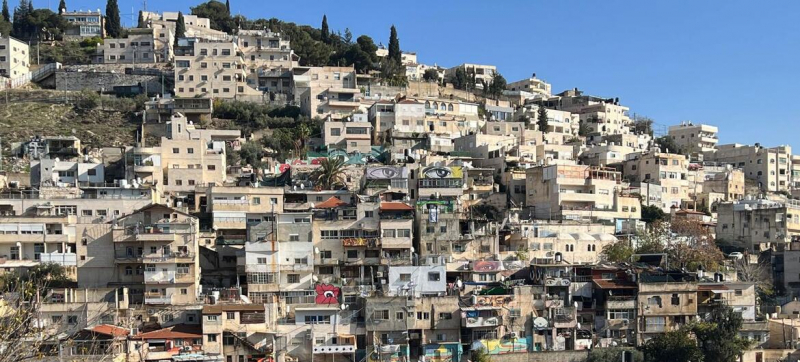

Palestinian families in East Jerusalem could lose their homes. West Bank: New Israeli measures further undermine prospects for two-state solution International law
UN Secretary-General Antonio Guterres expressed serious concern on Monday over reports of the Israeli Security Cabinet’s decision to authorize a series of administrative and law enforcement measures in Zones A&B of the occupied West Bank.
According to media reports, these measures will facilitate the process of transferring Palestinian lands to Jewish settlers, thereby expanding Israeli influence in this territory.
The UN chief warned that trends on the ground – including these measures – are undermining prospects for a two-state solution.
Settlements are illegal
He reiterated that all Israeli settlements in the occupied West Bank, including East Jerusalem, and the regime and infrastructure associated with them are null and void and constitute a violation of international law, including UN resolutions.
“Such actions, including the continued presence of Israel in the occupied Palestinian territory, are not only destabilizing, but also – as the International Court of Justice reminds – are illegal,” says the statement issued by the Secretary General’s press service.
The Secretary-General called on Israel to reverse these measures. He also called on all parties to “preserve the only path to lasting peace – a negotiated two-state solution”, in accordance with Security Council resolutions and international law.
Responding to questions during a briefing for journalists in New York, UN spokesman Stephane Dujarric stressed that Israeli measures “move us further and further away from a two-state solution and from the ability of the Palestinian Authority and the Palestinian people to control their own destiny.”
Ongoing humanitarian efforts in Gaza
Meanwhile, humanitarian agencies in the Gaza Strip continue efforts to distribute food and other assistance despite obstacles and difficult conditions work.
Residents of Gaza City continue to experience an acute shortage of drinking and domestic water, despite the recent opening of a water line connecting Israel with Gaza. Currently, only 6 thousand cubic meters of water enters the city daily, with significant losses occurring in hard-to-reach areas.
To alleviate these shortages, the UN and partners have increased water production and truck deliveries from underground wells and private desalination plants. Humanitarian agencies have distributed more than 100,000 canisters of water throughout the Gaza Strip since late January, Dujarric said. They also distributed more than 700 thousand bars of soap and more than 25 thousand hygiene kits to local residents.
Mines threat
Since Wednesday, aid workers have conducted more than 200 bomb threat assessments as part of efforts to clear the rubble. Last week, more than 10,000 children and adults received information about the risks of mines and unexploded ordnance.
Since the ceasefire came into force in October last year, 33 incidents with explosive devices have been reported in the enclave, resulting in nine deaths and 65 injuries.
Restrictions on humanitarian access
The UN notes that humanitarian workers still face restrictions, including on the import of so-called “double-double items” destination” and goods that are classified as non-humanitarian. These include spare parts and some materials for arranging shelters.
In addition, humanitarian operations are being undermined by Israel’s deregistration of some international non-governmental organizations (NGOs) and the imposition of restrictions on the United Nations Relief Agency for Palestine Refugees in the Near East (UNRWA).