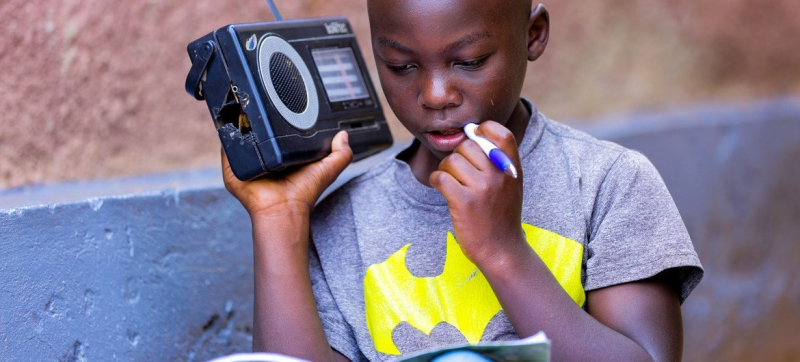

In Rwanda, children were unable to attend school during the pandemic. Many of them listened to lessons on the radio. From war zones to space: radio is still in demand Economic development
As the world increasingly gazes at bright screens and endlessly scrolls through digital feeds, one of the oldest methods of transmitting information – radio – lives on, uniting people and breaking down barriers.
It is developing rapidly, using the latest technologies, and at the same time remains the main means of communication in places where technological progress does not keep up with global trends.
Every year on February 13, World Radio Day is celebrated. On this day 80 years ago, the first broadcast of UN Radio took place.
UN News teams have collected stories from all over the world, and they confirm one simple truth: in regions devastated by conflict and natural disasters, radio remains a reliable source of information where other signals cannot reach.
From UN Radio to News Service
Eighty years ago, as the world was recovering from World War II, UN Radio began broadcasting – in five languages – from small studios at UN headquarters in New York, often broadcasting entire Security Council meetings.

One of the first broadcasts of UN Radio.
For decades, iconic voices such as Edward R. Murrow, Marlon Brando, Audrey Hepburn and Frank Sinatra have helped tell the world about the work of the global Organization. The broadcast featured speeches from world leaders, including John F. Kennedy, Mikhail Gorbachev, Nelson Mandela, Fidel Castro and Pope John Paul II.
Over time, UN Radio was replaced by UN News Service, a multimedia platform that publishes materials in 10 languages and reaches audiences in more than 170 countries. On the site you can find news, articles, interviews, live broadcasts of meetings dedicated to the most pressing problems of our time.
Despite all the transformations, the service’s mission remains the same: to provide reliable information to those who need it most, including in audio formats. Nowhere is this mission more important than in conflict zones. In the Gaza Strip, a total of 23 local radio stations operated until October 7, 2023. During the war provoked by the Hamas attack on Israel, they were all destroyed.
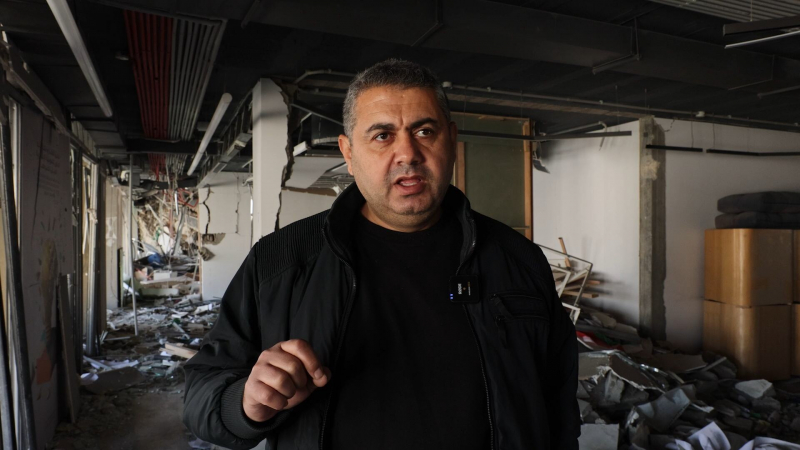
Rami al-Sharafi, director of radio station Zaman FM, is trying to restore broadcasting in Gaza.
Rami al-Sharafi, director of the radio station Zaman FM, is trying to restore broadcasting. When UN Arabic News Service journalists visited the station, he said bluntly: “Zaman FM has resumed broadcasting and we are currently the only radio station broadcasting an FM signal from the Gaza Strip.”
The need for reliable radio broadcasting is extremely high, especially as disease spreads and public services are disrupted.
The most important peacekeeping tool
In other conflict zones, radio also serves as a stabilizing factor. In the Democratic Republic of Congo, Radio Okapi has become a vital source since its creation in 2002 as part of the UN peacekeeping mission in the country.
The station broadcasts in French as well as four local languages, providing reliable information in regions of the country affected by violence.
In the eastern city of Bukavu, one listener said that Radio Okapi “plays a key role in promoting peace by broadcasting information that is reliable and impartial.”
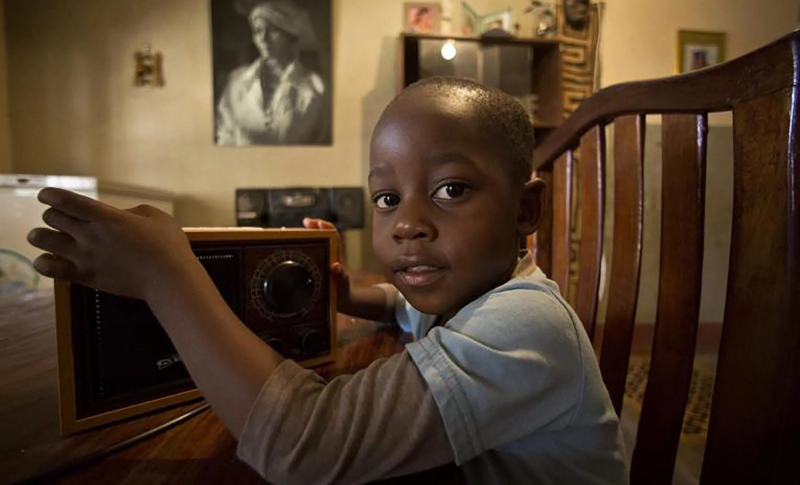
Radio Okapi and Radio nationale congolaise broadcast radio lessons on core subjects in primary and secondary schools in the DRC during the coronavirus pandemic.
For many communities, this station is also a vital channel for civic activism. “It allows war victims to tell their stories and their stories are heard by the authorities,” said another Bukavu resident.
Radio Okapi employees actively counter incitement to hatred. In Lubumbashi, one listener noted that Radio Okapi helps curb hate messages and supported programs such as the Inter-Congolese Dialogue, which he said promote social cohesion.
Life-saving information
For refugees like Bahati Yohane, who is now living in the Kyangwali refugee camp in Uganda, during the outbreak violence in the DRC, the radio station Radio Okapi became a real salvation. In an interview with UN News Service in Kiswahili, he said: “Honestly, if it weren’t for the radio telling us something about the security situation, we wouldn’t be alive today.”
In the Central African Republic, radio is helping people overcome isolation in remote and insecure areas. The UN mission in this country supports both its own radio station, Guira FM, and local radio broadcasters.
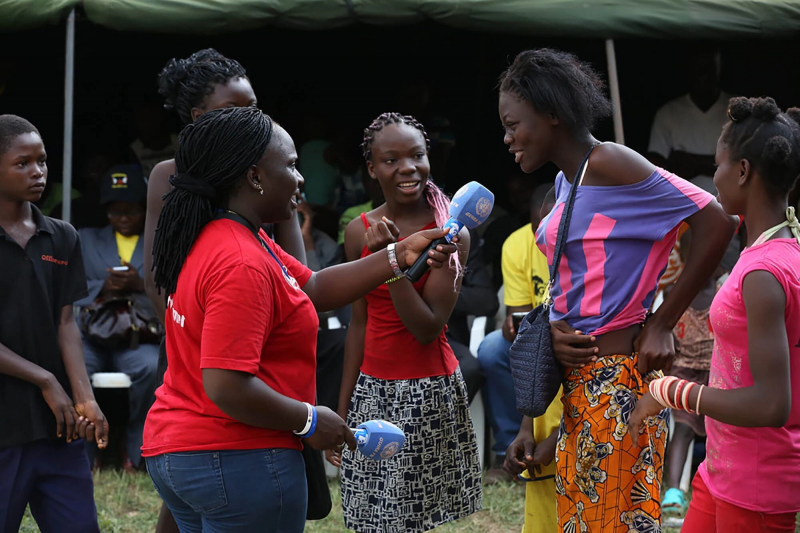
Celebrating the 4th anniversary of the start of Guira FM broadcasting in the Central African Republic.
As part of a recent campaign, more than 500 radios were provided to local residents, allowing them to receive reliable information, including on safe travel and trade routes.
UNESCO is also an important partner for radio stations in fragile regions, helping them stay on the air during crises and continue to transmit critical information.
In Afghanistan, the organization maintains 10 radio stations that broadcast recommendations for basic services. Of the tens of millions of listeners, 40 percent are women and girls.
Radio amateurs as national heroes
Outside of conflict zones, the power of radio is especially noticeable during emergencies caused by climate change. When hurricanes or floods knock out telephone and Internet connections, radio signals are often the last reliable channel of communication with the outside world.
In Mexico, radio amateurs were recognized as national heroes after the 1985 earthquake, when they were able to establish communications with the affected areas. Today, the Mexican Federation of Amateur Radio coordinates the National Emergency Communications Network and transmits critical information during hurricanes, floods and earthquakes.
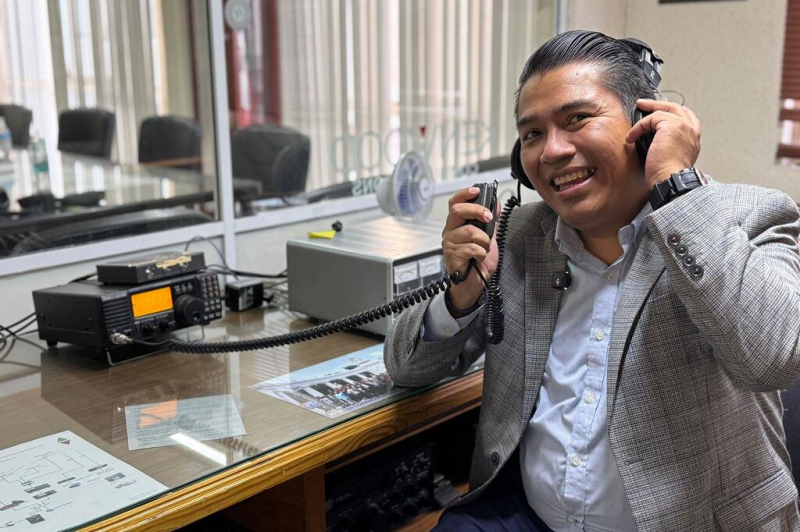
Jesus Miguel Sarmiento Montesinos, Chairman of the Mexican Federation of Amateur Radios.
The UN News Service in Spanish interviewed the president of the federation, Jesus Miguel Sarmiento Montesinos. “They turned copper wires into antennas, used their equipment and batteries, and immediately began transmitting messages about the situation in the affected areas, the extent of the flooding and whether these areas were accessible or inaccessible,” he said of his colleagues’ work during Hurricane Otis in 2023.
Radio makes society more inclusive
Radio breaks down many barriers and creates a more inclusive environment. In India, Radio Udaan was launched in 2014, the country’s first online radio station run entirely by visually impaired employees. Today she has 125 thousand listeners in 120 countries.
Radio Udaan airs topics on the rights of people with disabilities, education, technology and social inclusion.
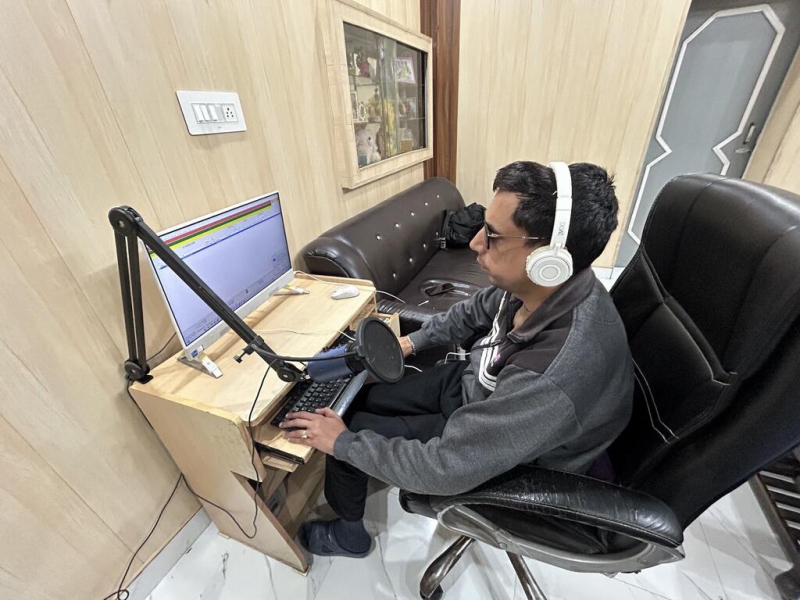
Radio Udaan is India’s first online radio station staffed exclusively by visually impaired people.
UN Hindi News Service reporters spoke with the station’s founder, Danish Mahajan. He said his own life experiences as a visually impaired person help him shape programs to meet audience needs.
“United Nations disability panels or special events that feature inspiring speeches bring enormous benefits to our community,” Mahajan said.
Empathy that algorithms cannot reproduce
Artificial intelligence is changing the global audio landscape. In China, these changes are happening especially rapidly: the podcast audience already exceeds 150 million people and will continue to grow.
The Chinese Language News Service spoke with Professor Sun Shaojing from Fudan University. He noted that AI-generated audio content is becoming increasingly woven into everyday life.
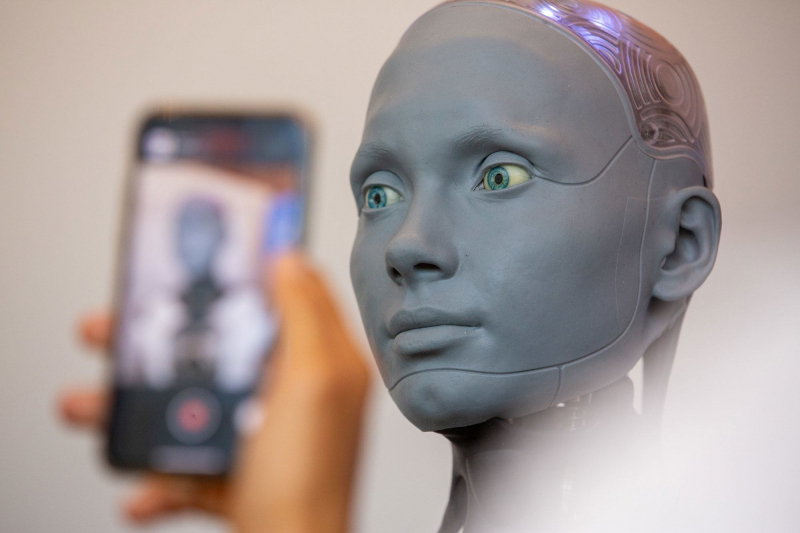
The “synthetic” AI voice will never replace the human voice, says Sun Shaojing, a professor at Fudan University.
“Synthetic” voices are becoming increasingly common, he says, delivering accuracy, efficiency and multilingualism on a scale that would have seemed unimaginable just recently. However, the professor notes, the imperfections of human speech – pauses, hesitations, emotional nuances, slips of the tongue – endow the voice with “soul”.
“When covering disaster scenes, stories of affected people, their suffering and needs, AI does not have an emotional and empathic dimension… It cannot achieve the same depth of emotional impact,” says Sun Shaojing.
Growing demand for radio communications in space
Even beyond Earth, radio remains the basis of communication and scientific research. Since the first satellite was launched in 1957, radio waves have helped humanity explore space and observe the Earth.
As space programs develop, their importance only increases. Alexandre Valle, head of space services at the International Telecommunication Union (ITU), told the Portuguese News Service that satellites equipped with highly sensitive sensors are effectively monitoring the effects of climate change using ITU protected radio frequencies.
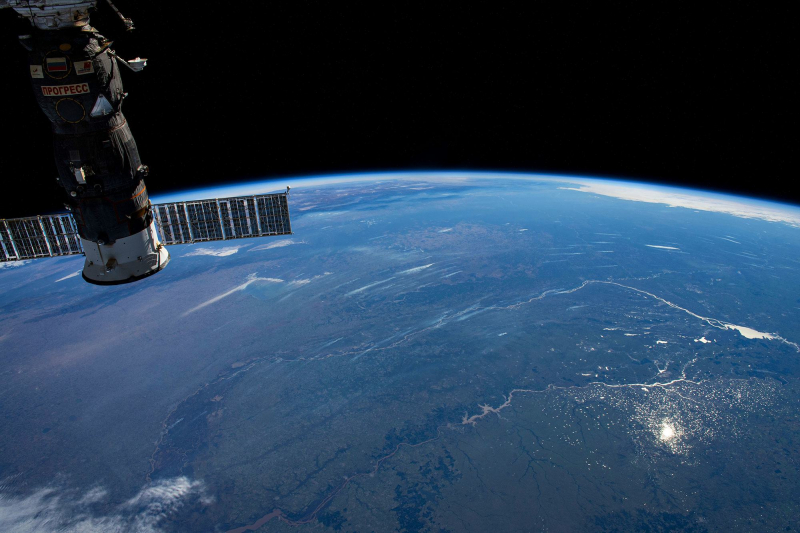
Radio waves help humanity explore space and observe the Earth.
He explained that the expansion of lunar programs by leading spacefaring nations – including plans by the United States and China to establish permanent bases on the Moon – will likely lead to a sharp increase in radio communications needs. However, he warned, this growth could threaten the “shielded zone” of the Moon, protected by the ITU treaty of the 1970s to maintain “radio silence” necessary for studying the earliest stages of the history of the Universe.
“At the next radio regulations conference, at the end of 2027, we will discuss for the first time the creation of a regulatory framework for managing the radio frequency spectrum on the Moon. This will mean finding a balance between the needs for communication channels and the need to protect the radio frequency spectrum for scientific purposes,” Valle said.
In the future, the “space” economy will only increase humanity’s need for radio communications. According to Valle, new industries such as space tourism, space manufacturing, resource extraction in space and even the creation of data centers beyond Earth will rely on reliable radio channels.