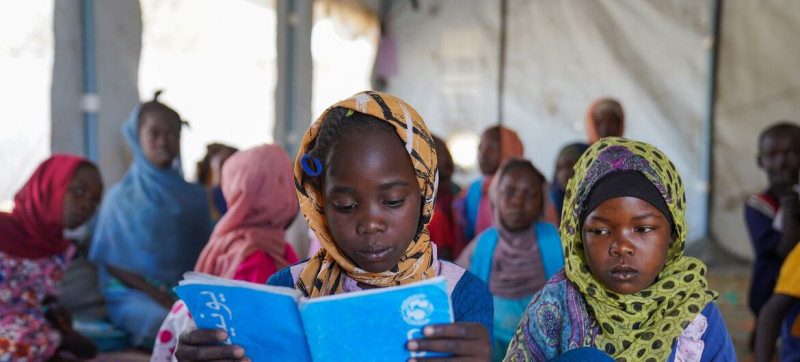

Children attend classes at a UN training center in Tawil, North Darfur. Fourth year of crisis in Sudan: refugee numbers growing, funding dwindling Refugees and migrants
As Sudan’s war approaches its fourth year, the UN High Commissioner for Refugees (UNHCR) and 123 partner organizations on Tuesday launched an appeal for $1.6 billion to support millions of people forced to flee the country in search of safety.
The Regional Response Plan 2026 aims to provide life-saving assistance to 5.9 million people in seven neighboring countries: the Central African Republic, Chad, Egypt, Ethiopia, Libya, South Sudan and Uganda. The plan will continue to prioritize support for the approximately 470,000 new refugees expected to cross these countries’ borders.
The biggest crisis in the world
The war in Sudan erupted in mid-April 2023, with the Armed Forces and Rapid Reaction Forces locked in a bitter power struggle. UNHCR Regional Director for Eastern and Southern Africa, Mamadou Dian Balde, said the need for the fourth annual humanitarian appeal for Sudan underlines the ongoing impact of the conflict on the population and the challenges facing humanitarian response. system. “Sudan remains the world’s largest displacement and humanitarian crisis, set against the backdrop of its worst funding shortfall in decades,” he told reporters in Geneva.
Host communities are “at the limit”
Some 4.3 million Sudanese refugees have found refuge within the region, the majority in Egypt and eastern Chad. Balde said host governments and local communities continue to show “amazing solidarity” but their capacity is stretched to the limit. “Due to severe funding cuts, UNHCR was forced to close two of three registration centers in Egypt, limiting people’s access to key protection mechanisms,” said he. In addition, funding per refugee per month, he said, has dropped from $11 to $4. In eastern Chad, more than 71,000 refugee families have not received housing assistance, meaning there is no safe and suitable housing. “Nearly 234,000 people are awaiting resettlement, living in highly unstable conditions along the border,” Balde added.
Growing needs, shrinking resources
Balde stressed that despite the limitations, the 2026 plan will continue to support host countries in providing basic services – food, shelter, medical care and protection mechanisms for new arrivals and the most vulnerable refugees. However, he warned that the growing gap between increasing needs and decreasing resources threatens to undermine both emergency responses and medium-term solutions. UNHCR continues to call for increased international support to overcome chronic underfunding of humanitarian operations in countries hosting people fleeing Sudan.