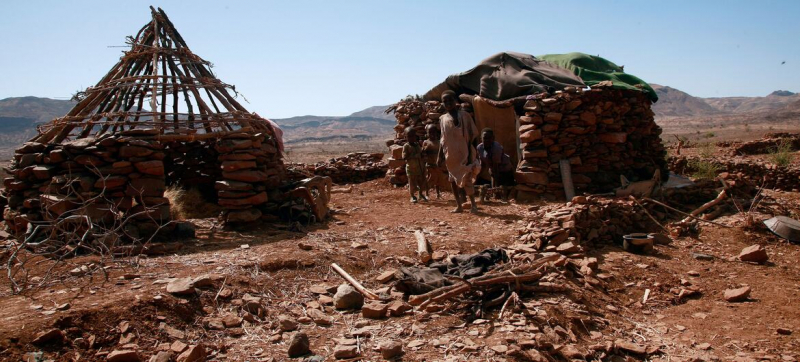

Since fighting began in April 2023, tens of thousands of people have been killed in Darfur, Sudan, with many forced from their homes. (photo from the archive) Sudan: UN experts report ‘signs of genocide’ in El Fasher International law
During the capture of the city of El Fasher in Sudan’s Darfur region at the end of October last year, the Rapid Action Force (RRF) carried out ethnic killings, widespread use of sexual violence and enforced disappearances. The Independent International Fact-Finding Mission to Sudan said the actions had “the hallmarks of genocide” against the Zaghawa and Fur communities and showed the continued risk of further atrocities.
In a report released Thursday, UN experts said the evidence collected points to at least three acts that fall under the definition of genocide: the killing of members of a particular ethnic group; causing serious physical or mental harm; and the deliberate creation of living conditions calculated to bring about the total or partial physical destruction of that group.
“The scale, coordinated nature and public support of the operation from the top leadership of the RSF demonstrate that the crimes committed in and around El Fasher were not random excesses of war,” said the Chairman of the Mission, Mohamed Chande Osman.
“They were part of a planned and organized operation with the defining characteristics of genocide,” he added.
Five hundred day siege
The Mission’s findings relate to events in and around the capital of North Darfur, El Fasher, in late October 2025, following an 18-month siege during which, according to the investigation, civilians lost access to food, water, medicine and humanitarian aid.
As the report notes, the siege “systematically weakened the targeted population through starvation, deprivation, injury and isolation,” leaving many unable to flee when the offensive began.
According to the Mission, the events in El Fasher were “an escalation of previous patterns of attacks” on other non-Arab communities in Sudan, “but on a much more lethal scale.”
The conflict in Sudan began on April 15, 2023, when fighting broke out between the Sudanese Armed Forces and their former allies, the paramilitary forces of the Rapid Reaction Force. Since then, war has engulfed a large part of the country.
Genocidal intentions
According to experts, genocidal intent is “the only reasonable conclusion” based on the “systematic nature of ethnically motivated killings, sexual violence, destruction and public statements directly calling for the destruction of non-Arab communities.”
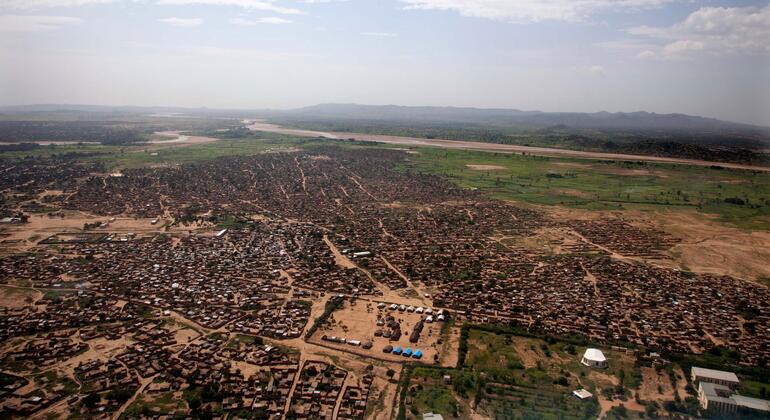
Survivors said that the RRF fighters said: Are there Zaghavas among you? If we find Zaghava, we’ll kill everyone”; and also: “We want to destroy everything black in Darfur.”
“The totality of the evidence we have collected – including a long siege, famine, denial of humanitarian aid followed by massacres, rape, torture and forced disappearances, systematic humiliation and the perpetrators’ own statements – leads to only one reasonable conclusion,” said Mona Rishmawy, a member of the Mission. – The RRF acted with the intention of destroying all or part of the Zaghawa and Fur communities in El Fasher. These are the hallmarks of genocide.”
The Zaghawa and Fur communities are among the largest non-Arab ethnic groups in the Darfur region of western Sudan. Both have historically suffered discrimination and were already targeted during previous waves of violence in Darfur in the early 2000s. Many families in and around El Fasher were forced to flee their homes several times before the current conflict.
Numerous warnings
The report highlights that targeted targeting based on ethnicity, gender and perceived political position became a key element of the operation. In particular, women and girls from the Zaghawa and Fur communities were selectively targeted for sexual violence, while women identified as Arab were often not targeted.
The mission also pointed to numerous warnings and “clearly identified indicators of the risk of mass crime” leading up to the city’s takeover, including international calls since mid-2024 to end the siege and protect civilians. “Despite these warnings, neither side has taken effective measures to protect civilians,” the document says.
With the conflict expanding into other regions, including Kordofan, experts warn that protecting civilians is needed “more urgently than ever.”
Bring those responsible to justice
Mission member Joy Ngozi Ezeilo called the events in El Fasher “an acute manifestation of patterns of behavior consistent with genocidal violence.”
In the absence of effective measures to prevent violence and ensure accountability, UN experts believe that “the risk of further acts of genocide remains serious.”
“The perpetrators at all levels must be brought to justice,” said Mohamed Shande Osman. “When there is evidence of genocide, the international community has an obligation to take enhanced measures to prevent crimes, protect victims and bring perpetrators to justice.”
The Independent International Fact-Finding Mission on Sudan was established by the UN Human Rights Council in October 2023 with a mandate to investigate alleged violations of human rights and international humanitarian law during the conflict, including, where possible, identifying those responsible. The report will be presented to the Human Rights Council on February 26, 2026.
UN Security Council meeting
The UN Security Council met on Thursday to discuss the situation in Sudan.
Under-Secretary-General for Political and Peacebuilding Affairs Rosemary DiCarlo noted during her briefing that fighting continues to escalate, with front lines remaining volatile in North Darfur, North and South Kordofan, and Blue Nile State.
In South Kordofan, the Sudanese Armed Forces reported breaking the siege imposed by the Rapid Reaction Force around the towns of Kadugli and Dilling. North Kordofan remains one of the centers of the confrontation, with the state capital of El Obeid surrounded on three sides by RSF forces, while government forces are strengthening their presence in the city and its surroundings.
“Ground fighting inside El Obeid would be catastrophic and deal a serious blow to the prospects for a ceasefire,” DiCarlo warned.
In turn, the representative of the UN Office for the Coordination of Humanitarian Affairs (OCHA) Eden Wosornu emphasized that all parties have the responsibility to protect civilians and ensure that their basic needs are met. The level of violence against women and girls, according to her, has reached catastrophic proportions.
Humanitarian agencies, Vosornu added, are outraged by repeated attacks on World Food Program (WFP) trucks, facilities and warehouses.
She called on the Security Council to urge the parties to respect international humanitarian law, protect civilians and humanitarian workers, and join forces to immediately stop the fighting.