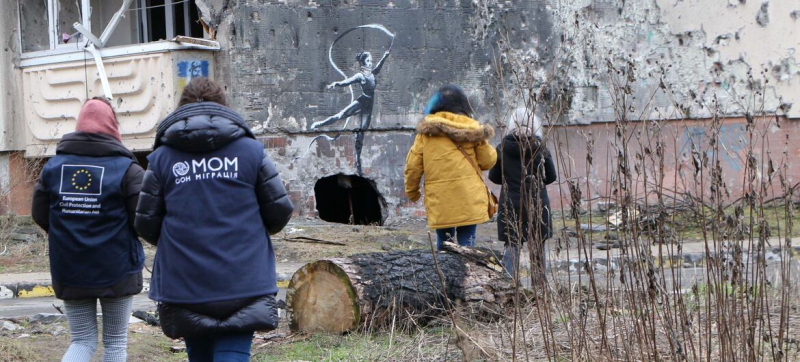

IOM employees walk past a war-damaged building with ballerina graffiti in the Kiev region. Myriads of fragments of one tragedy: how four years of war changed Ukraine Peace and security
Until February 24, 2022, most residents of Ukraine did not believe that a full-scale war would begin. Now many Ukrainians cannot believe that it has been going on for four years already – and there is no end in sight to the overall great grief.
Officially, this war is called a “full-scale invasion of the Russian Federation,” since fighting in the east continued until 2022. The last four years have brought endless hardships to Ukrainians. The older generation still remembers the echoes of the previous, Great Patriotic War, when there were also shelling and bombings, but the current one is now lasting longer than that Great War.
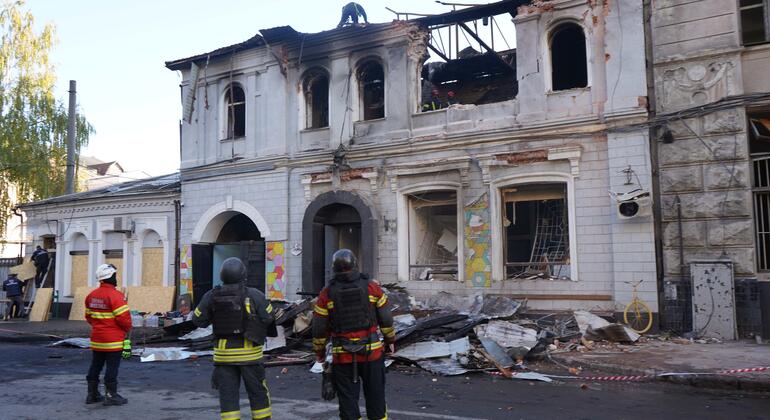
The current tragedy of Ukraine is not a solid monolith; upon closer inspection, it crumbles into myriads of fragments. Each of them reflects individual grief: someone lost relatives in the war. Someone’s house was bombed. Many are unable to return to their homes from abroad due to ongoing hostilities.
Dream of a “quiet future”
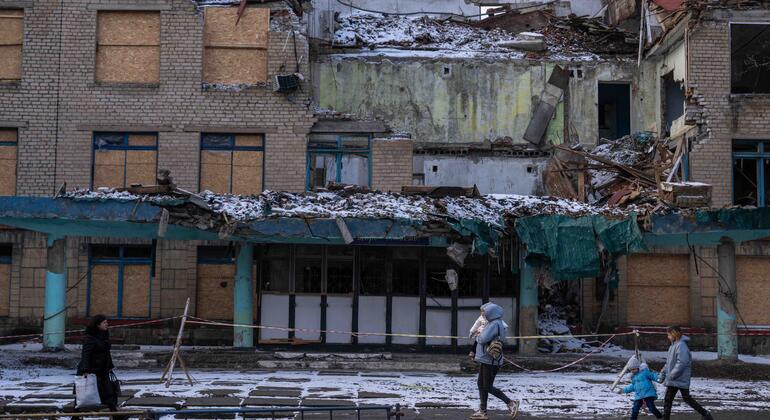
The frontline regional center of Kherson changed hands twice during the conflict. Sirens warning of shelling sound in the city almost every day. Schools and kindergartens are closed, so parents are taking their children to underground shelter centers where they can safely socialize with peers, continue their studies, play, or even just stay warm. Victoria and her five-year-old daughter Miroslava visit one of these centers every day. The mother says that she tried to leave Kherson for Nikolaev twice, but each time she returned: “At home, despite all the difficulties, it’s still easier.” Victoria works part-time online and receives social benefits, her husband also works. Humanitarian organizations support the family with all the essentials. Cash assistance helps to survive almost literally. “This is very helpful, and I am grateful for the support,” she says. Victoria, in her own words, is very angry at politicians: “Nobody wants to end the war, they are not interested.” Her main dream is a quiet future for her daughter. “It’s quiet,” she emphasizes. “If something explodes, it won’t be bombs, but fireworks.”
You can’t hide from winter
Since central heating in Kherson practically does not work, Victoria’s family uses a household heater to keep warm. “But it’s barely warm,” she adds. Penetrating cold, from which it is not always possible to shelter, is a widespread problem. This winter has been particularly harsh for Ukraine. Temperatures drop below minus 20 degrees and impacts to energy infrastructure leave hundreds of thousands of people without heating or electricity. In frontline areas, people report chronic shortages of generators and repair materials. “Children cannot leave their apartments,” Kenan Madi, head of field operations for the United Nations Children’s Fund (UNICEF) in the country, told UN News Service. – But inside the apartments the temperature drops to two or three degrees, there is no heating. This poses serious risks to their health.”
Cold numbers of “hot” statistics
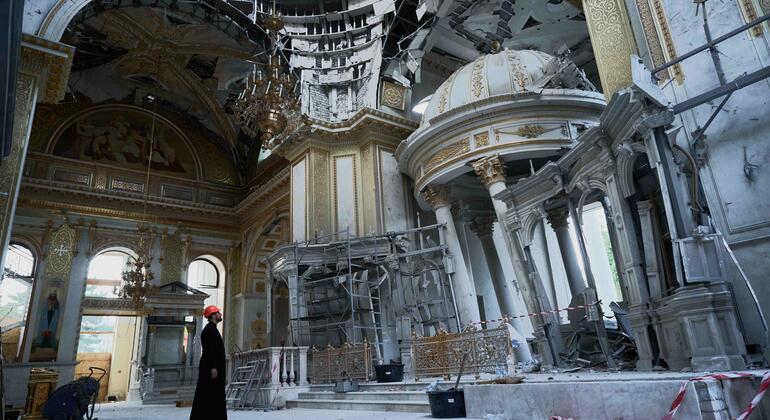
Against the backdrop of a harsh winter, the cold, as is often said, statistical figures look frighteningly “hot”. According to the Office of the United Nations High Commissioner for Human Rights (OHCHR), by the end of 2025 there were 55,600 confirmed civilian casualties of the war, including 13,883 dead. The real numbers are most likely much higher, since access to many front-line and occupied areas is lacking. The situation facing children remains particularly alarming. According to UNICEF, more than 3,200 children have been killed or injured since February 2022, with the number of child victims rising by 10 percent in 2025 compared to the previous year. This is the third year in a row that the UN has recorded an increase in the number of child victims. As of January 2026, 3.7 million Ukrainians are internally displaced. More than 4.4 million people who fled their homes since February 2022 have returned, including more than one million from abroad. However, not everyone who crossed the border back was able to return to their homes – 372 thousand people remain in the status of internally displaced persons. On the eve of the fourth anniversary of the start of the war, the UN High Commissioner for Human Rights again recalled that attacks on civilian infrastructure are prohibited by international humanitarian law. “I call on the Russian Federation to immediately stop these attacks,” said Volker Türk.
The crisis is exhausting both the most vulnerable and the most resilient
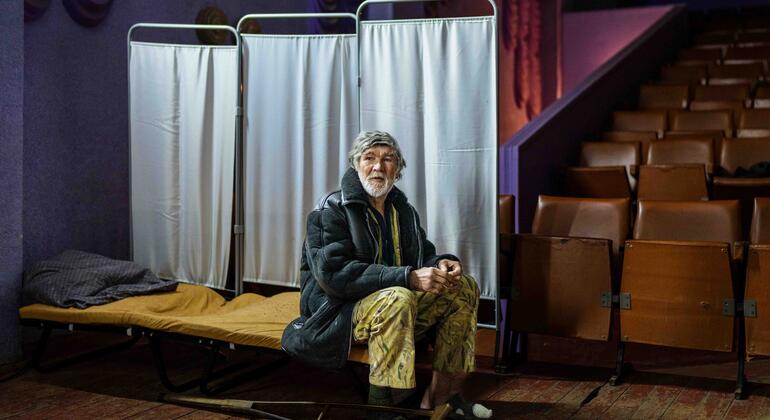
Prolonged power outages pose a deadly threat to the most vulnerable: the elderly, people with disabilities and chronic illnesses. The psychosocial consequences of the energy crisis are no less serious: darkness, isolation and constant uncertainty exhaust even the most resilient. “Is this life? It can’t be called life if people are shooting every day,” says 80-year-old Elena, who regularly visits the UN humanitarian hub in Kherson to get help. “A year ago I buried my son and his wife. The house is destroyed, everything is broken. What kind of life is this?..” According to her, if not for humanitarian aid, many would not have survived here: “The pension is small. What to live on? My son is no more, the rest have left… They also give us lunch. They give bread, they give medicine. God bless them for helping!” Matthias Schmale, UN humanitarian coordinator in the country, travels a lot to the regions. The population’s fatigue from everything that is happening is noticeably growing – and this, according to him, is understandable. “I meet people who admit they are tired, but they are not going to give up,” he says. “Let’s give them their due.” The most important thing, continues the UN Humanitarian Coordinator, is that the fifth year of war should bring the long-awaited end to suffering to the people of Ukraine. “This must be a sustainable peace,” he adds. “Long-term peace on decent terms.”