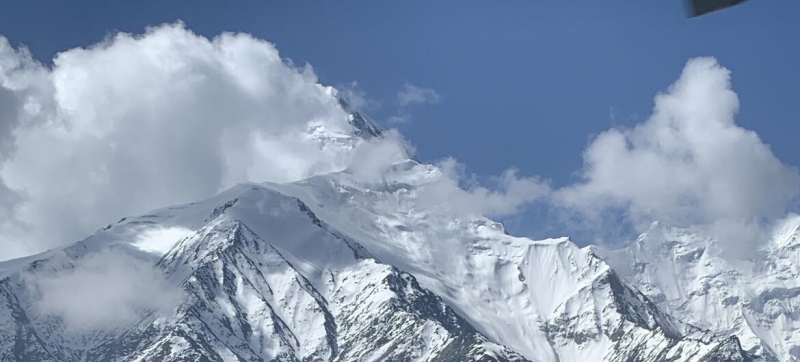

Tajikistan’s glaciers and rivers, rising high in the mountains, provide fresh water to millions of people throughout the region. Artificial intelligence innovations for water resources management are being introduced in Tajikistan Parvati Ramaswamy, UN Resident Coordinator in Tajikistan Climate and environment
UN Resident Coordinator in Tajikistan Parvati Ramaswamy reflects on the partnership between UN agencies and the government of the Republic of Tajikistan, as well as the new importance of water resources and artificial intelligence for sustainable, green and inclusive development.
Last year, on the eve of the first International High-Level Conference on Glacier Conservation, which was held in Dushanbe, I had the opportunity to visit the Vandzhiakh Glacier (formerly the Fedchenko Glacier). It was an amazing sight. Located in the Pamir Mountains, the glacier is the longest glacier not found in the polar regions of planet Earth. The glacier extends for 77 kilometers. While there, I was once again convinced that glaciers are the “water towers” of the planet and need to be protected.
Tajikistan’s role as the “water tower” of Central Asia is of both historical and strategic importance. Glaciers and rivers that rise high in the mountains provide fresh water to millions of people throughout the region. Water is not only a vital resource, but also a cornerstone of national identity, diplomacy and regional cooperation.
However, climate change is leading to rapid melting of glaciers, which increases stress on water systems and increases the frequency of disasters such as floods and droughts. Therefore, sustainable management of water resources is becoming one of the key tasks set at the national level in the field of long-term development.
I see how new technologies, especially artificial intelligence (AI), are opening up opportunities for more efficient use, conservation and management of water resources in this area. For example, with the help of AI, it is possible to more accurately predict the melting of glaciers and the volume of river flows. This tool will strengthen early warning systems for natural disasters, improve agricultural irrigation planning, and ensure proper design of hydropower facilities. This will help Tajikistan and the countries of the region in adapting to climate change and more effectively preparing for natural emergencies.
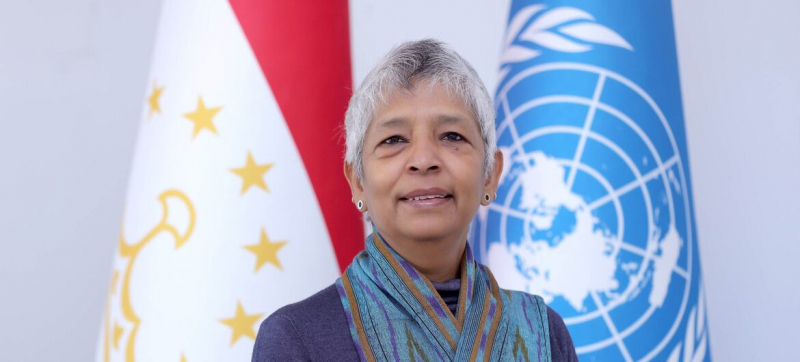
UN Resident Coordinator in Tajikistan Parvati Ramaswamy.
Leadership and partnership
However, artificial intelligence also creates new challenges. Data centers and digital systems consume significant amounts of water and energy, particularly to cool processors. This raises issues of water management, accountability and local environmental impact. If poorly managed, technologies designed to protect water resources may, on the contrary, increase pressure on them.
In this sense, the areas of water resource management and the application of artificial intelligence in Tajikistan have much in common: both are intended to shape the future of the country, but require thoughtful management and responsibility.
New forms of partnership and global leadership of Tajikistan help reduce risks. The UN office opened in Tajikistan in 1993. Since then, collaboration with government and partners has contributed to improving access to water and effective management of water resources. Activities in this area began with humanitarian assistance, and gradually moved to the level of developing environmentally sustainable programs using AI.
Over three decades, Tajikistan has become a leader among states raising issues of water resource management and offering practical solutions. The first initiative was to declare 2003 the International Year of Freshwater. Then two ten-year thematic campaigns on conservation and rational use of water resources were proposed.
Tajikistan has initiated global efforts to declare 2025 the International Year of Glacier Conservation. The first International Conference on Glacier Conservation took place in Dushanbe, at which the need to take urgent measures in this area was clearly outlined. Currently, together with relevant UN structures, preparations are underway for the fourth Dushanbe Conference within the framework of the International Decade for Action “Water for Sustainable Development”. The event, scheduled for 2026, will strengthen international cooperation and ensure that water and technology remain a national and global priority.
These activities bring together governments and organizations to help develop harmonized approaches to using AI without compromising water resources.
The role of AI in water resources management
In 2025, Tajikistan submitted to the UN a resolution “The role of artificial intelligence in creating new opportunities for sustainable development in Central Asia,” which reflects the state’s desire to use artificial intelligence for the benefit of one of the youngest regions on the planet.
Water management is already using practical AI-based tools, such as satellite monitoring to create more accurate maps of glaciers, river basins and watercourses. UN agencies in Tajikistan are supporting the government in using these digital tools to build resilience to climate change. Recently, Tajik researchers received the Glacier Lifelines virtual kit, equipment that allows them to visualize changes in glacier behavior and consequences.
With the support of the United Nations Environment Program (UNEP), the Atlas of Environmental Change was developed. It is an interactive online tool that allows you to track glacier loss, model impacts on water resources, and make informed decisions about water supplies, conservation measures, and early warning systems.
The Regional Project on Glacial Lake Outburst Risks in Central Asia, led by UNESCO with financial support from the Adaptation Fund, aims to support countries in the region in managing the risks of floods caused by glacial lake outbursts. The project is designed for the period from 2021 to 2027. Activities are carried out based on AI analysis in combination with local initiatives. This ensures a transition from monitoring to practical risk reduction. For example, automatic sensors are installed to monitor snow cover, temperature and precipitation. At the same time, radio communications and early warning systems help communities prepare for and respond to potential threats. Special equipment helps monitor changes in glacial lakes, and hazard modeling helps identify the most dangerous areas.
As AI changes the way data is collected and used to protect communities, Tajikistan will be able to more effectively predict the impacts of climate change while still involving local people in the process.
Water resources management and application of innovations
The future of water security depends on the effectiveness of international cooperation, the development and implementation of new technologies, and the availability of reliable national systems and resources. Tajikistan’s leadership in water conservation, along with the development of digital tools, opens up real opportunities for progress in all these areas.
UN staff in Tajikistan are committed to protecting natural resources, ready to support local communities in overcoming crises and ensuring that innovation benefits both people and the planet. By applying science, developing effective policies, and strengthening partnerships, we are creating an environment where water will contribute to prosperity in Tajikistan, Central Asia, and the world.
Water has always united countries. By using technology and artificial intelligence responsibly, acting collaboratively, and with visionary leadership, we are creating the conditions for future generations to thrive today and now.
The author of the material is Parvati Ramaswamy, Resident Coordinator of UN projects and programs in Tajikistan.