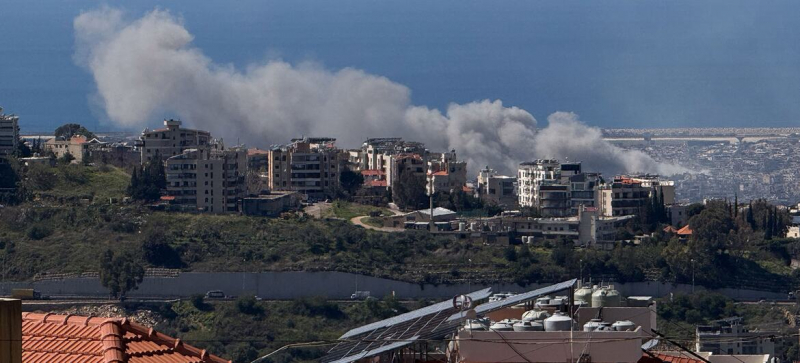

Consequences of air strikes in Lebanon. Escalation in the Middle East: UN peacekeepers in Lebanon report attacks on their positions Peace and security
Amid ongoing escalation in the Middle East, peacekeepers from the United Nations Interim Force in Lebanon (UNIFIL) continue to fulfill their mandate in what the Organization describes as “highly volatile” conditions.
Units of the peacekeeping mission monitor the development of the situation, liaise with the parties to the conflict and, where possible, facilitate humanitarian access. Together with the Lebanese Armed Forces, the Blue Helmets are delivering food, medicine and hygiene kits to civilians remaining in UNIFIL’s area of operations.
Peacekeepers report rocket and artillery strikes on Israeli territory, as well as shelling of the settlements of Bayt Leaf and Al-Qantara in Lebanon. The day before, two UN sites came under fire: a position in the eastern sector was hit by machine gun fire, and another, located near Bayt Leaf, was damaged after it was allegedly hit by a mortar shell. None of the mission employees were injured. The UN reiterated that the Organization’s facilities and personnel should not become military targets.
The situation in Iran
Meanwhile, large-scale humanitarian operations continue in Iran, led by the country’s authorities with the support of the Iranian Red Crescent Society. Search and rescue operations are underway, emergency medical care is provided to the victims and temporary housing is provided.
Staff from the World Food Program (WFP), the United Nations Children’s Fund (UNICEF), the Office of the United Nations High Commissioner for Refugees (UNHCR) and the United Nations Development Program (UNDP) provide food, water and medicine to the population.
According to the UN Office for the Coordination of Humanitarian Affairs (OCHA), key civilian infrastructure has been destroyed. The Iranian Red Crescent reports damage to more than 87,000 residential and commercial buildings, 600 schools, 289 medical facilities, 17 Red Crescent centers, as well as three helicopters and 48 emergency vehicles. Aid workers are also suffering losses: the Ministry of Health reported 23 deaths and 112 wounded among medics, and the Red Crescent lost one staff member.