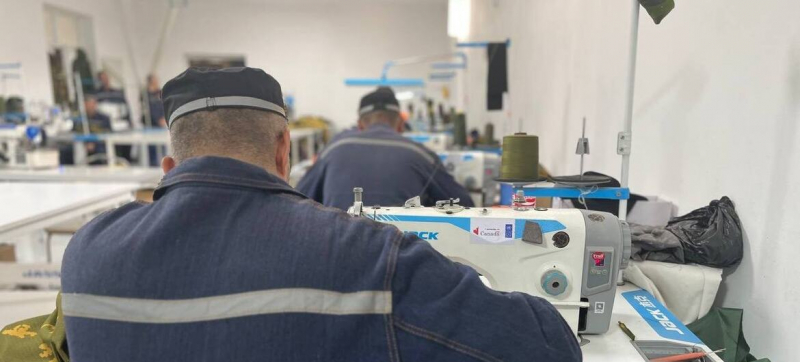

The opportunity to work and find a new profession gives prisoners the meaning of life. Hope in every stitch: Prison clothing production in Tajikistan is giving people meaning back to life Human rights
Otabek Ashurov, 38, serving a sentence in a correctional facility in Dushanbe, starts the day in an unconventional way for a prisoner: he goes to work. Today he is a tailor in a sewing workshop.
“I never thought that I would sew clothes,” says Otabek, threading a needle. “But in a short time I became a professional tailor. Now I even teach others.”
Otabek is one of 100 prisoners employed in the garment industry. In the workshop, they do not just pass the time, but produce high-quality uniforms for military and medical workers, schools and industrial enterprises.
It’s not just limited to sewing. In another wing of the correctional facility, mattresses and furniture are made.
Otabek’s 43-year-old friend Latif Dzhononov works in a carpentry workshop.
“I was offered a choice – to sew or make furniture. I chose the second, and Otabek – the first,” recalls Latif. “I’m now a certified furniture maker.”
Thanks to the project of the United Nations Development Program (UNDP) and the Canadian Ministry of Foreign Affairs, workshops for tailoring and furniture production appeared not only in the Dushanbe prison, but also in another correctional institution – in the city of Vahdat.
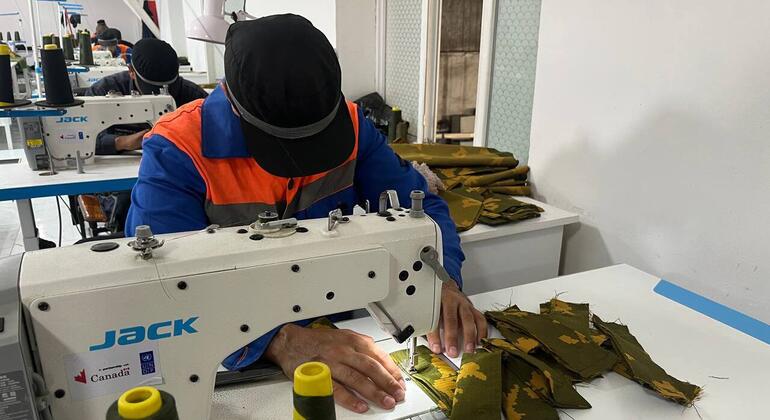
Since 2023, this initiative has been helping prisoners learn new professions, restoring their self-confidence and providing real opportunities for subsequent reintegration into society.
Their work is already bearing fruit. In particular, in 2024, one of the secondary schools in Vahdat officially ordered uniforms made by prisoners.
The government of Tajikistan has provided the penitentiary system with the opportunity to participate in government tenders. These policies open new markets for products produced in prisons, strengthen employment programs, and involve more people in the rehabilitation process.
For prisoners like Otabek and Latif, not only their profession is important. Their work is paid, which allows them to provide, albeit small, but very necessary support to their families, even in prison.
Vocational training is only part of the program. Prisoners also need emotional and psychological recovery.
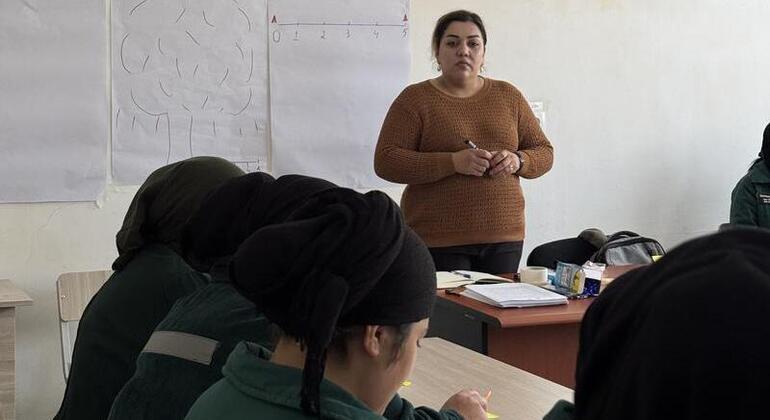
Since 2023, more than 4,160 people, including 660 women, have undergone consultation with a psychologist, as well as a course of religious therapy in Vahdat, Dushanbe and Nurek. Led by professionals, these meetings create a safe space to reflect on the past, overcome trauma, and rebuild self-esteem.
In parallel, more than 100 employees of the penitentiary system received special training, becoming familiar with international standards for the treatment of prisoners. Civil society representatives were also trained to support the reintegration of prisoners, especially in institutions for minors and women.
Thanks to systemic support, people like Otabek and Latif get a chance to rebuild their lives, gain hope and confidence that they can bring real benefit to society.