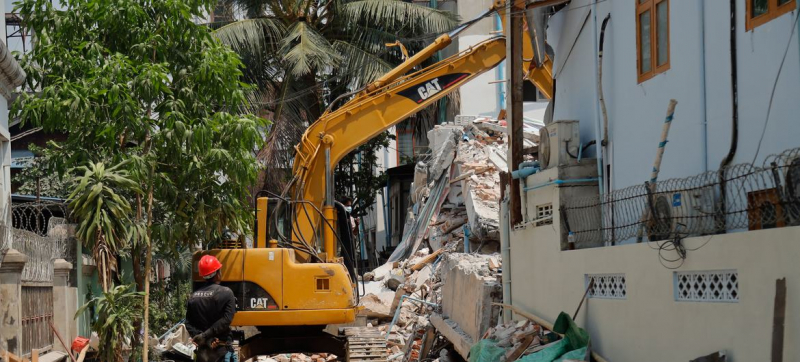

Rescuers try to find survivors in a destroyed building after an earthquake in Mandalay. UN says ‘fragile recovery’ in Myanmar a year after devastating earthquake Humanitarian assistance
“A new wave of global instability is hitting Myanmar at the worst possible time,” Michael Dunford, head of the UN World Food Program (WFP) Myanmar office, warned on Friday. Rising prices for fuel, food and fertilizer caused by conflict in the Middle East are threatening hunger for vulnerable families still recovering from a devastating earthquake a year ago.
The latest WFP data shows that recovery from the disaster remains extremely fragile. In the affected regions of Sikaing and Mandalay, one in six households faces food insecurity, and at least half of all households are extremely vulnerable to any further shocks.
“The earthquake survivors had barely begun to get back on their feet, and now another shock is knocking them down again,” said WFP Myanmar director Michael Dunford.
Echo of the Middle East conflict
Conflict in the Middle East is disrupting transport chains and causing fuel shortages across Myanmar. Rising fuel prices are increasing the cost of transporting food and agricultural goods, placing additional burdens on families who already struggle to afford basic necessities.
The crisis has also hit farmers preparing for the monsoon crop season. Fertilizer demand is expected to rise for at least the next three months. Fuel shortages and rising resource prices could cause production costs to double compared to last year. Over the past year, WFP has provided assistance to half a million earthquake victims. The organization is now moving from providing emergency relief to rebuilding infrastructure that ensures long-term economic stability. To provide life-saving assistance to 1.5 million people across the country, WFP needs $150 million this year. With insufficient funding, the agency will have to focus only on the most urgent life-saving measures.
“The people of Myanmar have endured blow after blow – conflict, climate disasters, a devastating earthquake and now a global fuel crisis,” Dunford said. “We must support them now.” A year after the earthquake, they will not be able to withstand another shock.”