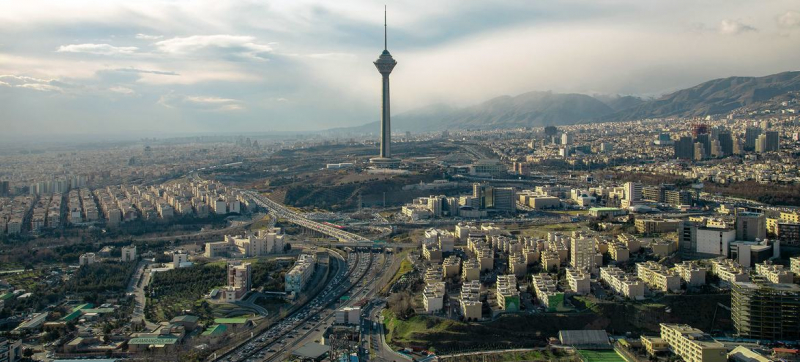

The capital of Iran is Tehran. Iran crisis: large-scale population movements, disruption of supply chains Peace and security
On the fourth day of escalation in the Middle East, the UN called for the protection of civilians and warned of growing humanitarian needs and displacement.
UN Human Rights Office (OHCHR) spokeswoman Ravina Shamdasani recalled Saturday’s attack on a girls’ primary school in the city of Minab in southern Iran. More than 160 people, including schoolgirls and employees of educational institutions, were killed and dozens were injured.
“Children, little girls… were killed in this way at the beginning of the school day. Backpacks with blood on them are absolutely horrifying,” she said.
“If there are any images that convey the very essence of the destruction, despair, senselessness and cruelty of this conflict, then it is these images,” Shamdasani added.
UN High Commissioner for Human Rights Volker Türk is “deeply shocked” by the consequences of the fighting for the civilian population. He called for a “prompt, impartial and comprehensive investigation” into the circumstances of the Minab attack.
“The responsibility to investigate lies with the forces that carried out this attack. We urge them to make the results public and to do everything possible to ensure that those responsible are brought to justice,” Shamdasani emphasized.
If it is established that the strikes were directed specifically against civilians or were indiscriminate in nature, then this would constitute a “serious violation of international humanitarian law and could be qualified as a war crime,” the OHCHR representative noted.
The situation of the Iranians
Shamdasani expressed concern about the situation of the Iranians, “given the authorities’ practice of using deadly force on a large scale against those who oppose their rule, as well as new threats from senior officials against any manifestations of dissent during the current period.”
She called on authorities to ensure the fundamental freedoms of Iranian citizens are protected and condemned the population’s limited access to information amid a nationwide internet shutdown.
Shamdasani also noted that in addition to Iran and Israel, the fighting affected 12 more countries, where homes, businesses, airports and energy infrastructure were destroyed.
Population displacement in Lebanon
In Lebanon, the armed movement Hezbollah entered the conflict, which resulted in Israeli strikes. “Large population displacement is reported in several areas of southern Lebanon, the Bekaa Valley and the southern suburbs of Beirut,” said UN Refugee Agency (UNHCR) spokesman Babar Baloch.
Israel issued evacuation warnings to residents of more than 53 Lebanese villages in three areas and carried out intensive airstrikes against them, he said.
As of Monday, “almost 30 thousand people were registered in collective temporary accommodation centers,” Baloch said.
“Many others slept in their cars on the side of the road or were still stuck in traffic jams after driving from the south towards Beirut,” he added.
According to media reports, on Tuesday, after Hezbollah strikes in northern Israel, Israeli ground units entered southern Lebanon.
The UNHCR representative emphasized that many of the countries affected by the conflict “are already hosting millions of refugees and internally displaced persons.”
Further escalation of violence and new waves of displacement could, he said, put an undue burden on host communities.
Supply chain disruptions
Serious disruptions in the transportation of goods due to the ever-expanding fighting in the region are already affecting routes humanitarian supplies.
The UN World Food Program (WFP) regional director for the Middle East and North Africa, Samer Abdel-Jaber, said supply disruptions through the Strait of Hormuz and the Red Sea would increase costs for most of WFP’s operations dependent on these routes.
“As the seas become a standoff zone and airspace closes, we are looking at adapting and leveraging the networks of our suppliers in other countries – such as Turkey, Egypt, Jordan and Pakistan – and supporting land corridors,” he said.
The WFP spokesperson added that Egyptian ports and the Suez Canal are key hubs to support our organization’s operations in the Gaza Strip, as well as Sudan.
Abdel-Jaber noted that Israel’s decision to close border crossings in Gaza after the outbreak of hostilities on Saturday caused serious concern, but on Tuesday news emerged that the Kerem Shalom crossing would soon open.
According to media reports, this crossing on the southern border of the sector actually opened on Tuesday.
“This is very timely for us and we need to get help as quickly as possible,” Abdel-Jaber said.
“We only have enough wheat flour reserves for ten days, and food parcels will only support our programs for two and a half weeks… We need to ensure a continuous and scalable flow of food into the Gaza Strip,” he concluded.