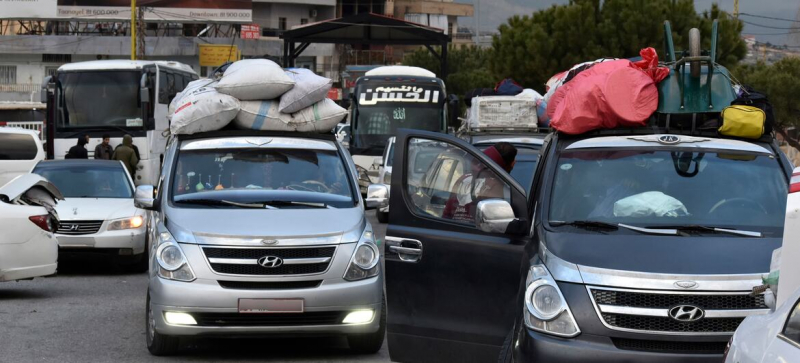

In Lebanon alone, almost 700 thousand people were forced to leave their homes, including about 200 thousand children. Almost 700 thousand Lebanese residents were forced to leave their homes to escape the war Peace and security
UN agencies reported on Monday widespread displacement across the Middle East, as well as soaring food and fuel prices that threaten to worsen hunger and suffering among the most vulnerable.
According to the United Nations Children’s Fund (UNICEF), in Lebanon alone, almost 700 thousand people were forced to leave their homes, including about 200 thousand children.
In its latest update, the UN Office for the Coordination of Humanitarian Affairs (OCHA) said 294 people were killed and more than a thousand were injured in the first eight days of another Middle East war in Lebanon. In particular, last Saturday, as a result of an operation by Israeli forces in the city of Nabi Shit in eastern Lebanon, more than forty people were killed and about a thousand were injured, OCHA reported, citing Lebanese authorities. For the third time since the war began, Israel issued evacuation orders covering the entire area south of the Litani River and, for the second time, the southern suburbs of Beirut.
Civilian casualties
Israeli health authorities reported that about two thousand people have been injured in Israel since the conflict began on February 28. One civilian was killed Monday when a rocket fell in the central part of the country.
Iranian authorities said that at least 1,330 civilians have been killed in the country since the start of the war.
Bahraini authorities reported more than 30 people injured in an Iranian drone attack. Qatari officials said two civilians were killed in Saudi Arabia.
Growing needs and ‘spillover impacts’
UN Emergency Relief Coordinator Tom Fletcher warned of the ‘spillover impacts’ of war on countries like these. like Afghanistan and Pakistan, “where the needs are already enormous.”
Fletcher added that the international community’s attention to existing crises – in Sudan, South Sudan and Ukraine – is increasingly weakening.
Crisis in the Strait of Hormuz
The deep economic uncertainty caused by the war is reflected in the rapid rise in prices for automobile fuel, associated with a sharp rise in oil prices. UN agencies also point to severe global supply chain disruptions affecting shipping, the energy sector and the fertilizer market.
Attacks on ships in the Strait of Hormuz have virtually stopped traffic through the narrow channel through which almost a fifth of the world’s oil supplies are carried. At least four sailors were killed and three seriously injured in the Strait of Hormuz on Friday after their ship was attacked. Drone strikes on Oman’s port structure have caused charter costs to rise. According to the International Maritime Organization (IMO), about 20 thousand sailors remain trapped in the Persian Gulf.
“The conflict has the most immediate impact on food security in the Middle East,” the World Food Program (WFP) said, noting that a significant portion of the world’s fertilizer supplies pass through the Strait of Hormuz.
“Any interruptions threaten to reduce the availability of fertilizers, reduce yields and, as a consequence, increase world food prices,” the agency emphasized.
Food security under threat
The WFP also recalled the high level of food insecurity in Lebanon, which existed even before the start of the war, as well as in Iran, where families have “limited capacity to withstand new shocks.”
A sharp rise in food prices in Gaza was caused by the closure of key crossing points for humanitarian aid from Israel. Although the Kerem Shalom/Karem Abu Salem crossing has reopened, prices remain high.
“WFP will likely be forced to reduce food rations by up to 25 percent of the daily value for approximately 1.3 million people. Without reliable humanitarian corridors, fragile gains associated with the ceasefire may be lost,” the agency said.
Faced with longer delivery times and delays for humanitarian supplies, WFP and its partners are increasingly using transit routes through Turkey, Egypt, Jordan and Pakistan, as well as expanding the use of land routes between the UAE and the eastern Mediterranean.
WFP also noted that its humanitarian hub in Dubai continues to operate despite disruptions in air travel and shipping.