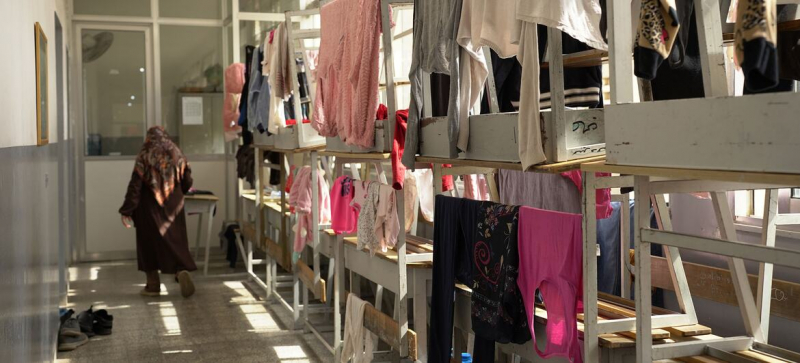

Lebanese families fleeing their homes are taking refuge in the grounds of a school in Beirut. The UN warns of the consequences of the crisis in the Middle East for civilians and global stability Peace and Security
Attacks on civilian infrastructure in the Middle East—along with the expansion of attacks into new areas—are increasing risks to populations throughout the region and beyond. UN High Commissioner for Human Rights Volker Türk warns about this.
He condemned large-scale attacks on residential areas and vital civilian infrastructure, including medical and educational institutions, cultural heritage sites, and water and energy supply systems. Turk stressed that international humanitarian law requires the protection of civilians and civilian infrastructure in all circumstances.
“All parties are required to comply with these rules and must be held accountable if they are violated. The whole world is watching what is happening,” added the High Commissioner.
Vital infrastructure hit
A desalination plant and fuel facilities were reportedly hit in Iran over the weekend, leading to an oil spill and fires along road drainage systems. On Qeshm Island in Hormozgan province, a strike on a water desalination plant has reportedly disrupted water supplies to at least 30 villages.
The Iranian Red Crescent Society also warned that rainfall in the country could become “dangerous and acidic” and could lead to chemical burns and severe lung damage. “I am deeply concerned about the health and environmental impacts of these oil fires, including possible acid rain pollution,” Turk said.
According to him, the expected consequences for civilians and the environment raise serious questions about compliance with the principles of proportionality and precaution enshrined in international humanitarian law.
Risks for the region and the global economy
Attacks in the region have already led to civilian casualties and damage to civilian infrastructure, including a desalination plant in Bahrain, which supplies water to a large part of the population.
Turk warned that a “spiral of mutual blows” could lead to even more serious consequences.
According to him, the crisis is already having an impact outside the region. Migrant workers in the Gulf countries find themselves in a dire situation—some of them have already died or been injured, while others are “trapped” and cannot return home. Remittances on which the well-being of their families in their home countries depend are also disrupted.
The decline in commercial shipping through the Strait of Hormuz is affecting access to energy, food and fertilizers in many countries around the world.
A sharp rise in oil prices, Turk warned, could negatively affect macroeconomic and social stability, especially in states already facing debt problems. In this context, he recalled the importance of investing in renewable energy sources.
Freedom of expression
The High Commissioner also expressed concern at reports of people being detained and harassed in a number of countries for expressing views on the conflict.
He reminded all states that international law obliges them to respect and protect the right to freedom of expression, including in times of crisis.
“All those arbitrarily detained must be immediately and unconditionally released,” Turk emphasized.