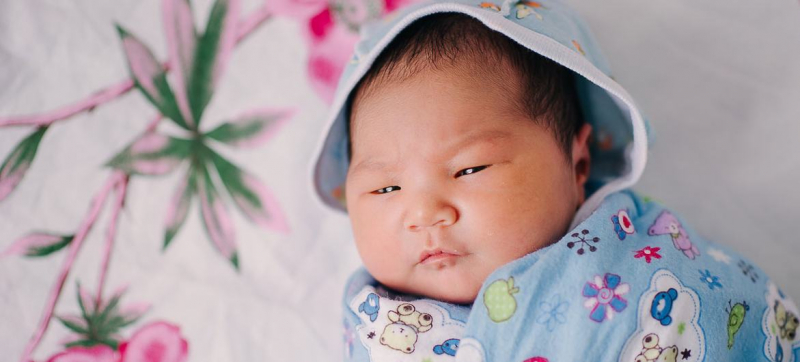

Newborn in Kazakhstan. Almost 70 percent of women in Eastern Europe and Central Asia experience mistreatment during childbirth Healthcare
Nearly seven in ten women surveyed in Eastern Europe and Central Asia report experiencing some type of mistreatment during childbirth. Such data are presented in a new report from the United Nations Population Fund (UNFPA). The report highlights the widespread but often hidden problem of obstetric violence, which violates fundamental rights and humiliates women.
The study is based on an online survey of more than 2,600 women giving birth in 16 countries and territories in the region. The survey was conducted by UNFPA with partners, including the Moldovan Center for Partnerships for Development.
According to the study, 67 percent of women reported experiencing at least one form of mistreatment during childbirth or a medical examination. These include medical procedures without the consent of patients, verbal and physical violence, and violations of privacy.
“These results are a wake-up call,” said UNFPA Regional Director for Eastern Europe and Central Asia, Florence Bauer. According to her, every woman has the right to the highest possible level of health care, which should include respect and dignity.
“Obstetric violence is not only a medical problem. This is a human rights violation that leaves women feeling helpless and stressed and can have long-term consequences for their health and well-being,” Bauer said.
Procedures without consent
According to the report, almost half of the women surveyed (48.1 percent) reported that they had undergone medical interventions without their informed consent. These include episiotomy, caesarean section or oxytocin administration. About 24 percent of women reported incidents of verbal abuse, including yelling and humiliation, from medical staff.
One in ten reported physical or sexual violence during childbirth or gynecological examinations. Thus, 12 percent of the women surveyed noted that during childbirth they were restricted in their movement, for example, tied to a bed or used rough physical force. At the same time, 10.4 percent of women reported experiencing various forms of sexual violence, ranging from inappropriate touching to more severe forms of assault, including humiliating manipulation of the genitals.
However, many women do not make such cases public. More than half of the survey participants (53.7 percent) had never heard the term “obstetric violence,” and only 2 percent of those who experienced maltreatment officially reported it. Often people do not seek help due to mistrust of complaint mechanisms or fear of consequences.
Regional differences
In the countries of Central Asia, the problem of obstetric violence is discussed less frequently than in European countries. According to the study, the largest proportion of women who have not heard or are not aware of the concept of “obstetric violence” was recorded in Kazakhstan, Kyrgyzstan and Uzbekistan – in these countries, approximately two-thirds of respondents are not aware of this phenomenon.
The report’s authors note that the situation may be partly explained by the cultural and social characteristics of the region, where traditional ideas about the role of women and childbirth may make discussion of cases of abuse less common.
The level of violations also varies between countries in the region. For example, in Albania, Moldova, Serbia, Tajikistan and Kosovo, women were more likely to report discrimination, verbal and physical violence, and problems in the health care system.
In particular, in Tajikistan, 31.8 percent of women reported verbal abuse during childbirth and 22.7 percent reported physical violence. At the same time, 34 percent of Ukrainian women in labor reported poor quality of medical care, including violations of privacy or insufficient qualifications personnel.
Sexual violence was reported by 19 percent of women surveyed in Serbia and 16.2 percent in the Republic of Moldova.
Call to action
UNFPA and partners called on governments and the region’s medical community to take comprehensive action to end obstetric violence.
Proposed steps include adopting appropriate legislation, improving the training of medical personnel, informing women of their rights, creating accountability mechanisms and conducting public information campaigns.
“Respectful attitude is not an additional option, but a prerequisite for quality medical care,” emphasized Florence Bauer. According to her, eliminating systemic barriers will ensure a safe and dignified birth for every woman.