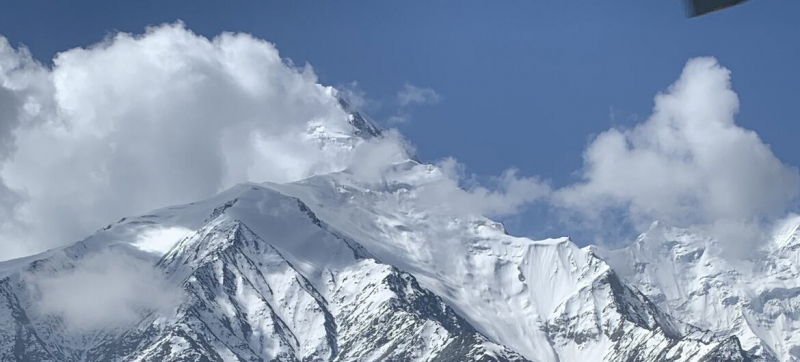

Tajikistan’s glaciers and rivers, rising high in the mountains, provide fresh water to millions of people throughout the region. Central Asia takes lead in glacier conservation Climate and environment
In Central Asia and other mountainous regions, glaciers are melting at a rate never seen before. Rising temperatures shorten the length of winter and prolong summer, which in turn causes glaciers to retreat.
Glaciers account for about 70 percent of all fresh water on Earth, and nearly two billion people rely on these resources for water, agriculture, industry and energy generation. Glaciers also help preserve ecosystems and act as local “climate stabilizers” by reflecting and directing solar radiation back into space, thereby preventing heat absorption on Earth.
As glaciers continue to shrink and even disappear, the water cycle becomes increasingly unpredictable, affecting water supplies around the world. This loss is not only an environmental problem, but also an economic problem that affects the well-being of millions of people. The United Nations Environment Program estimates that freshwater depletion from glaciers could cost four trillion dollars in global gross domestic product due to disruptions in agriculture, urban water supplies and energy production.
Impact of climate change
The situation in Central Asia is rapidly deteriorating. In August 2024, during the Sixth Summit of Central Asian countries, President of Uzbekistan Shavkat Mirziyoyev said: “The consequences of global climate change are felt in each of our countries. Rising temperatures, melting glaciers, floods, droughts, dust storms and many other problems continue to cause serious damage.”
According to a 2022 report by the Eurasian Development Bank, temperatures in the region are rising almost twice as fast as the global average, exacerbating the problem of desertification and accelerating the rate of melting of glaciers.
During the first High-Level International Conference on Glacier Conservation, held in May 2025 in Dushanbe, Tajikistan President Emomali Rahmon said: “Today, over a thousand have completely melted of 14 thousand glaciers in Tajikistan. Over the past few decades, the total volume of glaciers, which make up more than 60 percent of the water resources of Central Asia, has decreased by almost a third in our country.”
The glaciers of Kyrgyzstan were no exception, where over the past 50–70 years the area covered by glaciers has decreased by 16 percent.
In 2024, at the 29th United Nations Climate Change Conference (COP-29), President of Kyrgyzstan Sadyr Japarov noted: “If the current dynamics continue, then by the end of the century a significant part of the glaciers may disappear. This is not just a statistic – it is an immediate threat to the lives and well-being of millions of people who depend on glaciers for fresh water.”
Containing the crisis
At the initiative of Tajikistan, the United Nations General Assembly proclaimed the year 2025 International Year of Glacier Conservation, to draw attention to the problem of melting glaciers and promote the development of policies and measures aimed at preserving glaciers. The year officially began on March 21, 2025 in New York at an event dedicated to the first annual World Glacier Day.
A few weeks later, the High-Level International Conference on Glacier Conservation resulted in the Dushanbe Glacier Declaration, which expressed concern that the continued loss of glaciers, ice sheets, permafrost and snow cover could lead to irreversible impacts on some ecosystems and have detrimental impacts on the environment, society and the economy.
The declaration called for a worldwide inventory of glaciers and other perennial ice and snow masses; applying integrated approaches to climate change mitigation, adaptation and resilience for sustainable water resources management; development of scientific cooperation in the field of monitoring and study of the mountain cryosphere while ensuring accessibility of research results for all interested parties; Implementing capacity-building measures to link science, policy and traditional knowledge to train the next generation of glacier scientists and specialists.
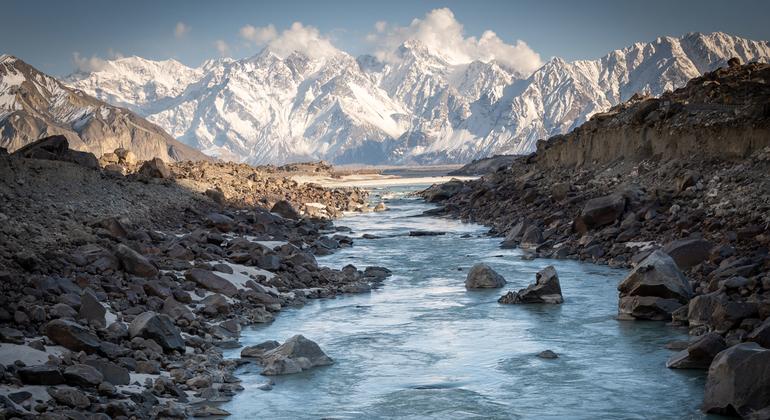
International cooperation in the field of monitoring and research of glaciers
This year also marks the beginning of the Decade of Action for Cryospheric Science, a global initiative that aims to promote increased research and international engagement and raise awareness of the importance of Earth’s permafrost regions, including glaciers.
Glacier conservation is a key component of a comprehensive regional climate change adaptation strategy in Central Asia, jointly developed by Kazakhstan, Kyrgyzstan, Tajikistan, Turkmenistan and Uzbekistan.
“No country can combat the consequences of climate change alone,” said President Japarov. “We need solidarity, cooperation and exchange of experience.”
As part of this regional strategy, five countries are strengthening their national glacier monitoring capabilities by jointly monitoring and compiling a comprehensive inventory of the region’s glaciers.
Glacier data is key to scientific assessment and decision-making regarding climate change adaptation and mitigation strategies. In 2025, the first isotope hydrology laboratory in Central Asia for glacier research was opened in Tajikistan, with the assistance of the IAEA technical cooperation program. The IAEA provided the laboratory with equipment to study glaciers in the field and trained scientists in its use. Tajikistan also took the initiative to create a regional network within the framework of the Global Network of Laboratories for the Analysis of Water Resources (GloVAL); The IAEA will work together with the countries of Central Asia to draw up its roadmap.
“In the arid lands of Central Asia, isotope hydrology can connect the past with the present,” says IAEA isotope hydrology specialist Yulia Vystavnaya. “It tracks past climate change and current glacier melt to ensure sustainable water use in a region where every drop counts.”
IAEA contribution to the study of glaciers
The IAEA has been collaborating with high-mountain countries for more than a decade to monitor and measure glacier retreat. Twelve countries, including Kazakhstan and Uzbekistan, are participating in a new IAEA coordinated research project that is using isotope hydrology tools to improve assessment of the complex processes associated with glacier retreat and its impact on overall water resource availability.
In many permafrost regions, glacier and snow melt, precipitation and other water supplies are not properly measured, despite their importance from a water supply perspective. The IAEA project will help countries collect accurate and reliable data to better understand glaciers and the replenishment potential of local and regional water systems. This will serve as a basis for establishing strategies for sustainable water management in mountainous areas and will help improve water resource planning for the benefit of downstream communities.
Tajikistan, Uzbekistan and seven other countries are studying snow cover and mountain glaciers as part of a new IAEA regional technical cooperation project to help guide evidence-based management of transboundary water resources. One of the main goals of this work is to preserve the isotopic signatures of glaciers that are on the verge of extinction.
Through the Joint FAO/IAEA Center on Nuclear Techniques in Food and Agriculture (Joint FAO/IAEA Centre), the IAEA is studying the impacts of glacier retreat on soil and water resources using advanced nuclear and isotope techniques. Instruments such as cosmic ray neutron probes and isotope tracers allow precise real-time monitoring of snow accumulation on glaciers and assessment of the redistribution of sediment from deglaciated areas to downstream rivers and lakes. From the Andes to the Himalayas, the IAEA’s technical cooperation program trains scientists to use these techniques to monitor glaciers, helping to develop evidence-based and site-specific climate change adaptation strategies.
“By bringing together nuclear science and local expertise, we are empowering scientists and policymakers to translate data into action to improve resilience to climate change,” concludes Gerd Derkon, Head of the Soil, Water and Plant Nutrition Laboratory at the Joint Centre. FAO/IAEA.