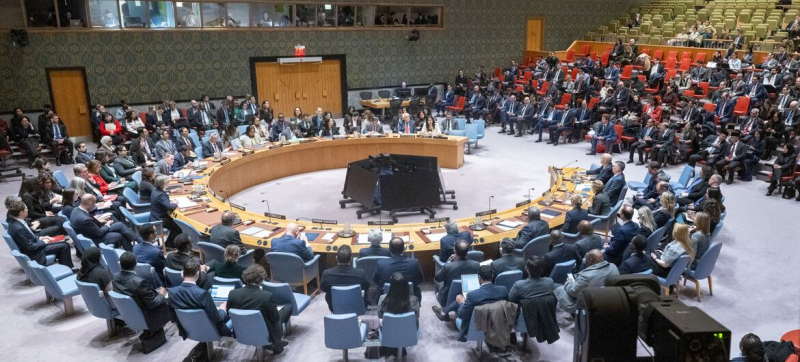

Security Council meeting. The Security Council discussed the situation in the Central African Republic Peace and security
The largest elections in the history of the Central African Republic – presidential, parliamentary, regional and municipal – were held in a calm and generally safe environment. The Special Representative of the Secretary General for the Central African Republic and head of the UN mission in this country, Valentina Rugvabiza, announced this at a briefing at the UN Security Council on Wednesday.
Voting took place in December 2025. “On 28 December 2025, the Central African Republic reached an important milestone in strengthening the peace process and State authority by holding joint presidential, parliamentary, regional and municipal elections,” the Special Representative said.
The successful conduct of the elections was the result of many years of joint efforts by the government and the UN Stabilization Mission in the Central African Republic (MINUSCA), which were aimed at strengthening state power and promoting the implementation of the 2019 Political Agreement.
The UN mission assisted the country’s authorities through mediation efforts, as well as technical, logistical and operational support.
This set of measures contributed to maintaining a safe environment during the election campaign and on voting day, including in high-risk areas. The second round of by-elections for legislative, regional and municipal bodies is scheduled for April 26, with final results expected to be announced in the summer.
Rugwabiza noted an increase in inclusiveness in the electoral process: women made up 47 percent of voters and 45 percent of candidates in municipal elections.
She also spoke about the progress in the implementation of the Political Agreement: two more armed groups were disbanded and an additional agreement was signed on the participation of the Movement for the Liberation of the People of Central Africa in the peace process with the assistance of the Government of Chad.
“These developments, along with MINUSCA’s continued support for disarmament and demobilization operations – which have resulted in the disarmament and demobilization of more than 1,200 combatants since July 2025 – contributed to the creation of a secure environment for the conduct of elections,” Rugwabiza said.
At the same time, according to the special representative, serious security problems remain in the northeast and southeast of the country. In particular, attacks on civilians and local authorities by armed groups continue. The influx of refugees from Sudan increases tensions.
The Special Representative also noted that the UN mission operates under severe financial restrictions. The post-election period will be critical for consolidating political and peaceful gains and for the gradual and planned transfer of the mission’s powers to national institutions.