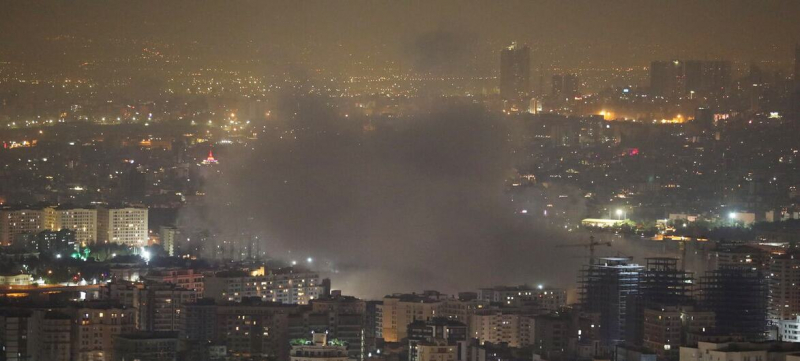

Tehran, Iran, after airstrikes in June 2025. (archive) Middle East: UN warns of risk of regional escalation as strikes continue Peace and security
A new wave of violence in the Middle East has continued for the fifth day. US and Israeli strikes on Iran are reported, as well as missile and drone attacks by Iran in a number of countries in the region. The intensifying confrontation raises fears of further escalation.
The Independent International Fact-Finding Mission to the Islamic Republic of Iran strongly condemned the strikes on Iran by Israel and the United States. In their statement, the experts reminded all parties of the need to strictly comply with international humanitarian law and international human rights law, including the principles of distinction, proportionality and precaution to protect civilians.
The mission also expressed deep concern at reports of attacks on schools in Iran, including an attack on a school in the city of Minab, where more than 150 students and teachers were reported killed.
Experts expressed serious concern about Iran’s retaliatory strikes on neighboring countries, warning that they are leading to the death of civilians and the destruction of civilian infrastructure throughout the region. They warned that further military escalation could lead to new casualties both in Iran itself and throughout the region and called for an immediate end to the attacks.
Attacks on medical facilities
World Health Organization (WHO) Director-General Tedros Adhanom Ghebreyesus has warned that the widening conflict in the Middle East is increasingly affecting health services. He expressed regret over reports that three medics were killed and six others were injured during rescue efforts following explosions in the city of Tire in Lebanon.
According to WHO, medical facilities in Iran were also damaged as a result of the fighting. It is reported that explosions near the Motahari hospital in Tehran on March 1 damaged part of the building and led to the forced evacuation of patients and staff. The Gandhi Hospital was also damaged. In addition, according to WHO, two emergency medical centers in the cities of Sarab and Hamadan were damaged, and at least two medical workers were injured.
WHO emphasized that health care institutions must always be protected, especially during crises when medical care is most needed.
Flow of refugees from Lebanon
According to the Office of the United Nations High Commissioner for Refugees (UNHCR), about 11,000 people fled Lebanon on Monday amid ongoing Israeli attacks on Hezbollah positions. This is significantly higher than the daily average.
Most of the arrivals are Syrian families, although there are also Lebanese citizens among those crossing the border. UNHCR staff are working at border crossings, and supplies of humanitarian aid have been pre-positioned in Syria in case of an increase in the number of arrivals.
Children among the main victims
The UN Committee on the Rights of the Child has expressed deep concern about the escalation of violence in the Middle East and its dire consequences for children. Experts said they were “deeply shocked” by the deaths of innocent children. They called for an immediate ceasefire and safe humanitarian access.
The United Nations Children’s Fund (UNICEF) also warned that children are increasingly becoming victims of violence in Lebanon. According to the country’s Ministry of Health, seven children were killed and 38 injured as a result of new airstrikes within 24 hours. The fighting also led to massive displacement of the population: almost 60 thousand people, including 18 thousand children, were forced to leave their homes in just one day.
UNICEF says it is expanding emergency assistance, including health services, psychosocial support and supplies for families sheltering in overcrowded accommodation centres.
Nuclear risks
The International Atomic Energy Agency (IAEA) reported that after the recent strikes there was no damage to facilities in Iran containing nuclear weapons materials, and there is currently “no risk of a radiological release.”
The agency, citing an analysis of the latest satellite images, reported damage to two buildings near the nuclear facility in Isfahan. At the same time, no new damage was detected at the Natanz facility, in addition to the previously recorded destruction of the entrance structures. Also, no damage was recorded at other nuclear facilities, including the Bushehr nuclear power plant.
IAEA Director General Rafael Grossi again called on the parties to exercise maximum restraint to avoid a radiological incident.