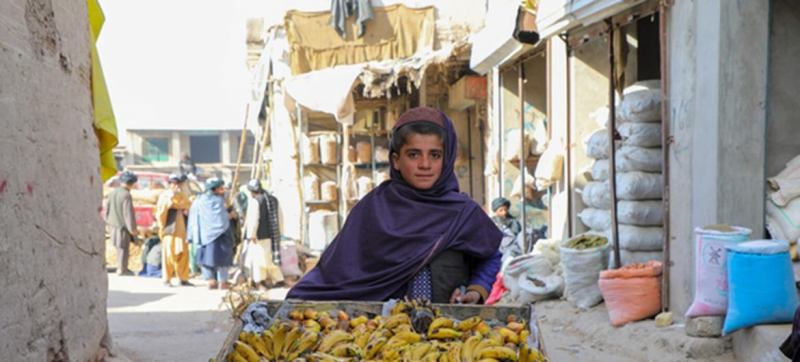

Almost 60 percent of women workers are employed in the informal sector. UN: Economic growth must benefit the entire population, not just a select few Sustainable Development Goals
Why do private companies make excessive profits while millions of people lack access to food, housing and health care? Inequality is becoming one of the main forces shaping the lives of millions around the world. This was stated by the UN High Commissioner for Human Rights, Volker Türk, speaking on Thursday at a session of the UN Human Rights Council in Geneva.
According to him, today every fourth person in the world risks being left without adequate nutrition, and a third of the population does not have access to decent housing. More than half of workers are employed in the informal economy—without paid sick leave, maternity leave, or other forms of social protection. This is especially true for women: almost 60 percent of the world’s working people work in the informal sector.
Global inequality continues to grow. Over the past two decades, the richest one percent of the population has gained 41 percent of the world’s new wealth, while the bottom half has gained only about one percent.
The economy must serve the people
One of the reasons for inequality between states remains the debt burden. Developing countries paid a record $415 billion in interest on debt in 2024, more than double what they paid a decade ago. These payments, according to Turk, reduce resources that could be allocated to education, health care and social protection.
“We cannot accept a future in which only a few prosper and billions are left behind,” Turk emphasized.
The High Commissioner called for reform of the international financial system, rethinking approaches to debt policy and expanding access to social protection. He also noted the need to move away from gross domestic product as the main indicator of development. The true measure of progress, he said, should be the well-being of people and the fair distribution of economic benefits.
Innovation for social benefit
How to make economic growth more equitable was also discussed at another event organized by the UN system this week. Economist, professor at University College London and founder of the Institute of Innovation and Public Value, Mariana Mazzucato, speaking at the Innovation Day of the International Labor Organization (ILO), emphasized that industrial policy should be aimed at achieving the public good
Governments pour billions of dollars into subsidies, tax breaks and public procurement every year, but such investments often come without clear commitments from companies, Mazzucato said. If the private sector receives taxpayer funds, it must commit to improving working conditions, raising wages, using energy-efficient supply chains and reinvesting profits, she said. She cited the energy transition in Germany as an example. The State Bank provided loans to the steel industry on the condition of reducing the material intensity of production and switching to technologies for reuse and recycling of resources. According to Mazzucato, it was precisely these conditions that helped stimulate the development of “green steel” in the country.
The economist emphasized that public procurement can also become a powerful tool for innovation. For example, school nutrition programs can be used not only to provide lunches, but also to support sustainable agriculture, local production, and healthier nutrition for children.
She also pointed to the US experience in developing legislation to support the semiconductor industry. Companies that received government subsidies had to meet a number of conditions, including workforce training plans and providing affordable child care for workers on large projects. Such requirements help ensure that public investments provide public benefit, she said.