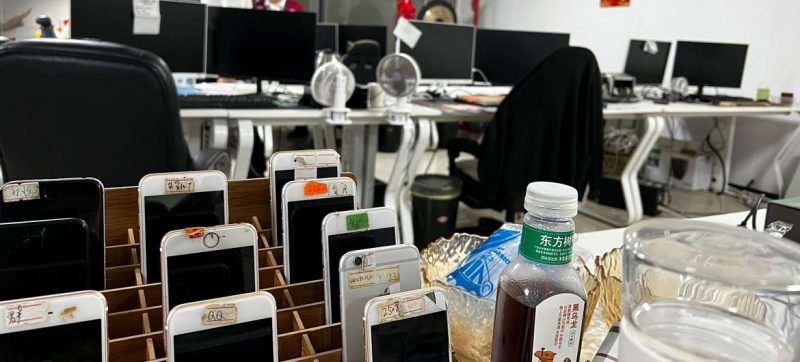

Fraud center in the Philippines, organized by an international criminal network. UN report: Victims of human trafficking forced into fraud, torture and sexual violence Human rights
The UN Human Rights Office has collected evidence on the situation of hundreds of thousands of victims of human trafficking who are forced to engage in fraud in major crime hubs in Southeast Asia and other regions of the world. The report documents cases of torture and ill-treatment, sexual violence and exploitation, forced abortion, food deprivation and solitary confinement.
The victims also spoke about assistance to criminals on the part of some border guards and about intimidation and extortion from the police.
Promises of legal work
Almost three-quarters of such operations are concentrated in the Mekong region, according to satellite imagery and on-the-ground data. However, the activities of fraud centers have also spread to some Pacific island countries, countries in South Asia, the Persian Gulf, West Africa and the Americas.
The report is based on interviews with victims from Bangladesh, Vietnam, Zimbabwe, India, China, Myanmar, Sri Lanka, Thailand and South Africa. They were trafficked to fraud centers in Cambodia, Lao People’s Democratic Republic, Myanmar, the Philippines and the United Arab Emirates between 2021 and 2025. The study also interviewed representatives of the police, border services and civil society.
Victims said they were lured by promises of legitimate work and then coerced into participating in online scams ranging from telephone extortion to financial scams and romance schemes.
Cruel punishments
Some of the victims described large closed complexes with an area of more than 200 hectares, reminiscent of autonomous cities, with multi-story fortified buildings, high walls with barbed wire and armed guards.
According to testimony from a victim in Sri Lanka, those who did not comply with monthly fraud “plans” were kept for hours in water tanks in so-called “water prisons”. Other victims said they were forced to beat colleagues or watch abuse in order to intimidate them into submission.
There are also reports of cases of people dying while trying to escape some fell from balconies and roofs of buildings. Attempts to escape were severely punished. A Vietnamese victim said her sister was beaten, tasered, and locked up without food for seven days.
Forcing fraudulent activity
According to the report, recruiters often arranged video calls with relatives of victims, forcing them to watch the abuse in order to obtain ransom payment.
Most of the victims received only part of the promised wages: various fines and “expenses” were deducted from their income. One interviewee reported that he was required to “earn” up to $9,500 daily as part of the scam or risk being beaten or “resold” to another center with more difficult conditions.
Inadmissibility of punishment of victims of human trafficking
“The scale of the abuses is both shocking and heartbreaking,” said UN High Commissioner for Human Rights Volker Türk. He emphasized that victims often face mistrust, stigmatization and even punishment instead of protection and rehabilitation.
According to Turk, effective measures must be based on human rights, including the recognition of forced involvement in criminal activity and the principle of non-punishment of victims of trafficking.
The report also emphasizes the need for safe and timely operations to release victims, respect the principle of non-refoulement, and provide victims with access to medical and psychological care.
Anti-corruption
Researchers conducted behavioral and systems analysis to study the reasons why people continue to fall into such schemes. Among the proposed measures are the expansion of safe labor migration channels, control over online vacancies and the active participation of public organizations and associations of victims themselves in preventive work.
The High Commissioner called on states to combat corruption associated with the business of fraudulent networks and bring criminal syndicates to justice, as well as to ensure the free work of independent media and human rights defenders fighting human trafficking.