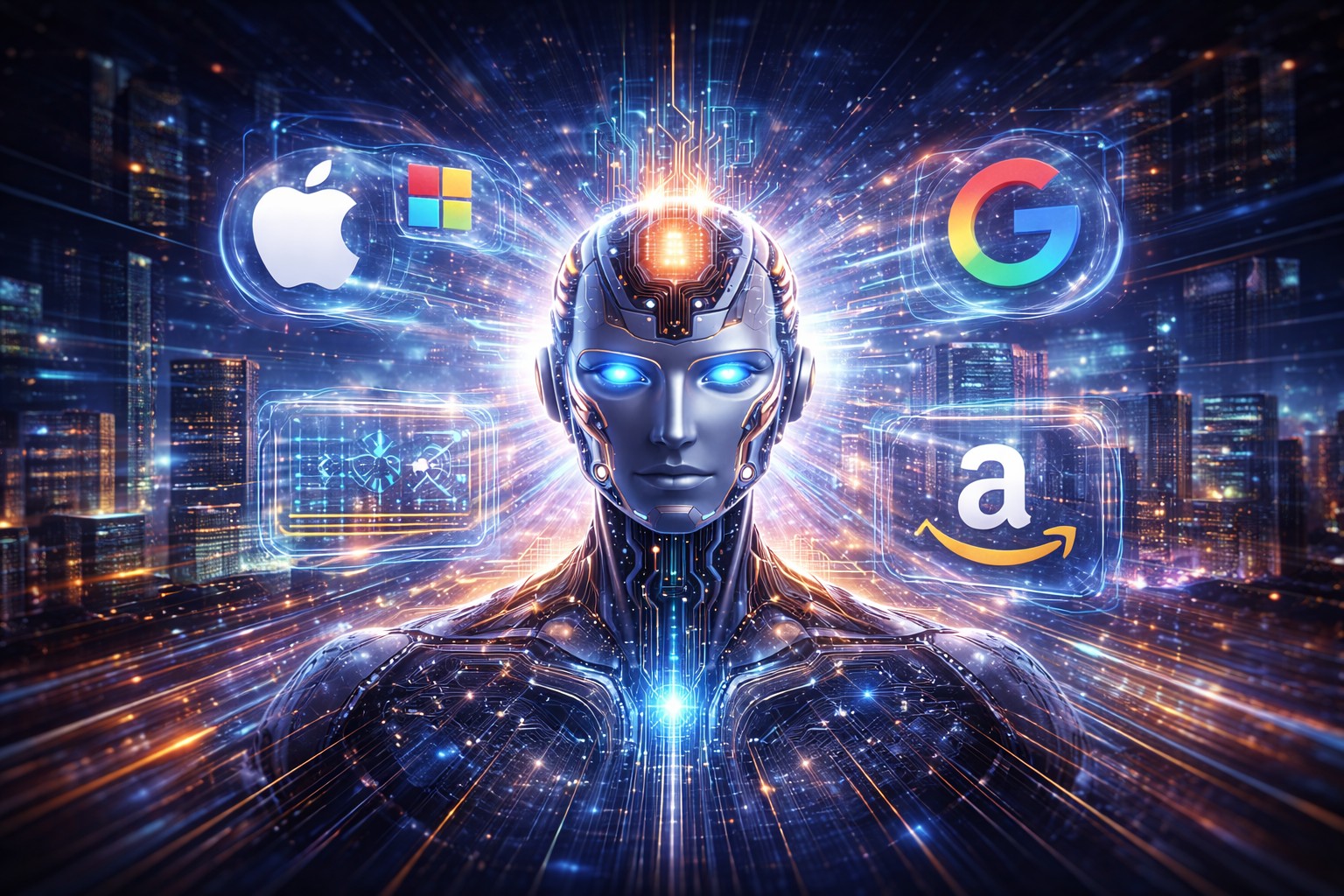
As the first quarter of 2026 unfolds, the technology industry has moved past the era of experimental chatbots and isolated AI pilots. Major technology companies have begun a coordinated acceleration of artificial intelligence integration, shifting the focus from generative assistants to “agentic” systems woven directly into the core architecture of operating systems and enterprise tools.
This transition marks a significant milestone in human-computer interaction. While the previous two years were defined by users prompting models for answers, 2026 is defined by software that can execute multi-step workflows autonomously. Industry analysts suggest this shift is driven by intense competitive pressure and a maturing market that now demands measurable return on investment (ROI) over mere technological novelty.
What Happened
The most prominent development in early 2026 is the move toward “AI-native” operating systems. Rather than treating AI as an overlay or a sidebar feature, companies like Microsoft, Google, and Apple have integrated machine learning models into the kernel levels of their software. This allows for system-wide “agentic” capabilities, where the software understands context across different applications to perform complex tasks, such as organizing a complete business trip based on a single email thread or managing real-time data engineering flows without manual intervention.
At the Consumer Electronics Show (CES) 2026, the industry also saw a major push toward “physical AI.” Google DeepMind and Boston Dynamics announced a new partnership to equip humanoid robots with foundational AI models, while Meta unveiled neural-interface wearables that translate muscle signals into digital commands. These updates signal that AI is no longer confined to screens but is becoming the connective tissue for a new generation of hardware.
Key Details and Facts
The acceleration is underpinned by new hardware standards that have become mandatory for modern computing. Most flagship PCs released this year are categorized as “Next-Generation AI PCs,” requiring a Neural Processing Unit (NPU) capable of at least 40 to 50 Tera Operations Per Second (TOPS). This hardware shift allows for “on-device” AI processing, which significantly reduces latency and improves data privacy by keeping sensitive information off the cloud.
However, this rapid integration has hit a significant bottleneck: a global memory shortage. Because AI models require vast amounts of high-speed memory, suppliers have redirected production away from consumer-grade RAM toward high-bandwidth memory (HBM) for data centers. Consequently, the industry-standard minimum for an AI-capable laptop has jumped to 16GB of RAM, with premium “Super Agent” systems targeting 32GB or higher. This has led to a projected 8% increase in average PC prices for 2026.
Why It Matters
The shift toward integrated AI matters because it is fundamentally changing the economics of productivity. Research indicates that 72% of business leaders believe integrated AI has already improved team productivity by automating routine cognitive tasks. For the end user, this means the end of “siloed” applications; your calendar, email, and project management tools now function as a single, synchronized ecosystem that anticipates needs rather than waiting for commands.
For the hardware industry, the “perfect storm” of the Windows 10 end-of-life cycle and the AI PC wave should have triggered a massive growth cycle. However, the skyrocketing cost of components like DRAM and NAND is forcing manufacturers to rethink their roadmaps. This dynamic is creating a divide in the market between those who can afford high-performance AI hardware and those who are being priced out of the latest technological leap.
What to Expect Next
Looking ahead to the remainder of 2026, the focus will likely shift toward “Personal AI Hubs.” These are edge devices designed to coordinate AI tasks across a user’s entire device portfolio, from smartphones and PCs to smart glasses and wearables. This “hybrid AI” approach will allow a single personal agent to follow a user across different contexts, maintaining long-term memory and personalized preferences without compromising security.
Furthermore, the industry is moving toward “interoperable AI skills.” Following initiatives to standardize how AI models interact with various software interfaces, it is expected that a “skill” or workflow created for one platform will soon be portable to another. This democratization of agentic capabilities will likely lead to a surge in specialized, domain-specific AI agents for industries such as healthcare, legal, and advanced manufacturing.
FAQ
What is the difference between Generative AI and Agentic AI? Generative AI focuses on creating content, such as text or images, based on prompts. Agentic AI goes a step further by using reasoning to navigate software, make context-based decisions, and execute multi-step workflows to complete a specific goal autonomously.
Why are PC and smartphone prices increasing in 2026? The primary driver is a global shortage of memory components. Manufacturers are prioritizing high-margin memory for AI data centers, which has significantly increased the cost of the RAM and storage required to run advanced AI features on consumer devices.
What are TOPS, and why do they matter for my next computer? TOPS stands for Tera Operations Per Second. It measures the performance of a computer’s NPU. In 2026, a higher TOPS rating means the device can run more sophisticated AI models locally on the device, rather than relying on a slow or potentially insecure internet connection to a cloud server.
As AI becomes the default operational core for both consumer and enterprise technology, the industry is entering a period where the quality of integration will define market leadership. Success is no longer measured by the presence of AI, but by how seamlessly that intelligence serves the user’s daily needs.