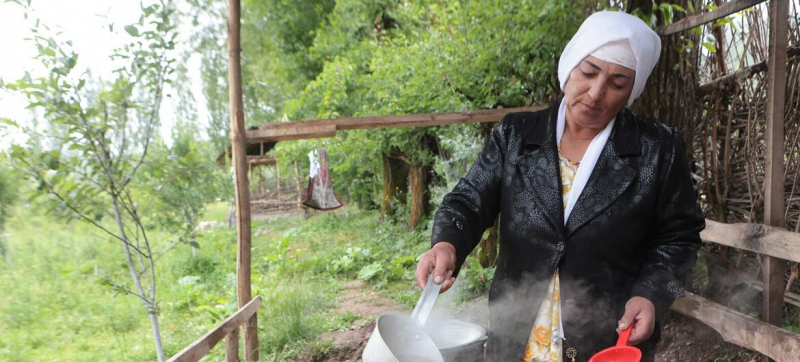

When a new project to preserve traditional agricultural crops began in the Tajikabad region of Tajikistan, Sonya Kirgizova became one of its first participants. “We can do more”: a woman who became a leader among local farmers in Tajikistan Women
Sonya Kirgizova enjoys well-deserved respect in the mountain villages of the Tajikabad region, located in the eastern part of the central region of Tajikistan. Neighbors admire her greenhouse, her homemade onions and cucumbers, and the buzzing beehives behind her house. But first of all, they trust her. It was thanks to trust that Sonya was able to attract women farmers to participate in a project to protect the rich agrobiodiversity of Tajikistan.
Sonya was associated with farming from an early age. As a teenager, she helped her parents grow potatoes, and after marriage, she planted seedlings with her husband. When he left for a long time for seasonal work in the Russian Federation, she did all the agricultural work herself. Over time, Sonya mastered all stages: planting, watering, harvesting and storage. At first it was a necessity – then it became a skill.
“I had no choice,” shares Sonya. “At first it was difficult, but over time I learned to cope with everything. I have become more resilient.”
Sonya’s story in many ways reflects the fate of many women in Tajikistan. Women in rural areas have always played a leading role in agriculture, doing planting, weeding, caring for livestock and producing household food. However, as more men leave for work, women have even more responsibilities. Today, women have become the de facto main workforce in agriculture, often managing entire farms on their own.
For a long time, the work of women in Tajikistan in agriculture remained unrecognized and often unpaid. Many women still do not have access to the knowledge, finance, tools and resources needed to make agriculture a sustainable source of income.
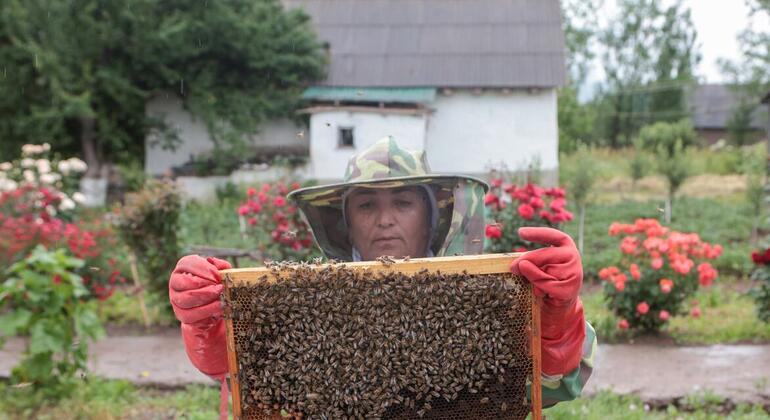
Sonya’s role in the community extends far beyond her own household. Over the years, she has learned new skills and knowledge through health and development projects and passed them on to other women.
When a new project to preserve traditional crops and strengthen local agriculture began in the Tajikabad region, Sonia was one of the first participants invited by the Food and Agriculture Organization of the United Nations (FAO). The initiative, implemented by the Government of the Republic of Tajikistan and FAO and funded by the Global Environment Facility (GEF), helps women-led communities revive the use of local seeds, improve food security and nutrition, and build resilience.
Cultural and societal norms often make it difficult to directly interact with women in rural areas, but Sonia already had the trust of the community and the support of local authorities. She opened the door to this initiative.
“Sonia has become the main link,” says FAO agricultural specialist Caroline Starr. “Thanks to Sonya, it was possible to establish interaction and provide women with access to local seeds, training programs and active participation in activities during the implementation of the project.”
Through collaboration with FAO, Sonia organized hands-on workshops in her garden where other women learned skills in growing vegetables, pruning fruit trees, greenhouse farming and beekeeping. As they acquired knowledge, their confidence in their own abilities grew.
“The women here are very hardworking,” notes Sonya. “However, they are rarely recognized as farmers and participants in the decision-making process. Now the situation is starting to change.”
Gaining access to local seeds was the turning point. Sonia helps manage one of the seven community seed banks supported by the project.
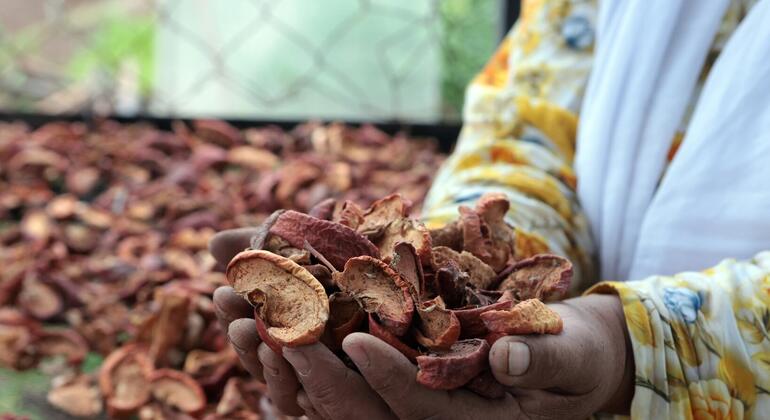
These community seed banks, stocked with traditional climate-resistant varieties, operate on a local loan system. A farmer can take one kilogram of seeds at the time of sowing and return 1.3–1.5 kilograms back to the bank after harvest, thereby maintaining its activity and growth.
“Seeds are of great importance to us,” explains Sonya. “Now women can receive seeds directly, without delays or complications.”
Most importantly, seed banks are community owned and operated. Farmers decide what seeds to bank, when and how to return them, and how to keep track of the local stock.
“Community seed banks allow farmers to control their production,” Starr says. “In addition, since many of the banks are headed by women, who are primarily responsible for feeding their households, this also helps improve nutritional quality.”
With a greater variety of crops in the fields, families receive a more varied diet.
Women began to revive the cultivation of traditional, often lost, varieties of crops, again using them in food and selling surplus products. Some of them are growing mountain crops on their plots for the first time, such as onions. They pickle and preserve these onions, creating new sources of income.
According to Sonya, the most important change was that women began to see themselves as producers, mentors and participants in the decision-making process.
“Some of the women I work with have never made money before,” she notes. “Today they help their families, feed their children better and share their knowledge with others.”
While community seed banks are the most visible outcome of this initiative, it is made possible by people like Sonia – trusted local leaders who impart knowledge, lead change, and engage others.
The FAO-GEF Agrobiodiversity Project covers seven districts of Tajikistan, where farming communities are reviving traditional crops, conserving plant genetic resources and strengthening local food systems. The project also contributes to the implementation of national policies for the conservation of agrobiodiversity.
By placing women at the center of this initiative, the project is helping to make agriculture more resilient, improve nutrition and increase equity in rural development. To date, more than 1,500 people across the country have taken part.