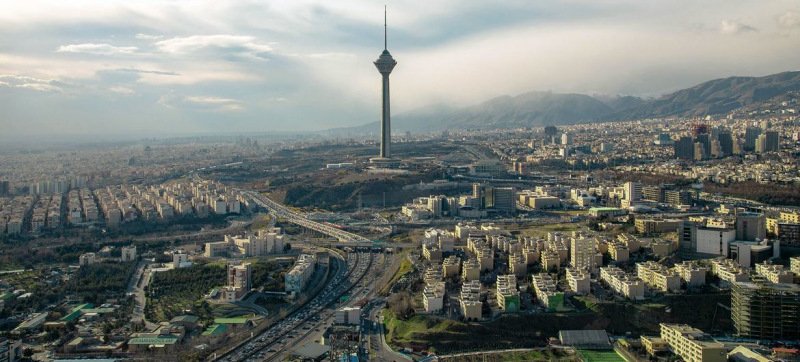

The capital of Iran is Tehran. UN Security Council discusses sanctions against Iran amid disagreements between permanent members Peace and security
The UN Security Council met on Thursday to discuss the work of the committee that deals with sanctions related to Iran’s nuclear program. The meeting was convened by the United States, which chairs the Security Council this month.
The committee, established by resolution 1737 in 2006, suspended its activities following the conclusion of the Joint Comprehensive Plan of Action (JCPOA) in 2015, which also suspended previous UN sanctions. The Security Council then unanimously adopted resolution 2231, in which it approved the JCPOA. However, in September 2025, France, Germany and the UK initiated the agreement’s “snapback mechanism” to restore UN sanctions against Iran. China, the Russian Federation and Iran are challenging the legality of the move, arguing that the sanctions regime ended in October 2025 when Resolution 2231 expired. class=”notranslate”>__GTAG2__
Disagreements among Council members prevented reaching consensus on the committee’s report. Nevertheless, the United States decided to hold a briefing at which the states also discussed Iran’s nuclear program and rising tensions in the region.
Russia, with the support of China, questioned the legitimacy of the meeting, saying that the sanctions regime had ceased to apply. The representative of the Russian Federation called for a procedural vote to block the meeting.
US and UK highlighted nuclear threats
US Representative Michael Waltz called the meeting a “regular meeting as mandated” by the sanctions committee and accused Russia and China of blocking its work. According to him, the snapback mechanism restored UN sanctions against Iran, including an arms embargo and restrictions on missile technology.
Citing data from the International Atomic Energy Agency (IAEA), he warned that Iran remains the only non-nuclear weapons state producing uranium enriched to 60 percent, raising serious concerns.
In turn, British Permanent Representative James Kariuki said that Iran’s nuclear and missile programs remain a serious threat to global security. He also expressed solidarity with the Gulf countries affected by the recent attacks. “The UK joined more than 130 countries in condemning Iran’s actions and supporting the restoration of UN sanctions,” he said.
Russia criticized the USA and the Eurotroika
Permanent Representative of the Russian Federation Vasily Nebenzya criticized the majority of Security Council members for, in his words, not speaking out against the “gross violation” of previous Council decisions. He said that responsibility for the resulting “lawlessness” lies with the US presidency and the countries that support its actions.
Recalling that Washington withdrew from the Joint Comprehensive Plan of Action in 2018, he said that the United States, Great Britain, France and Germany do not have the legal right to initiate the restoration of sanctions against Iran.
According to him, these countries “deprived themselves of the right to launch a snapback with their chronic violations of the JCPOA and resolution 2231.” He added that the issue should be resolved within the framework of the Dispute Settlement Mechanism (DSM) at the Vienna site.
Destabilization in the Middle East
Chinese Permanent Representative Fu Cong said that the crisis around the Iranian nuclear program was provoked by the unilateral withdrawal of the United States from JCPOA. He also accused Washington of resorting to military action with Israel before the completion of nuclear negotiations. Condemning such actions, the Chinese diplomat called on the US to change course and return to diplomacy. He also called on European countries to “stop adding fuel to the fire of war” and warned of the risk of sanctions being used to promote narrow political interests.
The representative of France, Jerome Bonnafon, in turn, said that the “main responsibility” for the current situation in the region lies with Iran. He accused Tehran of destabilizing the Middle East and obstructing IAEA inspections at its nuclear facilities.
According to him, the volume of Iran’s reserves of highly enriched uranium remains unclear, which is estimated to be about 450 kilograms – this could be enough to produce several nuclear warheads.
He called on Member States to support the work of the Sanctions Committee established by resolution 1737, calling it a peaceful tool to curb Iran’s destabilizing activities.